Sodom and Gomorrah 01/01/22

Explosive Media
Region Free Blu-ray

Maverick director Robert Aldrich’s one foray into grand-scale epic filmmaking is returned to crystal clarity in this fine import disc, a restoration from original Italian film elements. Stewart Granger’s Lot allies his Hebrew tribe with the notorious cities of evil, and almost loses his soul to Anouk Aimée’s wicked Queen Bera. Pier Angeli is the slave who becomes Lot’s wife, and Rossana Podestà is the daughter taken by Stanley Baker’s rapacious prince. Second unit director Sergio Leone whips up a terrific battle scene, Ken Adam provides the spectacular sets and Miklós Rózsa the powerful music score. And yes, the explosive finish involves hellfire, brimstone and the Biblical Pillar of Salt. On Region Free Blu-ray from Explosive Media.
01/01/22

The 7th Dawn 01/01/22

KL Studio Classics
Blu-ray

It’s a Cold War thriller in the steamy tropics! The Reds are making their move in Malaya and four vibrant people are caught in the crosshairs: rich rubber planter William Holden, revolutionary strategist Tetsuro Tanba, peaceful teacher and activist Capucine, and adventurous Governor’s daughter Susannah York. Director Lewis Gilbert keeps a rickety script on its feet drama-wise and superb cinematography (Freddie Young) and impressive music (Riz Ortolani) do the rest. The show ended up being most noted for a nude swimming scene scooped in the pages of Playboy. On Blu-ray from KL Studio Classics.
01/01/22

CineSavant Column

Saturday January 1, 2022

Happy New Year — !


The news may no longer be fresh, but it’s still significant: Gary Teetzel tips us off to a Kino Lorber triple-bill disc being released on March 29. An Edgar G. Ulmer Sci-Fi Collection will contain 1951’s The Man From Planet X followed by wildcat director Ulmer’s 1960 features Beyond the Time Barrier and The Amazing Transparent Man.

I’ll eventually have plenty to say about all three modest Sci-Fi mini-epics. Full details are now up, with the promise of commentary input from Tom Weaver, Gary D. Rhodes, Richard Harland Smith, David Schecter, David Del Valle, Dr. Robert J. Kiss, Joe Dante . . . and The Daughter of Director Ulmer herself, Arianné Ulmer Cipes.


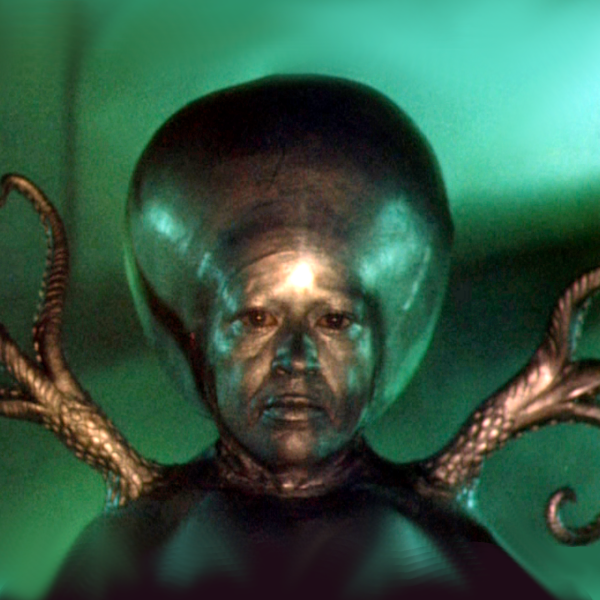
David J. Schow circulated this fun link to an article from Ralph Jones’s Inverse, 12 /13/21: a little interview-bite piece entitled
The Oral History of ‘Mars Attacks,’ Tim Burton’s Misunderstood Sci-Fi Masterpiece.

I think Mars Attacks! is a masterpiece too, my perfectly rational argument being that it was clearly conceived and filmed just to please me personally. According to the article’s presumed author Ralph Jones, the big secret that will enable you to stop worrying and love Mars Attacks! is to remember the film’s timeless Martian dialogue: Ack! Ack! Ack!


And this one I’ll claim I found for myself, even though my search ordeal was limited to pushing a button on Facebook: on the Filmmaker page for 10/11/21, author Simone Odino discusses Stanley Kubrick’s “Manhattan Project”: How Two Experimental Filmmakers Contributed to 2001: A Space Odyssey.

I remember reading in Jerome Agel’s ‘Making of 2001’ book that two filmmakers created shots for the light show conclusion of Kubrick’s Ultimate Trip in a NYC loft space, experimenting with dropping oil into water (?) under a 65mm movie camera. This great piece explains who they were, what they did and the general craziness experienced by all that work for Stanley Kubrick.

Thanks for reading! — Glenn Erickson

Monday December 27, 2021


Here’s how I’ve felt for the last 22 months: like a deer caught in the headlights, wearing a doctor’s mask.

The Great Escape 4K 12/27/21

KL Studio Classics
4K Ultra HD

By now I must have at least 7 home video releases of John Sturges’ classic, starting from VHS, but they’ve come up with a good reason to return: a 4K transfer with color and contrast grading that to me better represents the movie. The thrilling, not-too-violent escapades of Steve McQueen, Richard Attenborough, James Garner, David McCallum, James Coburn, Charles Bronson & James Donald are no longer timed so that everything looks like a washed-out high noon: both the 4th of July and much of the mad-dash escape scramble are meant to take place near the crack of dawn. In this case ‘Much darker’ is much richer; faces don’t get blown out. And I do see more detail in the enhanced image. So here we go again, happily. On 4K Ultra-HD: way to go, KL Stud

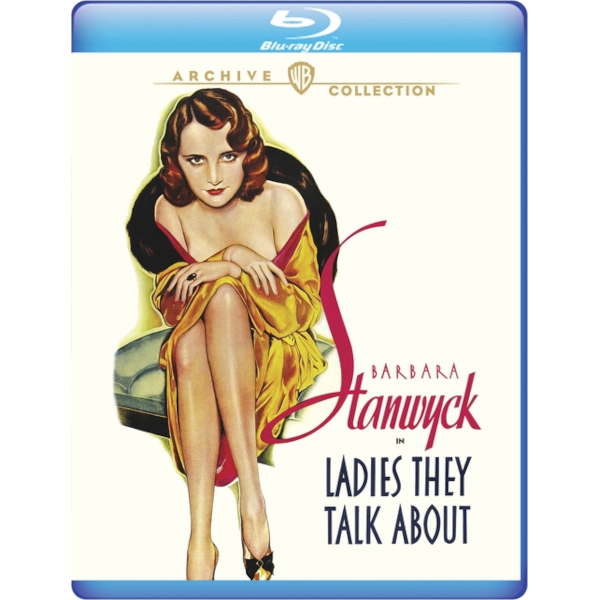
Ladies They Talk About 12/27/21

The Warner Archive Collection
Blu-ray

You can’t beat pre-Code Barbara Stanwyck, who glows as a knockout thieves’ accomplice, tough prison convict and deceitful lover of an incorruptable revivalist preacher-politician. She’s matched by the sassy, naughty Lillian Roth. In this Warner crime-tale-duel between piety and sin, darned if Stanwyck and Roth don’t make the crooked path seem cozy. There’s a girl-girl punch-out and an ill-fated prison break, but just watching Barbara ooze attitude as she saunters through the prison is worth the price of admission. Even more eye-opening is a positively lewd cartoon extra, also from the pre-Code halls of joyful infamy. With Preston Foster, Lyle Talbot, Dorothy Burgess and Ruth Donnelly. On Blu-ray from The Warner Archive Collection.
12/28/21

CineSavant Column

Monday December 27, 2021


Hello!

A nice announcement last week from restoration specialist Dave Strohmaier : his long-in-gestation filmic resurrection work on George Pal’s The Wonderful World of the Brothers Grimm is apparently complete, and about to be premiered at The Museum of Modern Art in New York. Dave says that ’22 will be the year of Grimm, and I hope he’s only talking about this long-overlooked roadshow spectacle.

Mr. Strohmaier’s long association with Pacific Theaters / Cinerama & Warners has completed, or come close to completing, HD remasters of all the Cinerama travelogues, the Cinerama format copycat productions, and soon the two MGM features filmed in the unwieldy three camera – three projector process. If Dave’s publicity text is correct an eventual Blu-ray will include a Smilebox encoding, which some viewers don’t like but I enjoy a lot. Starring Colonel Travis and Peeping Tom as those lovable Grimm Brothers!


The welcome link-nod this week comes from dependable correspondent Edward Sullivan: a steer to the National Film Board of Canada presentation Hoodoo McFiggin’s Christmas. It’s more of a storyboard picture book movie than really animated, but it has a droll appeal … a sideways take on the usual ‘be grateful for your lousy presents’ holiday moralizing.

Ed tells me that the narrator — what a precise reading he gives — is Alan Maitland. Ed also offers another Christmas-themed radio piece from the CBC narrated by Maitland: The Shepherd. It’s a non-combat tale about a military flyer. The ‘Vampire’ he talks about is the name of an early Brit jet plane.


And lastly, this isn’t at all holiday-oriented but I liked it, so there. Correspondent and frequent advisor “B” sent along this vintage poster image, with a link to a Cooper Hewitt art exhibit website on an American artist once called ‘the poster king,’ Underground Modernist: E. McKnight Kauffer. Kauffer’s approach was definitely radical at a time when most public art made Norman Rockwell look radical. One poster promoting London’s Underground is almost scary.

The radicalism is all in Kauffer’s pleasing sense of design. Although this abstract Metropolis poster got my attention, it’s the only one of the 20 examples that advertises a movie. All catch the eye and I have to admit one or two were definite head-scratchers. Thanks “B,” with twenty more years of this kind of exposure I might be able to add ‘cultured’ to my list of personal adjectives. Hey, although Kauffer likely did not write the text, one poster shouts “Death to Facism! Liberty to the People!” Gotta love that sentiment, even if it’s in support of Marshal Tito.

Thanks for reading! — Glenn Erickson

Merry Christmas !

Friday December 24, 2021


Hello, and a Merry Christmas to you . . .

Yes, we’re looking at some lazy days off here at CineSavant Central, but for fun I dug around a bit for holiday themed images. Just above is my Covid Beard, long gone now but fun to remember; it almost qualified for Santa Claus status. The tree is actually from two or three years ago, and the picture is a ZOOM composite. You don’t expect anything genuine or real around this page, I hope.

The general policy in our family is to not plaster each other’s photos on the web, which is why the cute Corgi features but not his owner. But I couldn’t resist my ‘older sister noir’ photo, a snapshot from maybe just before I was born, 1951 or so. I love the contrast of the holiday wreath with the stark shadow. B&W beauty in little saddle shoes.

Surely everyone remembers the motto, ‘If they come to your page give them something to look at, no matter what.’  In the interest of fulfilling that pledge, here’s what I came up with.

See you Tuesday, perhaps … hope yours is a safe and secure holiday — !

Glenn


Tuesday December 21, 2021

When Mr. Kastner met Ms. Black. . . still such a gem.

The Learning Tree 12/21/21

The Criterion Collection
Blu-ray

The triple-threat talent Gordon Parks gets carte blanche to film his own autobiographical novel back in his old home town — and the result is one of the better depictions of growing up black in the Midwest. Parks’ memories don’t wield a fiery political agenda, nor does he say that ‘there were good people on both sides.’  It was what it was and it wasn’t always pretty. As young Newt, Kyle Johnson ‘does the right thing’ and his experience helps explain the pervading lack of faith in justice, to put it mildly. Parks’ beautiful film remains positive, reflecting his warm memories, and his direction gives us a full ensemble of black talent at work: this is said to be the first Hollywood film produced and directed by a black man. On Blu-ray from The Criterion Collection.
12/21/21

The Ultimate Invaders from Mars 12/21/21

CineSavant Essay
From 1999
Sorry, this is not for a new disc. From 23 years ago, this was the first article that convinced me that there might be a real audience for my review page, then called DVD Savant. It’s about time that the illustrated essay was brought up to date and moved to CineSavant. It probes the ‘primitive sophistication’ and weird appeal of William Cameron Menzies’ most accomplished job of direction: the paranoid nightmare that haunted our childhood dreams. It’s slightly rewritten and has improved images. There’s so much to talk about:  Near-experimental visuals!  Strange editing choices!  The idea for the essay is the same as ever, to inspire somebody to properly remaster the show . . . it’s not like we’re going to live forever.

12/21/21

CineSavant Column

Tuesday December 21, 2021


Hello!

CineSavant will be going relatively quiet for a week or so across this year’s Holiday, so we’re getting our Horror fun out of the way now:

Here’s a Book Review for Tom Weaver’s latest fanta-opus, Sardonicus – Scripts from the Crypt #11, the book series through Bear Manor Media. This time around Weaver and his cohorts alight on a 1961 William Castle ‘shocker’ that’s maintained a certain reputation despite not performing as well as any of his previous 5 horror pix. I personally like it much better than Castle’s most successful, Homicidal. And this book review gives me an opportunity to detour into several personal tangents.

I wasn’t a horror film attendee as a tot but I was intrigued by the posters for House on Haunted Hill and The Tingler. I also remember being frustrated when my older sister got to see 13 Ghosts and then wouldn’t answer questions about the ‘ghost viewer’ she brought home . . . It must have been a family conspiracy not to warp my 8 year-old mind. The only actual Castle film I saw in a theater was the later The Night Walker, when the producer-director was fumbling several unfunny horror comedies and striking gold again with his bizarro Joan Crawford show Strait-Jacket. It didn’t matter, as all sins would be forgiven when Castle produced the superb Rosemary’s Baby, one of America’s best mainstream horror pix ever.

The center of interest is a scary makeup for the Baron, which in the film is briefly glimpsed only three or four times. The one classic sequence in the film is the graveyard scene, which benefits from Guy Rolfe’s sympathetic performance and a graphic shot of a decomposed corpse that seems very advanced for  1961 Hollywood — the darn thing made us jump back half a foot, even though Castle’s direction is merely adequate.

Why does Mr. Sardonicus remain a sticking point in my adult psyche?  I learned the lore of Castle’s Columbia horror oeuvre through Famous Monsters magazine long before I got a look at the pictures themselves. One early issue I saw at age ten printed a mug shot of Baron Sardonicus’s horror-face, an image that I found nightmarishly disturbing … that impossible rictus with more teeth than a Tyrannosaurus Rex, resting below eyes that looks relaxed, at ease. It took me years to figure out what was so psychologically unnerving about it.

Tom Weaver’s book is something of an organized collage. The backbone is Weaver’s own making-of essay chronicling the filming of the show, its publicity, its ‘Punishment Poll’ gimmick and the fallout from exhibitors and the public. Accompanying the film’s entire shooting script are chapters from other writers. Music expert David Schecter wades into Von Dexter’s soundtrack score, Laura Wagner contributes detailed career articles on actors Guy Rolfe and Audrey (swoon) Dalton, and Library of Congress archivist Rachel Del Gaudio writes up a combo- horror fan memoir and visual analysis of the film’s themes.

Weaver’s own writings give depth to a film that in many ways is not all that distinguished. Weaver has no illusions about William Castle, a director who started by emulating Alfred Hitchcock and attending to Orson Welles before settling into a minor groove at Universal and elsewhere. Castle’s hucksterism seemed derivative, even if his ‘carnival advance man’ appearances predated Hitchcock’s in-person presence in film trailers — Castle took his cue from Hitchcock’s marvelously droll bookend cameos in his TV show. It’s fun reading about Castle’s less than respected reputation in Hollywood, where crews either treated him as a pretentious pretender, or (more likely) a slippery climber. He must have been a special case to stand out from the 1,001 other obnoxious Hollywood climbers. Castle’s main writing collaborator Robb White couldn’t resist nailing his employer in an interview (from Filmfax, I think). Castle was in no way prosperous but went to great lengths to affect celebrity airs. ‘Forced’ to hitch a ride in White’s volkswagen, Castle brought along a phone receiver and cord, and pretended to be carrying on a radio-phone conversation in the car, so people would notice him at intersections and think him a bigwig. The joke is the fact that he’d try the gag in a lowly VW bug.

But back to the review. Tom Weaver offers more amusing examples of Castle’s odd methods of self-aggrandizement, along with the facts of the Sardonicus shoot. Weaver had access to a pre-production schedule but not actual production reports, so he’s careful when explaining which scenes were filmed in what order. He also must wade through every dubious publicity announcement, statement and interview quote from William Castle: the producer-director cultivated his mini-celeb persona through pure publicity flackery. Everything he said that wasn’t untrue, was an out-and-out lie. He gave out multiple stories for how shows began, who came up with what idea and how actors were hired.

Castle wasn’t psychotic, just practical: he made very cheap, un-newsworthy films, and knew that unless he hyped everything his work would be invisible. That approach worked well for several years. The cheapo pictures multiplied Columbia’s investment and gave him an excellent relationship with the front office.

Weaver adds some collected reviews and ‘script to screen changes,’ plus anecdotes and news blurbs about the director and his actors. We learn that Guy Rolfe was sickly, and that in England he had played mostly ‘handsome leading man’ parts. Audrey Dalton is still with us; she provides an introduction and does her best to recall good memories of the picture. She remembers Oscar Homolka as a big personality who gave the show a needed boost by purposely injecting some humor into his role. Why not?  Homolka got first billing, even above Ronald Lewis’s dull hero.


The best thing about Scripts from the Crypt / Sardonicus is what we learn about writer-screenwriter Ray Russell. With significant input from Russell’s children Marc and Amanda, Tom Weaver fashions an in-depth portrait. In the early 1950s Russell went from a barely-published short story writer to associate editor for Playboy magazine, all on the basis of two stories he’d submitted to Hugh Hefner after they were turned down elsewhere. Russell spent a decade in Chicago overseeing most of the text content of Hef’s magazine; he’s the one responsible for hiring fantasy-friendly writers like Ray Bradbury and George Langelaan. Russell also used Playboy to get more of his own work in print, such as the novella Sardonicus. We get the full story on Russell’s ambitions, his migration to Los Angeles courtesy of William Castle’s film, and his subsequent writing work on the two excellent Roger Corman pictures that became his most prestigious credits.

Finally, the book reprints the entire original Sardonicus novella. It is easy to see why it appealed. Russell affects a vintage writing style, making full use of antiquated formalities, that gives it a great ‘curling up with a spooky old book’ feeling. William Castle’s film has its moments but comes off as mostly flat and conventional when it needed to be stylish and mysterious. I dug up my copy of a Playboy reprint from 1964 (just above, with its color illustration). The novella seems more like a short story — it fills just 11 pages.

Scripts from the Crypt / Sardonicus also discusses the film’s bizarre makeup at length. The book is informative and its affectionate ribbing of William Castle is funny. Even with only a moderate interest in the movie, I found it to be a rewarding, valuable read, especially the Ray Russell bio.


And we hear from correspondent & advisor Gary Teetzel once more before 2021 sinks into the past … this time he’s come up with a Variety article from April, 1959 that’s an early trade paper look the increasing popularity of Kaiju Pix on American screens: Rashomon may win awards but big rubber monsters were doing booming business. The writer Dave Jampel appears to be unaware of Columbia’s Toho aquisitions, but he has good research on the little business partnership that imported and re-worked the original Godzilla and good info on some subsequent imports and retitlings — with production and licensing price tags attached.

The helpful article confirms a bit of arcane Kaiju lore: Toho indeed initially formatted its movie Daikaiju Baran (later, Varan The Unbelievable) as four half-hour TV shows, and tried to sell them to American television. That really makes sense considering that the show appears to conclude more than once. The article calls the movie “Valan” — did Jampel hear the title over a telephone?  The reporter offers some quotes from Eiji Tsuburaya; we wonder if he simply translated them from a Toho publicity sheet. In any case, the article is at this link, bearing a very Variety-speak title headline: Japanese Arters Wow Critics, But Horror Films Get Coin.

On the same Variety page we’re told that Carol Reed’s Our Man in Havana is about to shoot in Cuba, just four months after Castro’s revolution — and our film Guilds ask that all foreign-produced ‘runaway productions’ be banned because they employ communists!

Thanks for reading! Enjoy the holiday — Glenn Erickson

Saturday December 18, 2021

Still a great Holiday Movie. Howzabouta 4K remaster, Danjaq?!

The Red Shoes 4K 12/18/21

The Criterion Collection
4K Ultra HD + Blu Ray

The only sales pitch needed is “The Red Shoes has been encoded in 4K.” Michael Powell & Emeric Pressburger’s 1947 masterpiece conquered America as had no previous English film. This is one artsy dance show that captivates nearly everybody: audiences can be counted on to ooh and ahh the film’s dazzling hues, striking dance artistry and endless visual creativity. Cameraman Jack Cardiff took first position as the world master of Technicolor, and Moira Shearer’s dancing is recorded forever, celebrated as with no other ballet artist. Criterion’s 4K remaster includes all the extras of their 2010 restored Blu-ray. On 4K Ultra HD + Blu-rayfrom The Criterion Collection.
12/18/21

The Abbott and Costello Show Season 1 12/18/21

ClassicFlix
Blu-ray

ClassicFlix comes forward with an entire 26 original episodes of the comic duo’s 1952 TV show, all fully remastered by the 3-D Archive people. That’s 13 + hours of Abbott and Costello comedy, looking better than new — even the original opening logos have been restored. The repeating leads are fully attuned to A&C’s style of comedy — Sid Fields, Hillary Brooke, Joe Besser, etc.. The full set comes with numerous audio commentaries and featurettes. For A&C fans it’s a must, especially as we await the same group’s restoration of the comedians’ color kiddie show Jack and the Beanstalk. On Blu-ray from ClassicFlix.
12/18/21

CineSavant Column

Saturday December 18, 2021


Hello!

Some mighty impressive disc announcements today — just when I think the companies have exhausted the resource of desirable titles, more keep rolling in. Things once seemed to slow down after the Christmas holiday, but not this year.

The Criterion Collection has announced its March 2022 offerings, which include three vintage enticements. One of Robert Aldrich’s very best pictures, The Flight of the Phoenix will make its Region A debut with interesting extras, including the input of the Aldrich authority Alain Silver. Martin Scorsese’s concert show The Last Waltz will debut in 4K, and Jean-Pierre Melville’s crime thriller Le Cercle Rouge jumps to 4K as well. Also coming from Criterion are the newer pictures Adoption (1975) by Márta Mészáros) and Love Jones (1997) by Theodore Witcher. All for March.


Taking the prize for sheer volume is Kino Lorber and its associated labels. Toplining their January slate is a 4K Ultra-HD of United Artists’ crowd-pleaser The Great Escape. It’ll be interesting to see what 4K adds to the experience … if I close my eyes I can remember it from the screen of the Fox San Bernardino, back around 1966 or so. The same goes for Billy Wilder’s Some Like It Hot, which might undergo a quantum image jump in 4K — it was stunning on a big screen. The onslaught of notable KL Studio Classics titles continues with Alfred Hitchcock’s not-well-known Rich and Strange and a pair of pre-Code mystery thrillers, The Crime of the Century and Double Door.


Continuing with Kino, there’s Loretta Young, Alan Ladd and William Bendix in John Farrow’s China; Ray Milland and Marlene Dietrich in Mitchell Leisen’s Golden Earrings; Arthur Miller’s excellent All My Sons with Edward G. Robinson and Burt Lancaster; James Cagney and Dana Wynter in Michael Anderson’s Shake Hands with the Devil; William Holden, Susannah York and Capucine in The 7th Dawn; Michael Caine and Shirley MacLaine in Gambit (the only M. Caine movie that didn’t hold my attention, oddly); Bill Forsyth’s Breaking In and several others. Releasing through Kino, Code Red gives us a rarity (maybe with good reason): the Hugh Hefner- produced The Naked Ape the documentary (?) about the evolution of sex that features Johnny Crawford and introduced Victoria Principal. All for January.

Thanks for reading! — Glenn Erickson

Tuesday December 14, 2021

My favorite romance: earthy and direct, with a guy unaccustomed to expressing his emotions.

The Mystery of Picasso 12/14/21

Milestone / Kino Lorber
Blu-ray

Art theaters of the 1950s art theaters often featured documentary films about great painters and this may be the most significant example. Fresh from his shocker Diabolique director Henri-Georges Clouzot instigated an ingenious filmic experiment that works in surprising ways. We don’t just see Pablo Picasso paint, we see him on task through highly creative means, sketching and painting in a way that we can often watch his face at the same time. Some of it done by painting on glass, and other filming methods are more mysterious. Clouzot changes the screen format halfway through, from flat 1:37 to anamorphic CinemaScope. Milestone has combined the short feature with a number of useful extras, creating a special treat for followers of art. On Blu-ray from Milestone/Kino.
12/14/21

The Wolf of Wall Street 4K 12/14/21

Paramount Viacom CBS
4K Ultra HD + Digital

The Mean Street for this Martin Scorsese picture is Wall Street. His show pushes the hard- R rating to depict the wild life and times of a stock-selling pirate who bilks investors for millions that fuel a ten-year spree of obscene consumption, Bad Boy decadence and absurd levels of sex and drug abuse. Leonardo DiCaprio plays Jordan Belfort beautifully, surrounded by a corps of terrific players (including Margot Robbie) given clear characters by Terence Winter and superb direction by Scorsese. The surprise is that the show is not a facile take-down of the American Dream. Screaming greed is the lure and the joke’s on us. Co-starring Jonah Hill, Matthew McConaughey, Kyle Chandler, Rob Reiner, Jon Bernthal, Jon Favreau, Jean Dujardin and Joanna Lumley. The show looks fantastic on 4K Ultra- HD + Digital from Paramount Home Video.
12/14/21

The Long Goodbye 12/14/21

KL Studio Classics
Blu-ray

And it just got added to the National Film Registry!  Can Robert Altman and Leigh Brackett honestly find a place for Philip Marlowe in the laid-back 1970s?   Vilmos Zsigmond’s even more laid-back ‘pushed and pre-flashed’ cinematography made industry news by shooting in places that normally needed three times more artificial light. The characters are vivid, as portrayed by Nina Van Pallandt, Sterling Hayden, and Mark Rydell. It’s also a terrific Los Angeles film, from Marlowe’s Hollywood apartment to the Malibu Colony, and a gangster’s Sunset Blvd. tower office suite. Elliott Gould’s mellow Marlowe may be unfocused and sloppy, but he still subscribes to the old ethics, particularly where friendship and betrayal are concerned. And darn it, he cares about his pet cat. On Blu-ray from KL Studio Classics.
12/14/21