
Glenn Erickson's
Review Page and Column
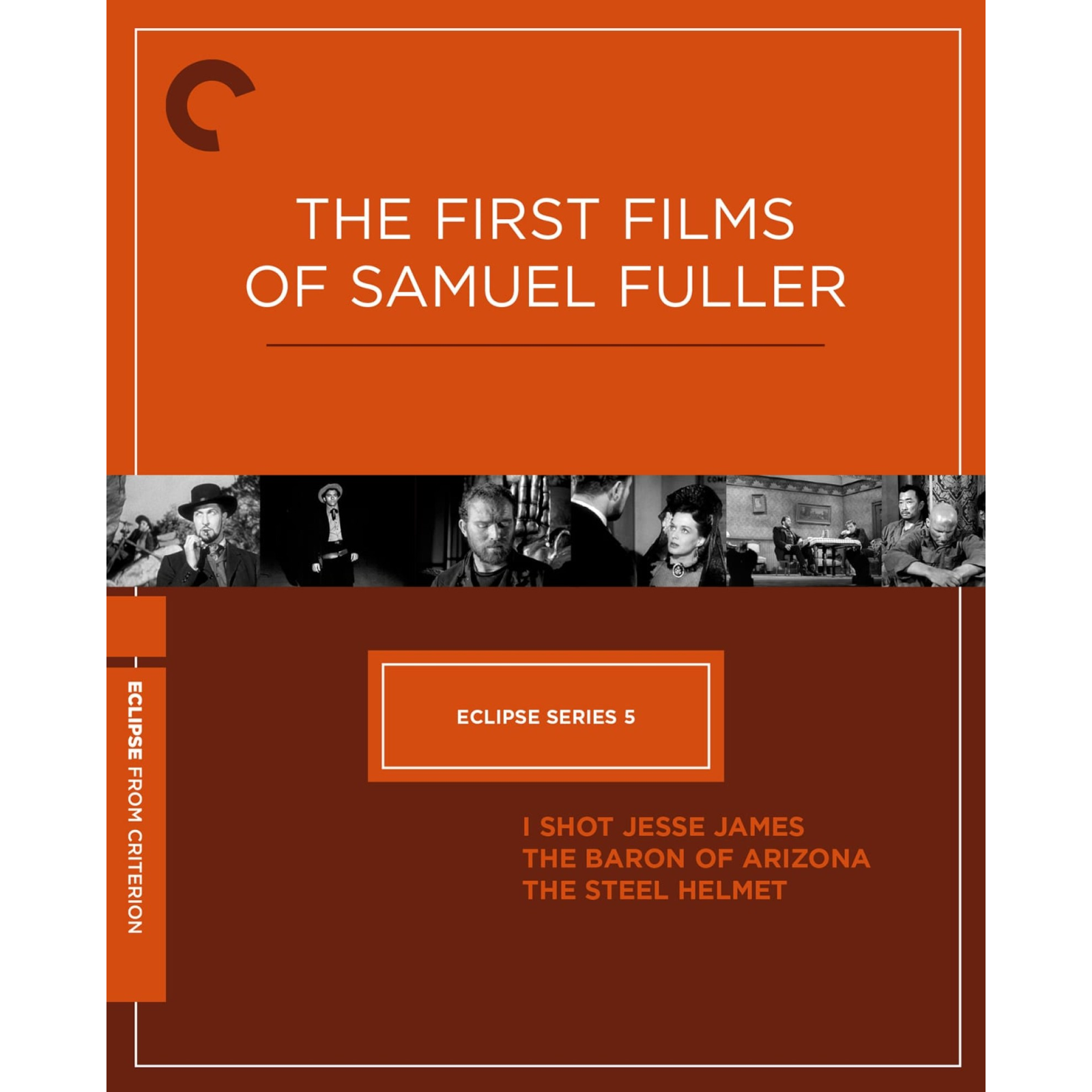
The First Films of Samuel Fuller 10/24/26
Eclipse Series 5
Blu-ray
There’s nobody like Samuel Fuller, a bolt of cinematic energy who kicked Hollywood filmmaking in exciting directions. His first three directed features are little works of art, and all too willing to confront controversial subject matter. The Steel Helmet conveys the brutality of combat, I Shot Jesse James hints at psychosexual angles, and The Baron of Arizona casts Vincent Price as a master swindler on a grand scale. The modest B&W ‘programmers’ offer good acting opportunities for John Ireland, Ellen Drew, Gene Evans and James Edwards. On Blu-ray from Eclipse / Criterion.
10/24/26

Duplicity — 4K Ultra HD 10/24/26
KL Studio Classics
4K Ultra HD + Blu-ray
This one still impresses: the subject is industrial espionage, being played for keeps by two ex-security professionals. Tony Gilroy writes and directs his update of the romantic thriller staple, in which seductive spies steal from their corporate employers, while constantly trying to trick each other. Julia Roberts and Clive Owen juggle the witty dialogue with ease, and make things suitably glamorous. Tom Wilkinson, Paul Giamatti, and Carrie Preston are in top form. On 4K Ultra HD + Blu-ray from KL Studio Classics.
10/24/26
CineSavant Column
Hello!
I was given a fine book to read on the road last week. Back in the film culture of the early ’70s, new books about movie directors appeared at Larry Edmunds almost every day. Many film students read Joseph McBride’s study of Orson Welles, eager to learn about the man’s masterpieces, and the stories behind movies compromised and sometimes mutilated by their producers. McBride’s book had a firm grip on the man’s personality. A critic whose last name began with an ‘H’ used cheap psychology to claim that Welles had willed his own films to fail, while Pauline Kael’s book was an unfounded smear declaring that Welles had stolen writing credit for Citizen Kane.
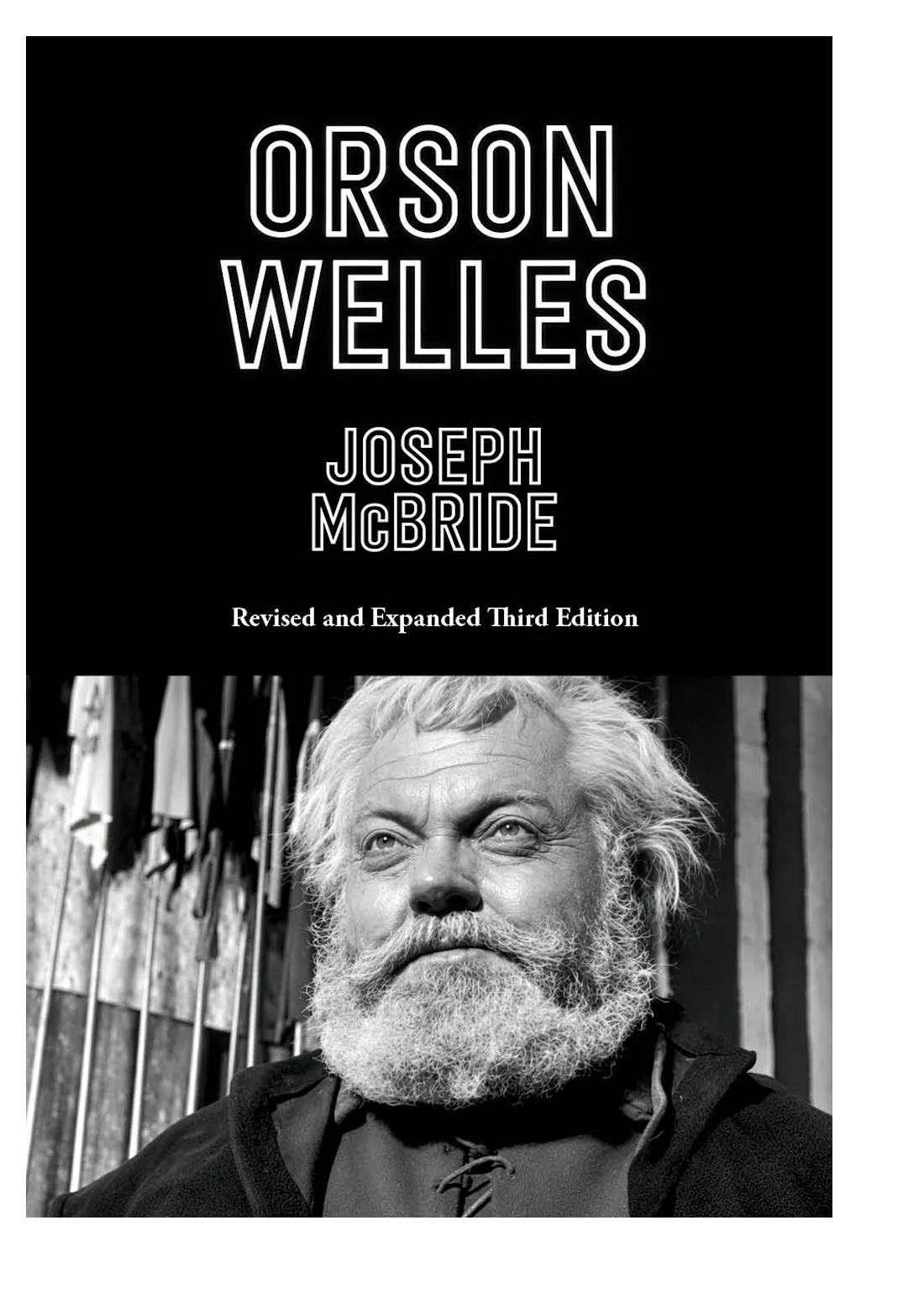
Half a century later, McBride has revisited his book, to expand upon it and alter some previous thinking on some of the movies: Orson Welles – Revised and Expanded Third Edition. Some of these revelations came about because of restorations that brought pictures closer to Welles’ original intentions. Several of Welles’ movies have been found in multiple versions, and/or remastered at a level of quality not available when McBride’s first book appeared in 1972. McBride has reversed his opinion of Welles’ Macbeth, which he had only seen in Republic Pictures’ re-cut version.
Decades of research enabled McBride to reassess Welles from a better-informed viewpoint. The book is a film-centric biography, yet it doesn’t try to explain Welles in knee-jerk ‘Rosebud’ terms. McBride interviewed Welles many times but also worked with him at length, gaining a personal take on the man’s contradictory ways. Other biographers theorized that Welles’ behavior sabotaged his career, whereas McBride argues for a verdict of not guilty. Real artistic crimes were inflicted on so many of his pictures, starting with The Magnificent Ambersons. Being a provocateur by nature surely didn’t help. The furor over Citizen Kane and William Randolph Hearst was the main obstruction to his career, and kicked off near- continuous attacks in the press.
The book also addresses the cause of Welles’ graylisting. Hollywoodites sensitive to liberal causes could find their names on lists even if they were not politically active. To conservative politicians, being pro-labor made one a radical. McBride chronicles Welles’ aborted Brazilian ‘good neighbor’ film from a fresh angle. To the ire of RKO and the Brazilian authorities, Welles insisted on filming an episode about fishermen in a heated labor dispute. Even worse, the fishermen were non-white. Letters and telegrams show the flagrant racism involved. The powers that be expected a musical valentine to Rio, a la Walt Disney’s attractive, non-controversial animated work.

McBride’s criticism explores psychology only to show the complexity of the man. He traces the theme of Welles’ father’s suicide through his work, showing good connections without claiming to have found the director’s personal Rosebud. We do get the idea that Welles’ all-consuming love for moviemaking became a stumbling block, when he expected artistic fervor to overcome commercial reality. Welles himself stated many times that, had he stuck with his theatrical career, he wouldn’t have found himself scrambling for money, or living in a house loaned to him by Peter Bogdanovich.
The book does not aim to be comprehensive on Welles’ theater and radio work prior to his big break with RKO and Kane, yet quite a bit of his school-age creativity is covered. We do see how important cohorts such as John Houseman figured in his work. McBride doesn’t moan the tragedy of Magnificent Ambersons as much as he focuses on the actual events that led to its butchery.
It was totally completed … if they wanted to cut it down, all they had to do was retain an uncut original for future reference.
The text doesn’t exactly blame editor Robert Wise for the cinematic crime against Ambersons. But it does show that Wise presided over the hasty re-edit, jettisoning most of the film’s third act in favor of a different, truncated finale. This unfortunately plays into my (not particularly defensible) view of Wise as a cagey careerist. He became a director by taking over a Val Lewton film already mostly shot by Gunther Fritsch; he later helped Walter Mirisch ‘manage’ new director Jerome Robbins before taking over and receiving most of the credit for West Side Story.
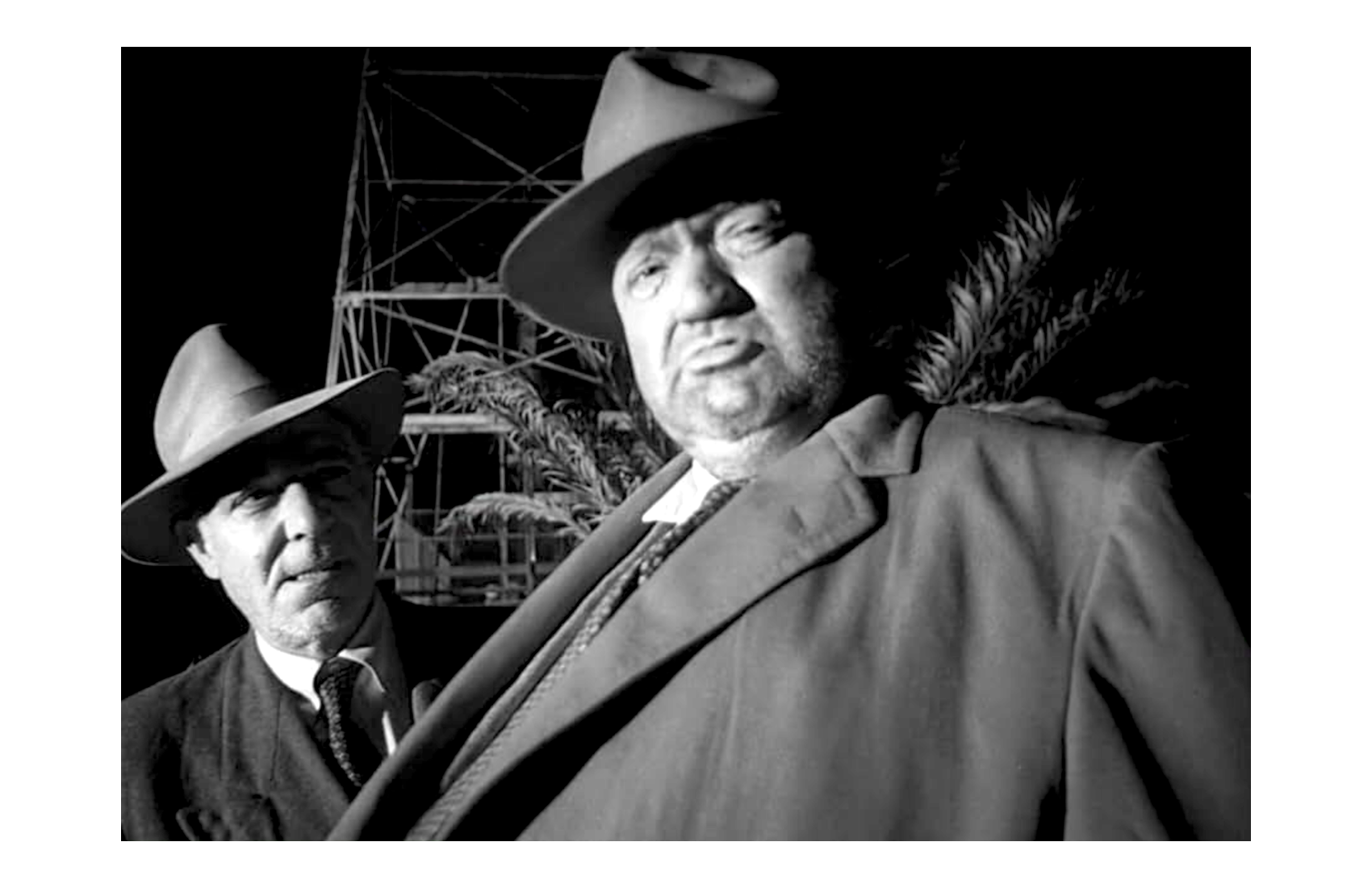
We get detailed making-of accounts of Welles’ Othello, Journey into Fear and Mr. Arkadin, with refreshingly honest appraisals of their strong points and failings. Mr. McBride thinks that Orson Welles sometimes miscast himself in his later movies, with the exception of Chimes at Midnight, which in his view stands with Kane and Touch of Evil as genuine masterpieces.
The criticism also defends Welles as a genuine ‘auteur’: most everything he attempted was highly personal in nature. An exception might be his postwar thriller The Stranger. McBride calls it the director’s one attempt at a commercial product without bigger ambitions, and has plenty of negative things to say about the script, the inconsistent characters, and Welles’ own performance. When it comes to giving credit where due, actor Charlton Heston is revealed as the booster and defender of Welles throughout the troubled Touch of Evil. Five years later, Heston extended that same loyalty to an unfortunately less grateful director, Sam Peckinpah.
McBride cites other biographers that made breakthroughs and pegs talent that helped or influenced Welles along the way. He also identifies companies involved with the restorations of Welles’ work on film and home video. Criterion figures in this frequently, but Joe also pauses to mention some key research by Bret Wood on The Stranger.
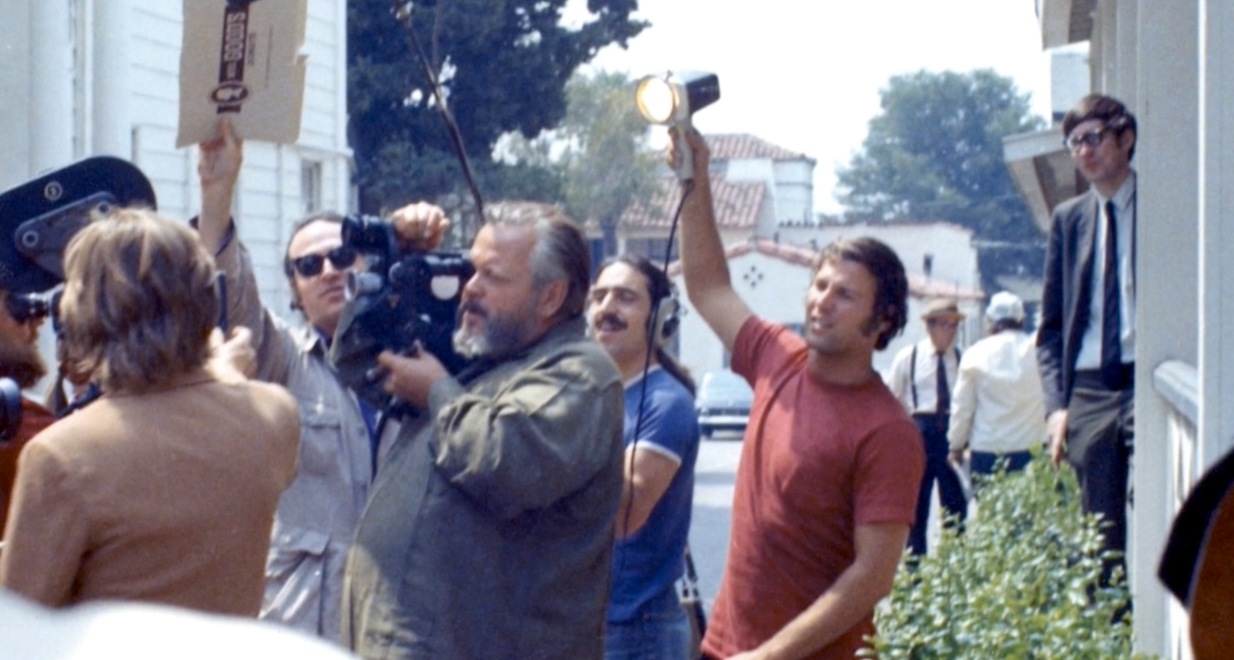
Author McBride has another rare quality: he maintains a reasonable objectivity when writing about his own work with Orson Welles. A big part of the new book is given over to a Welles picture made after the first book was published, The Other Side of the Wind. It was begun in 1970 as a piecemeal production, forever in search of financial backing, by Welles, Oja Kodar, cameraman Gary Graver and a long list of actor-contributors. McBride was invited into the project and played an on-screen role. Most of the film had been shot when it encountered the kinds of tangles that had wrecked Welles’ never-completed Don Quixote project.
Skipping ahead 47 years … When The Other Side of the Wind finally premiered via Netflix in 2018, many of its actors and contributors had already died. Star John Huston passed away in 1985, Susan Strasberg in 1999, Norman Foster in 1976, Lilli Palmer in 1986, Edmond O’Brien in 1985, Cameron Mitchell in 2004, Paul Stewart in 1986, John Carroll in 1972, Stafford Repp in 1974. It’s more than a little strange, watching a movie starring so many ghosts returned from the dead. Art director Polly Platt died in 2011. Welles most faithful collaborator Gary Graver died in 2006, having never seen his work in a final form.
The book covers the genesis, production and the years of rights disputes on The Other Side of the Wind. He sets the story down as straight as he can. We’re not sure how McBride does it, but he avoids making his account All About Him. He does share sharp opinions about some well-known personalities. I’ve digitally dog-eared page 428 for McBride’s two-paragraph capsule on John Milius. A character in The Other Side of the Wind was based on Milius’ public persona.
Our spirits are lifted when the book dismisses Spaniard Jésus Franco as an exploitation hack who made a mess of Don Quixote. And when McBride gets around to directly assessing Welles’ work as an actor, the segment begins with the words, “Let’s start with the nose.” It is a fair and insightful opinion-essay about Welles’ on-screen efforts through the decades.
McBride rightly lauds Welles’ performance as Clarence Darrow in Compulsion, but does not address Richard Fleischer’s account of Orson’s behavior on that show. The same goes for Welles’ purported abuse of the independent director Harry Kümel, who only wanted a chance to work together in harmony. Was Welles chronically abusive or unprofessional? I can’t judge, I wasn’t there.
Joseph McBride has written with authority about numerous directors that piqued his interest. He’s been especially insightful on all things John Ford, but Orson Welles is of course an even more personal subject. McBride’s book gives us a new appreciation of Welles, and new ways of looking at films we thought we already knew well. The great director remains something of an unmanageable genius, but we feel we know him and his movies much better.
Publisher Sticking Place Books has a sales page for Orson Welles – Revised and Expanded Third Edition. I also found sales pages at Barnes and Noble and Amazon.
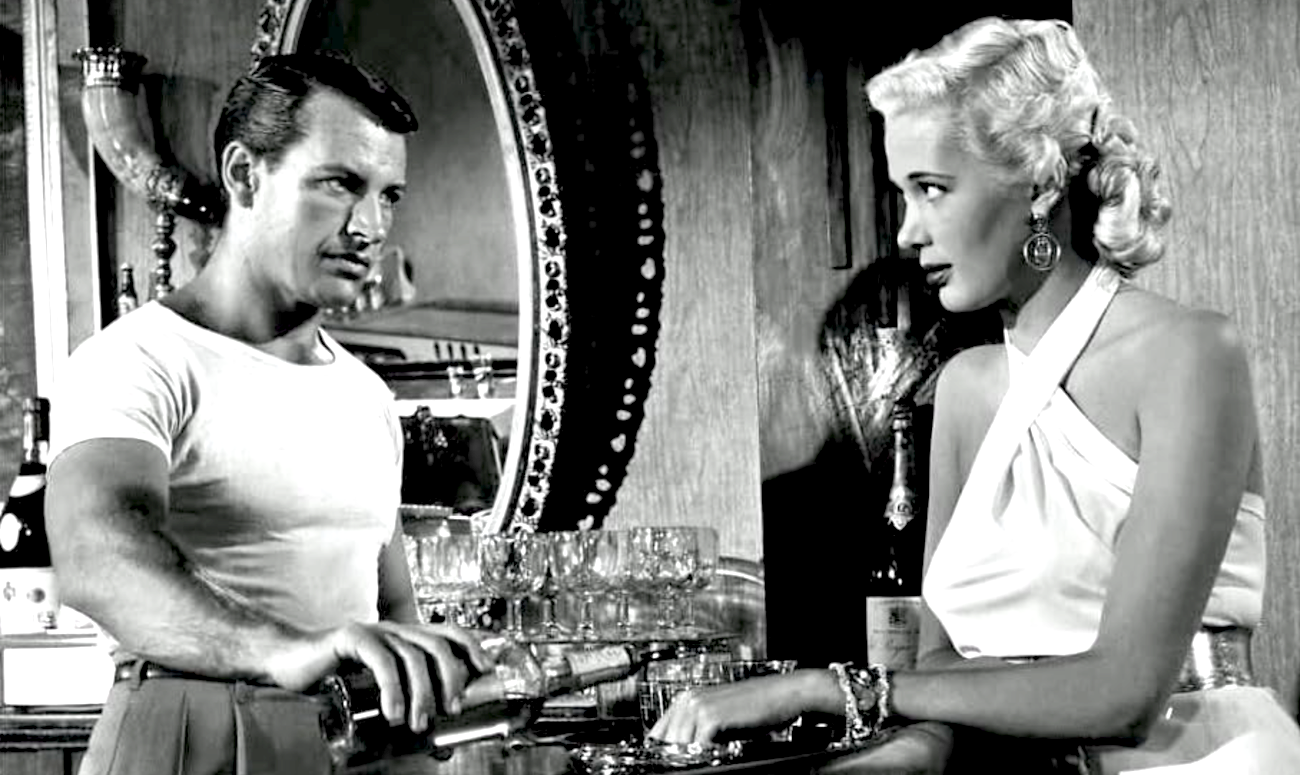
Here’s something to avoid — it’s technically a Disc Review. I was eager to receive a new DVD of the eccentric 1953 ‘domestic noir’ feature Wicked Woman, with Richard Egan and Beverly Michaels. It was a real kick on Eddie Muller’s TCM show Noir Alley, and it was one of the more uproarious Noir City screenings I attended at the Egyptian, years ago. The United Artists release captures the sordid ‘n’ sleazy vibe of cheap pulp fiction about adulterous lowlifes. Nobody forgets the lurid presence of Beverly Michaels, as the beautiful but morally inert drifter who tries to pry saloon owner Egan from his wife. The scenes with her slimy rooming house neighbor Percy Helton are priceless.
There is no legit Blu-ray of this one that I know of, which is a shame, as the movie is so entertaining. My uninformed guess is that there must be some kind of rights roadblock … ?
I had planned to point out how much fun Michaels could be in her Hugo Haas pictures; she also gives a socko finish to MGM’s very good star-laden drama East Side West Side.
But this ‘Shadowplay Enterprises’ DVD is not recommended. It’s the kind of sub-sub-par encoding one would expect to see on an old bargain bin VHS. The image is a mess; it might be a ragged conversion from PAL. It’s not good. I’m only writing this quick coverage because the disc comes from a distributor that asks that I review everything I solicit. Here’s hoping some company gives us a quality release sooner than later.
Thanks for reading! — Glenn Erickson

Skyscraper Souls 10/20/26
The Warner Archive Collection
Blu-ray
Pre-code delirium hits a sordid low (high?) in Edgar Selwyn’s saga of financial conflict and sexual predation in a futuristic super-skyscraper run buy an incredibly devious scoundrel … who else but star Warren William? He double-crosses his partners, manipulating stock to steal money and power. His philandering reaches a new high, as he prepares to ditch one loyal mistress (Verree Teasdale) with a replacement, Maureen O’Sullivan. But even William can’t keep his crimes in balance. MGM’s fine production, newly restored, also delivers an unexpected anti-capitalist message. On Blu-ray from The Warner Archive Collection.
10/20/26

Dear Heart 10/20/26
The Warner Archive Collection
Blu-ray
A square romance that needs rediscovery: Glenn Ford and Geraldine Page are the most endearing couple of the 1960s — ordinary decent people looking for the right mate in the confusion of big city relationships. She’s a postmaster attending a convention. He’s getting ready to marry Angela Lansbury, who somehow survived being shot in the head by Laurence Harvey. Tad Mosel’s funny screenplay takes time out to embrace the problems of a kind soul with an open heart but sensitive feelings. Page is terrific. Theme song by Henry Mancini. On Blu-ray from The Warner Archive Collection.
10/20/2026
CineSavant Column

Hello!
Yes, we’re late but we’ve got good reviews. An updated graphics program slowed me down (and I’m still not working it right). We may have some Halloween fun after all, even with a couple of key releases being delayed. I even found a fantasy thriller set that Charlie Largent wants to review.
First up is a big surprise from the Criterion people, on my return from back East … I never dreamed they’d send along their lavish The Complete Kubrick box …. it is indeed mind-blowing.
It’s the man’s entire filmography in 4K (and Blu) in a massive red brick box. A finely crafted disc-holder album is stocked with interesting items. I’ll be giving it a full review shortly.

And I was in a different place … and I brought home photo proof ….
In Washington D.C., my son took me to a site he figured was a must-see for old ‘DVD Savant’… and snuck it up on me. The funny thing was that I wouldn’t have recognized the location with out being tipped off, even though this one is a thousand times more famous than the Paris morgue seen in Eyes Without a Face.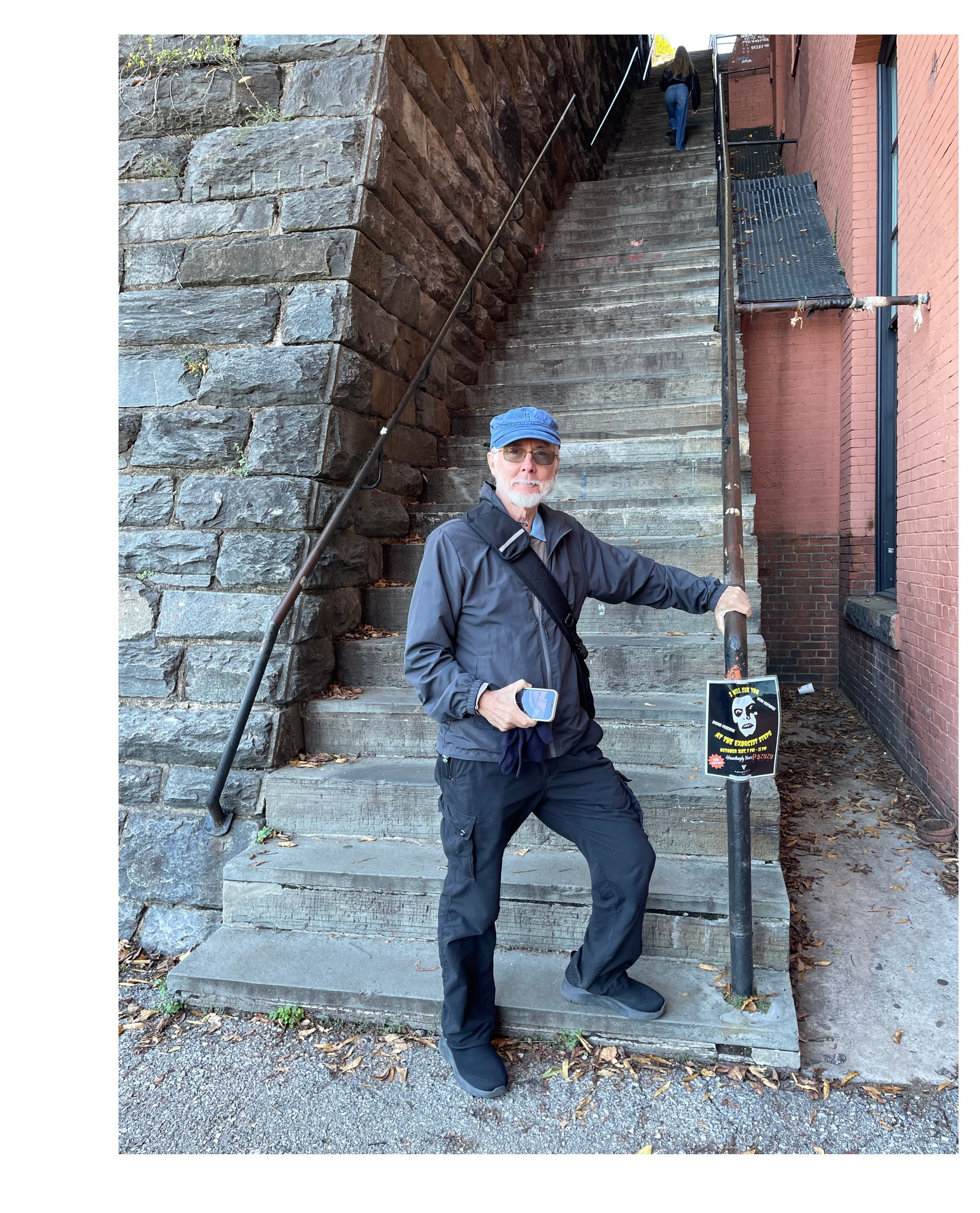
Yep, I can now say that I’ve personally visited the locale for the Devil’s losing battle against Father Damien … those steps are pretty steep. I’ve mellowed a bit in my grudge against Friedkin’s movie, but I still like what I wrote about it way back in 2010, when advisor Gary Teetzel challenged me to stop griping and air my complaints. It was a good exercise — you know, reviewers are supposed to be able to defend their incoherent ravings considered opinions.
My takeaway — those steps are steep and hard, and on that morning, COLD. They might only ding the Devil up a bit, but I’d be a goner for sure.
Thanks for reading! — Glenn Erickson

Operation Kid Brother 10/17/26
Explosive Media / Plaion
Blu-ray
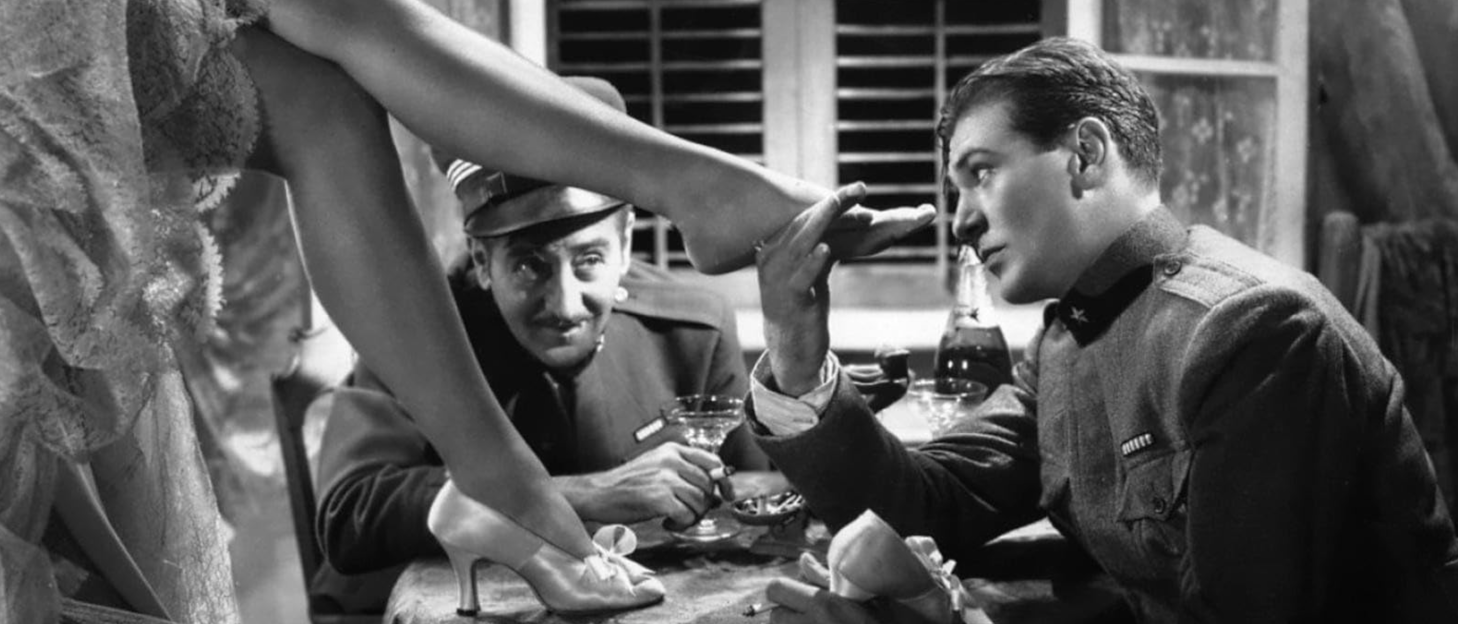
At the ragged end of the SuperSpy craze came this ingenious Italo 007 wannabe, so desperate for a James Bond connection that it recruited Sean Connery’s brother Neil … whose character is supposed to be the brother of the world’s most fabulous spy. Actors from the official 007 series — Daniela Bianchi, Adolfo Celi — can’t compensate for non-actor Neil Connery. The locations roam from the French Riviera to North Africa, but but we’re fans of the Ennio Morricone / Bruno Nicolai music score, which seems to know that the movie’s no good. So why have so many 007 fans wanted to see it for so long? This German import gives us three separate language versions. “Oh-Kay, Connery!” On Blu-ray from Explosive Media / Plaion.
10/17/26
13 Washington Square 10/17/26
KL Studio Classics
Blu-ray
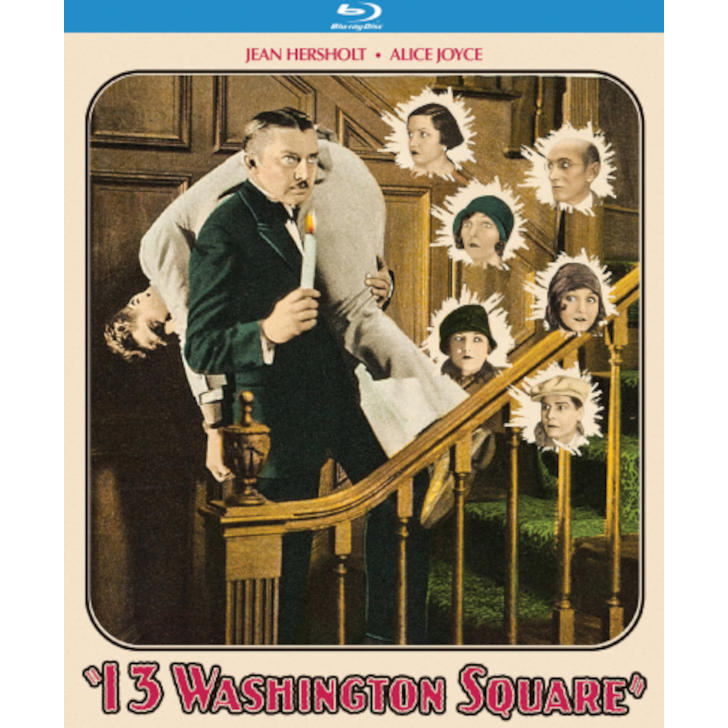
The double standard strikes again. Reviewer Denise Morrison takes on this late-era silent, a frisky comedy of manners circling around an elopement across class lines. Count on a meddling mother, her goofy maid and the involvement of a clever thief to complicate the romantic confusion. Stars Alice Joyce, Jean Hersholt and Zasu Pitts guarantee the entertainment quotient. On Blu-ray from KL Studio Classics.
10/17/26
CineSavant Column

Hello!
Here’s something nice that dropped into my in-box today, an interesting come-on for a German magazine, available in English, that digs into Euro-crime pictures in a very serious way, with full-on academic research.
American-International’s 1970 shocker Scream and Scream Again was released with the title Die lebenden Leichen des Dr. Mabuse: ‘The Living Corpses of Dr. Mabuse.’
An article in a new issue claims that the Dr. Mabuse connection is actually appropriate — scriptwriter Laslo Fodor of the CCC Dr. Mabuse series penned an unproduced screenplay in 1966, intended for Robert Siodmak. Das Horrorkabinett des Dr. Mabuse is the missing link that explains everything.
The magazine is Krimi! The Magazine for European Crime Cinema Culture, published by Boris Brosowski, who wrote to say,
“Based on that, we were able to establish the link between Bryan Edgar Wallace (who participated in the Dr. Mabuse series) and Stephen D. Frances, the author of the book The Disorientated Man. In short, putting the Dr. Mabuse title on Scream and Scream Again was no mere marketing stunt, but indeed a necessity, as the movie was, in fact, a Dr. Mabuse movie. Even more so, the main story was lined out by Fritz Lang himself, reaching back to the Replicants of Metropolis.”
That claim would certainly explain a lot. It’s sufficiently intriguing to offer a link to Mr. Brosowski’s sales page for his magazine:
The Magazine for European Crime Cinema Culture
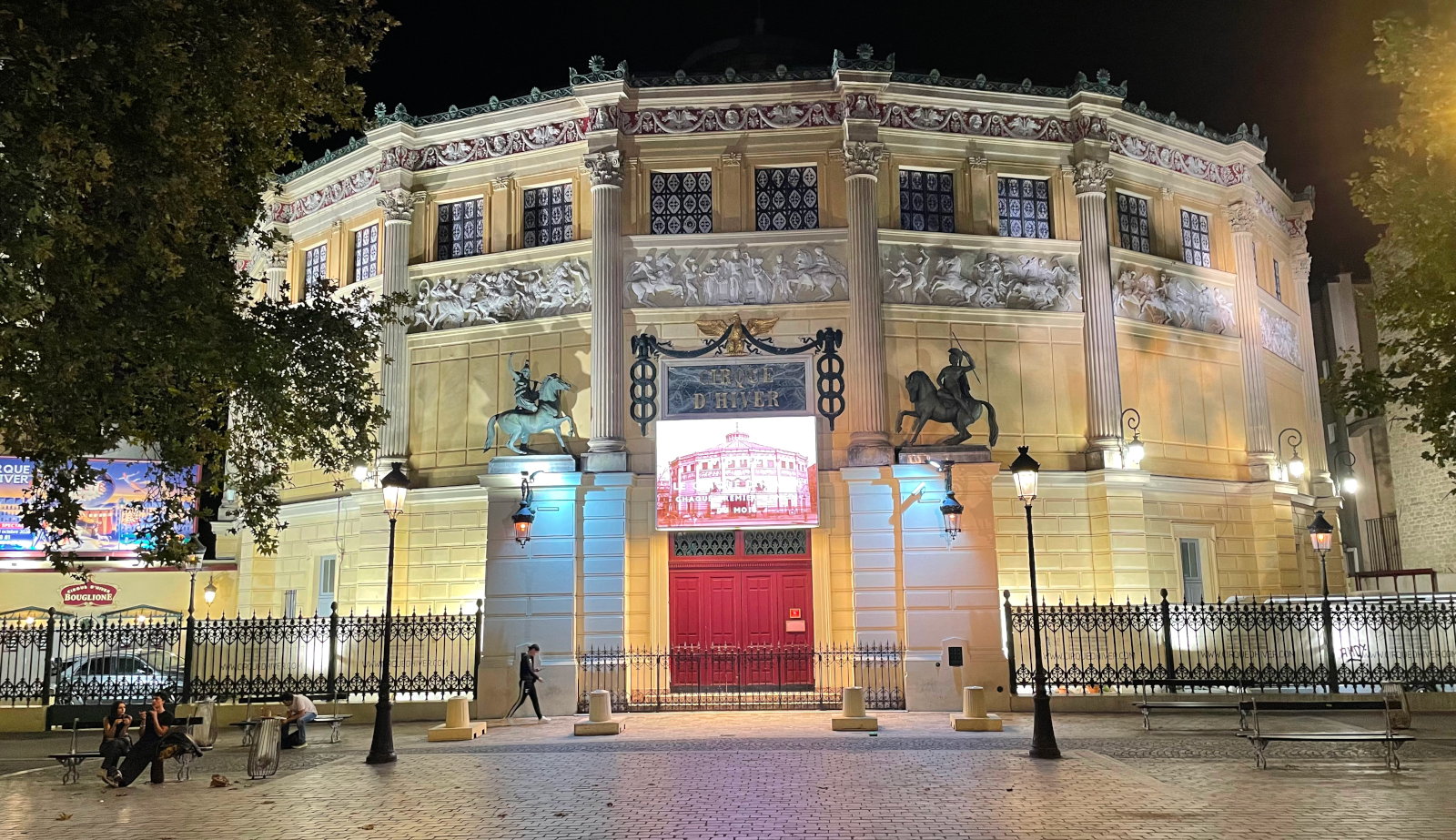
The real-life Paris movie location that we billboarded on October 10 prompted some positive responses, so naturally we’re trying it again, this time with a movie that isn’t horror.
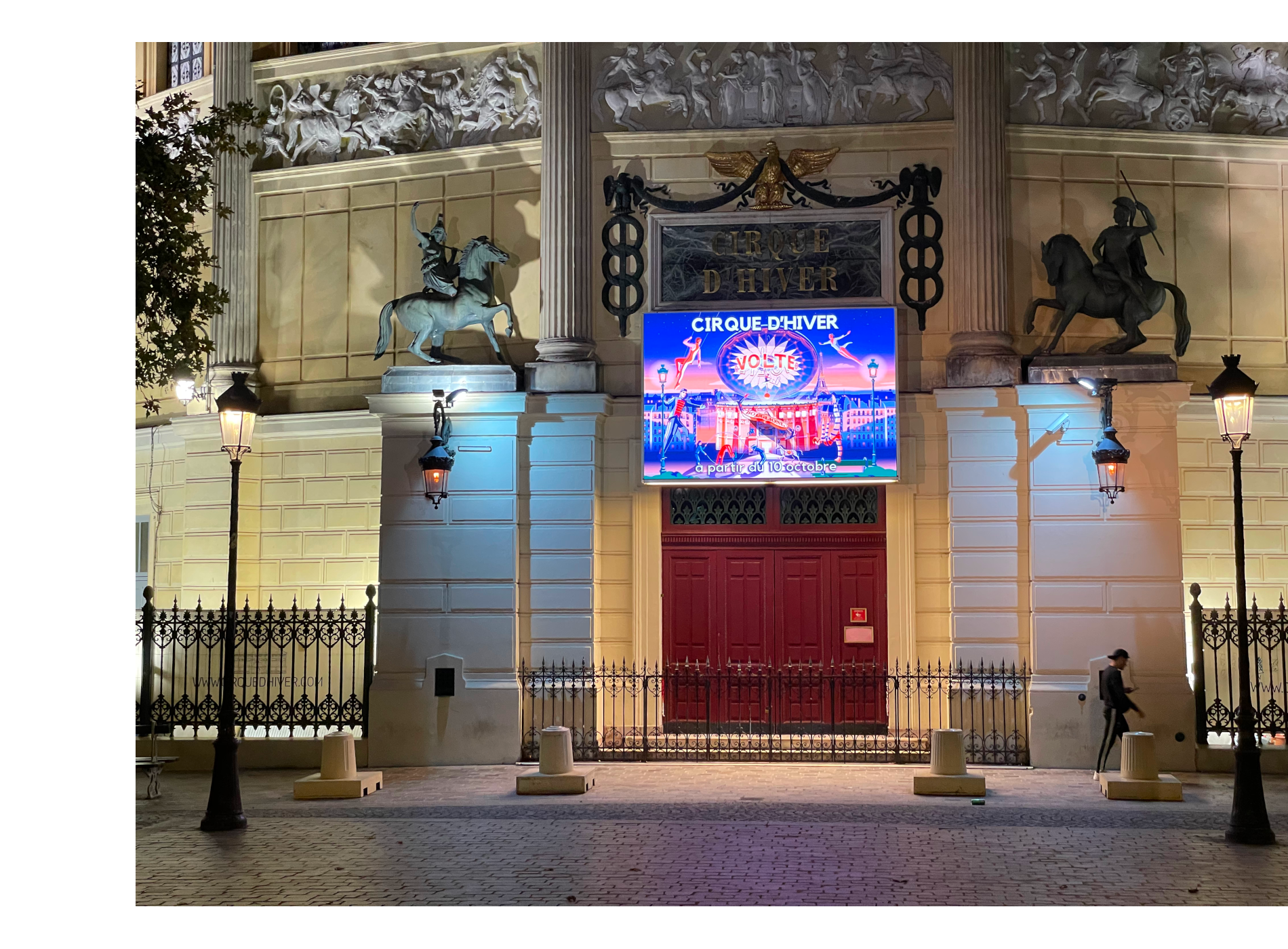
Readers that know the city better may not be impressed, but we were. Walking in the Marais after dinner, down an ordinary boulevard, suddenly on our left was a building that we knew very well. And there was no mystery about it … there and ready to open for business soon was the Cirque D’Hiver, a large round edifice with a distinctive look.
The building is grand in every respect … enlarging the photos reveals more beauty.
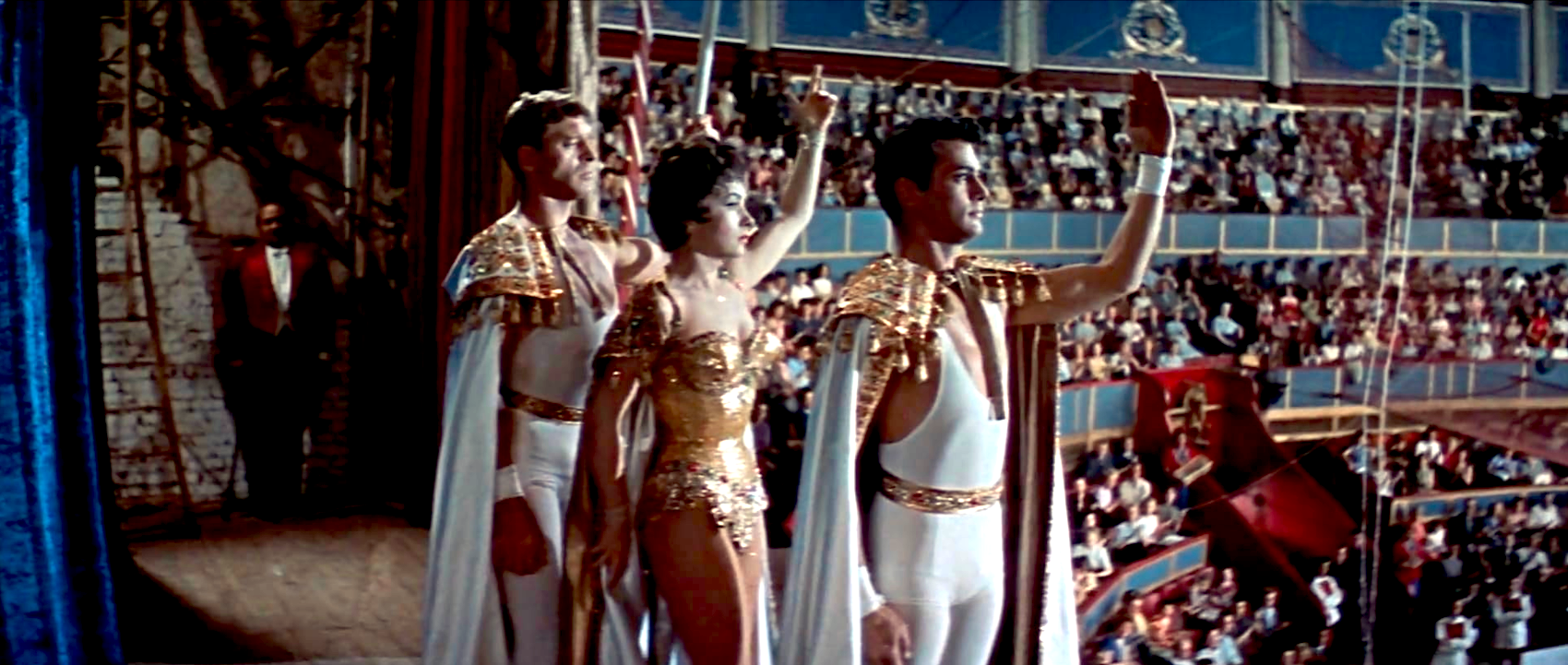
We know it from umpteen screenings of Trapeze, United Artists’ big-budget 1956 circus movie by Carol Reed, starring Burt Lancaster, Tony Curtis & Gina Lolobrigida. It’s in CinemaScope and color and is quite good. I had no idea that it used an actual circus building. I supoose that after touring Europe, the circus returned to Paris and played the winter months in more comfort, at the home headquarters.
This is clearly no big news to the multitudes … but yes, I guess we’re easily impressed when things so familiar are suddenly, unexpectedly, right in front of our eyes.
Thanks for reading! — Glenn Erickson
The First Deadly Sin 10/13/26
Vinegar Syndrome
Blu-ray
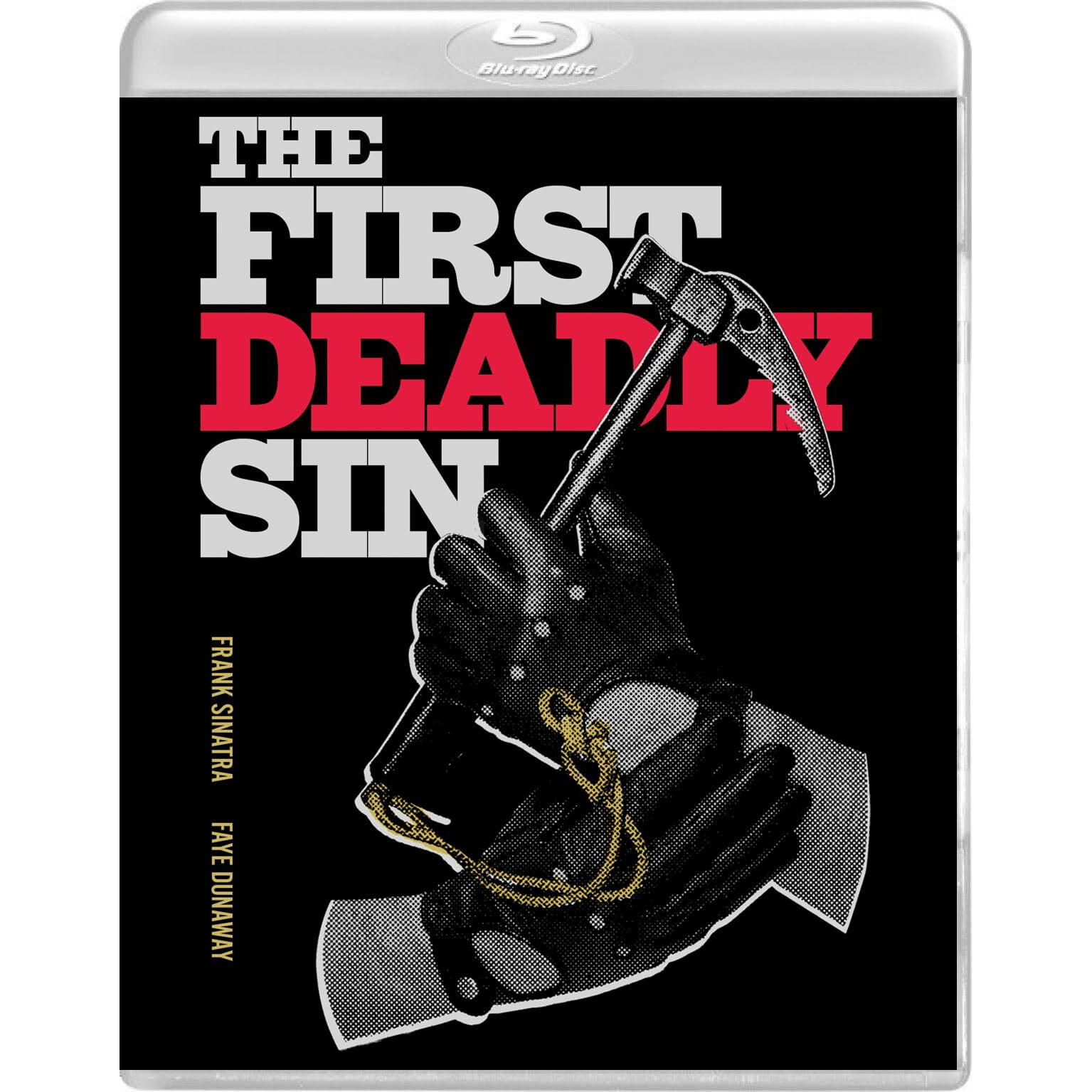
Frank Sinatra’s final starring performance in a feature is an interesting, low-key tale of a retirement-age detective hunting a serial killer while dealing with a sobering personal problem, the failing health of his wife. Faye Dunaway plays her decidedly unglamorous role in a hospital bed. Focusing on an odd murder weapon, Sinatra seems intrigued by the character. His detective starts breaking serious rules, aiming to nab his man while he still has a badge. The offbeat, quiet thriller plays out on dark New York streets. On Blu-ray from Vinegar Syndrome.
10/13/26
The Lost Patrol 10/13/26
The Warner Archive Collection
Blu-ray
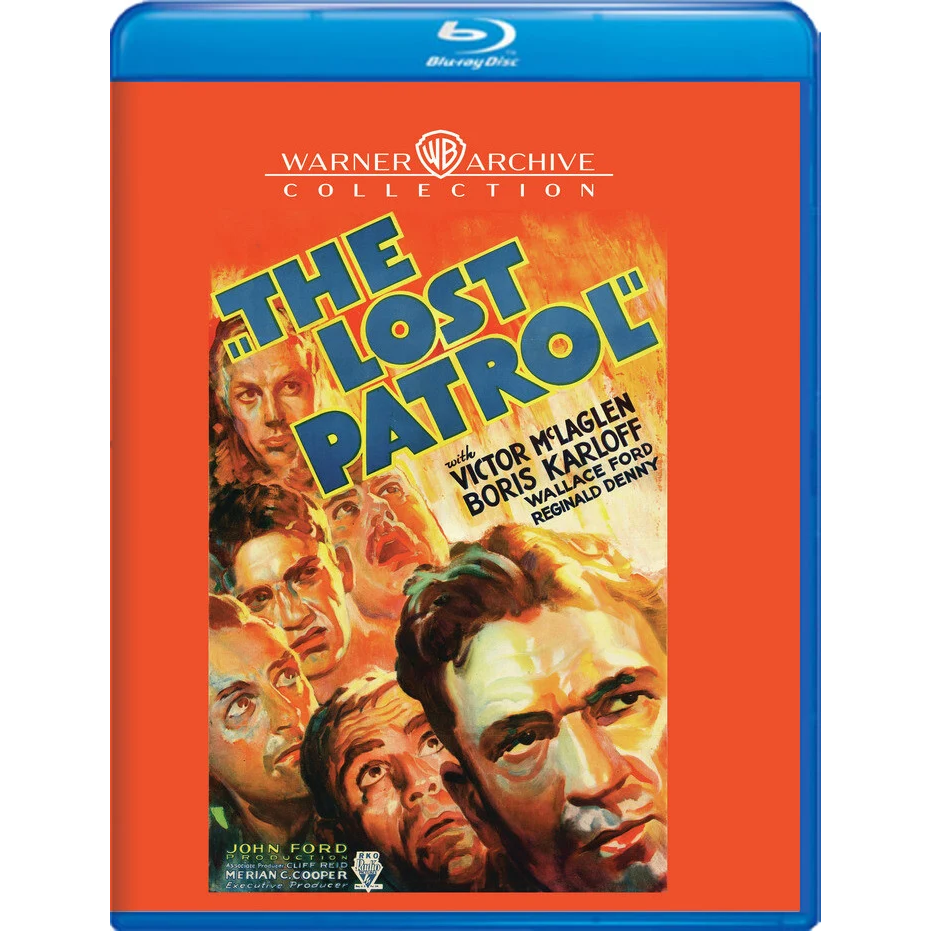
No women here, just a gritty, doom-laden ordeal in the desert. John Ford took Victor McLaglen and Boris Karloff to Yuma, Arizona for what in 1934 was a nail-biting meat grinder of suspense: lost in the sands of Iraq, British riflemen are cut down by unseen Arab enemies, one by one. All hold out as best they can; Karloff’s highly-strung trooper goes mad with fear and desperation. The new restoration really brings this one back to life, with audio that showcases Max Steiner’s music score. On Blu-ray from The Warner Archive Collection.
10/13/26
CineSavant Column
Hello!
We only infrequently get to review Warner Archive discs before street date, but their distributors Allied Vaughn are good at early announcements of upcoming product. Thus we are properly stoked for the upcoming titles The Hill, Phantom of the Rue Morgue in 3-D, and Ryan’s Daughter, The Man Who Would be King and The Music Man all in 4K.
George Feltenstein wasn’t kidding when he said this year would have an impressive rollout of library classics.
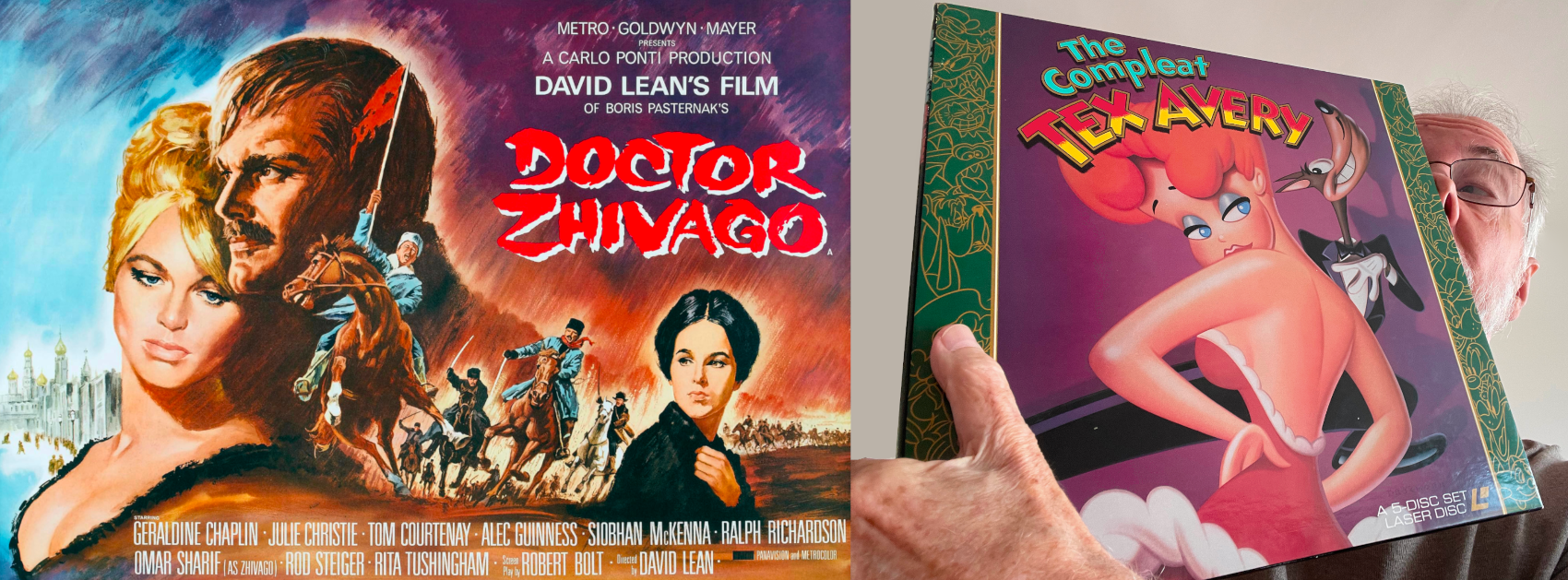
So we’re not surprised to hear of two more desirable announcements: Doctor Zhivago in 4K, and a Blu-ray set called Tex Avery Screwball Classics Collection. The David Lean epic is a natural title. The Tex Avery box might confuse buyers that picked up the WAC’s previous Tex Avery releases, three Blu-rays of remastered cartoons starting with Volume 1 in 2018.
This first announcement doesn’t have details, but being that the upcoming Tex Avery Collection is listed as 4 discs, I’m thinking that it may have additional cartoons and other extras, making it a Blu-ray box equivalent of the old ‘The Compleat Tex Avery’ laserdisc set from the middle 1990s. I’ve proudly kept my copy for its glorious cover artwork, even though I no longer have a working laserdisc player. Thirty-plus years is enough time for the experts to locate and remaster even more rare items.
Let’s hope that the going-forward mega-studio ‘Skydance’ will keep The Warner Archive Collection active, along with hard media disc releases of great movies and TV shows.

And here’s a more selfish item … I’m supposed to be reporting anything that may not be working in the CineSavant reviews hosted at the newly-refurbished Trailers From Hell page. I like the new look, and the website engineers have done a great job bringing my review details, even without being asked.
But I am asking for a little help, if readers see something questionable. I initially came across some old reviews that got mixed up a bit in the translation, but of course I didn’t write down their URLs.
I’m grateful for the page’s correspondents, many that have written in for years. It’s helpful when they point out my errors, especially when my brain fails and I write in the wrong name, or say that a movie was released in the year 2945. I have tried to prioritize proofreading lately, honest.
If you come across some old review that has a big reformatting problem, please let me know. Don’t bother to report reviews from the old DVD Savant Page — pre- September 2015. I’m discovering that Trailers from Hell’s website engineers can solve all kinds of formatting problems with generalized updates.
Thanks!
Coup de torchon 10/10/26
The Criterion Collection
Blu-ray
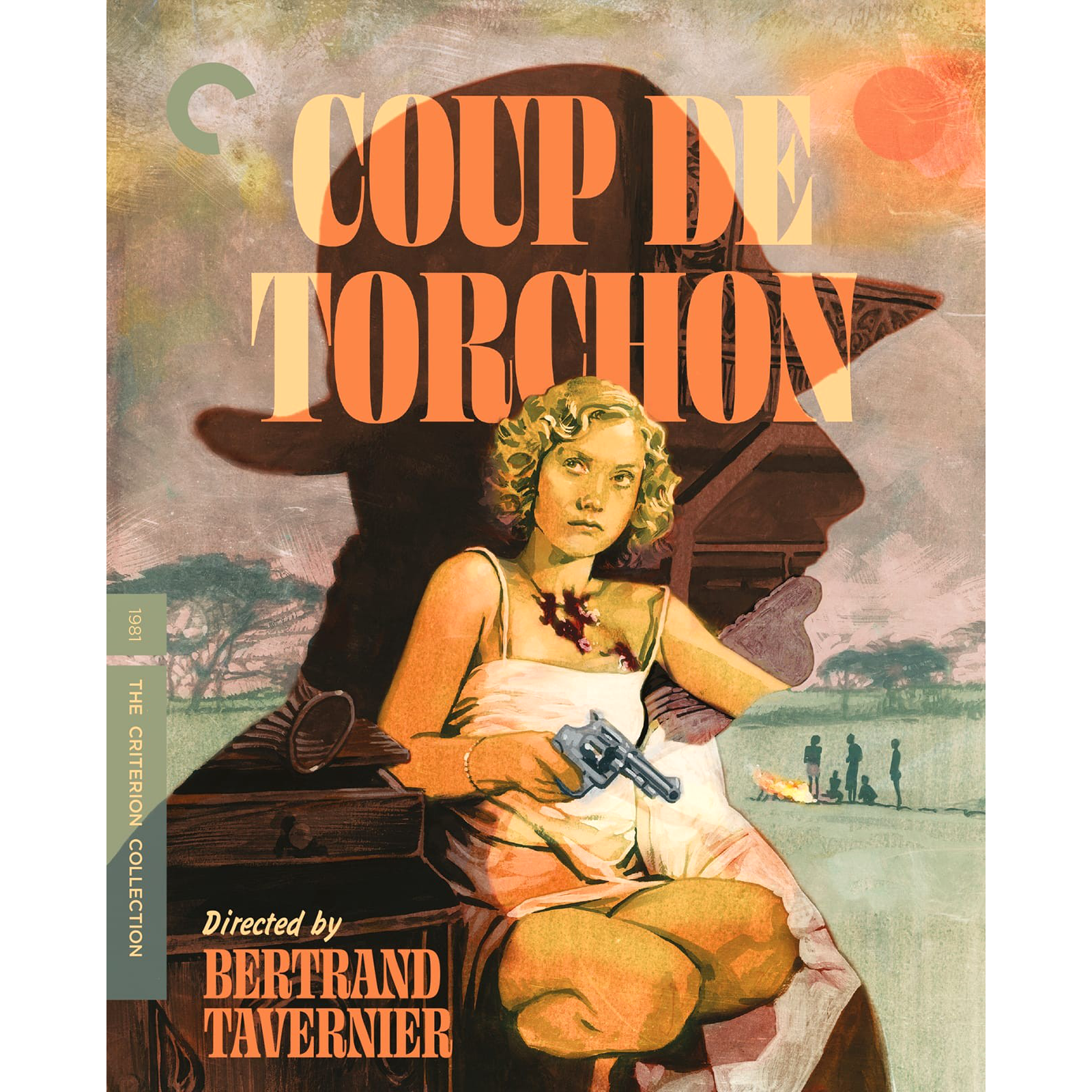
French director Bertrand Tavernier relocates Texan Jim Thompson’s acid-pulp thriller “Pop. 1280” to French colonial Africa just before WW2. Philippe Noiret embodies one of the coldest killers ever to stain a movie screen, a lawman who is also a functioning madman — and has a rational argument for every one of his murders. Isabelle Huppert, Jean-Pierre Marielle, Stéphane Audran and Eddy Mitchell are the equally cynical colonials, in a situation dripping with racist degeneracy. It’s tense entertainment, without the guardrails of mainstream American prudery. On Blu-ray from The Criterion Collection.
10/10/26
Sergeant Rutledge 10/10/26
The Warner Archive Collection
Blu-ray
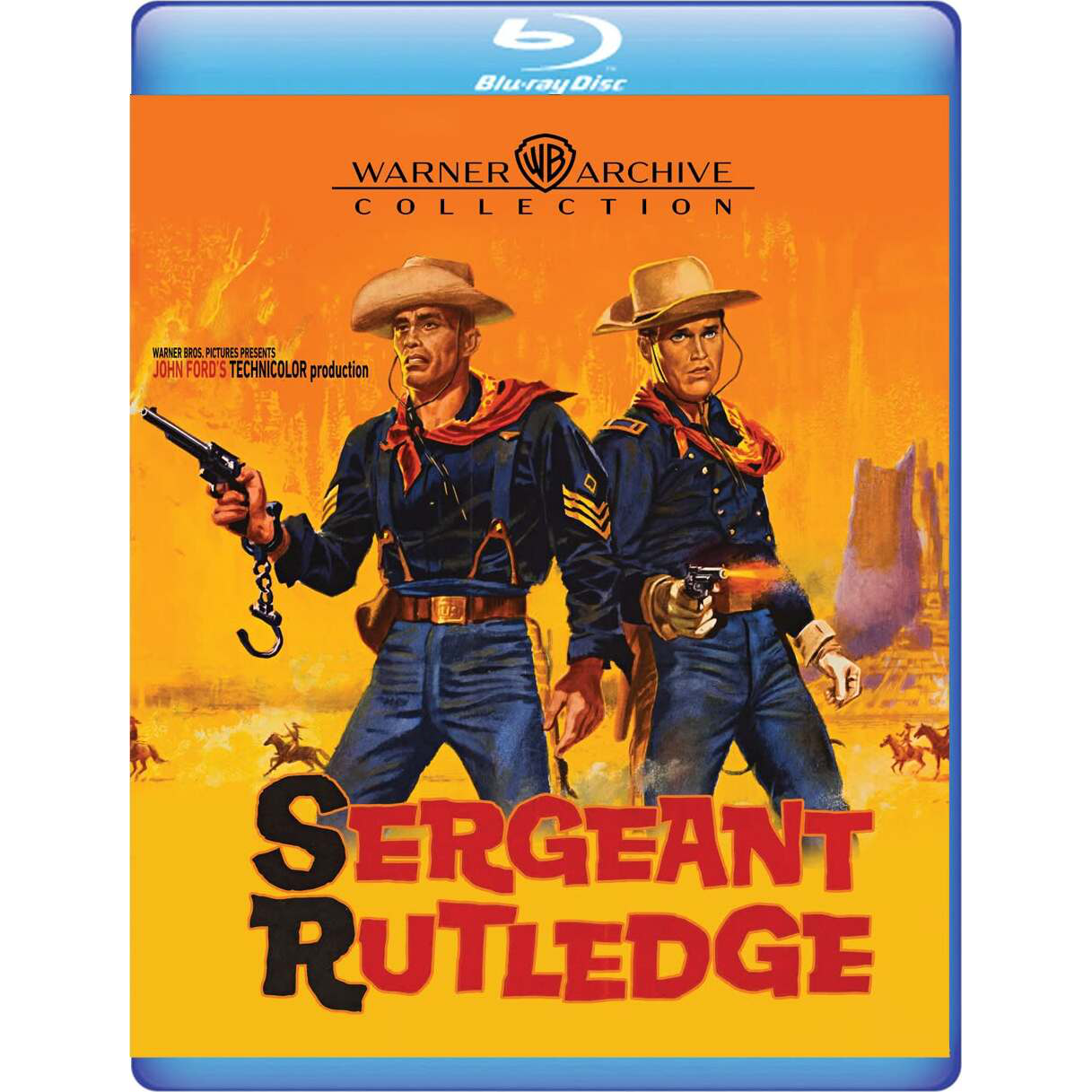
We never pass up a John Ford western, even if this story of a military trial is not one of the best. Yet Sgt. Braxton Rutledge IS the mighty Woody Strode. We see him in gallant action (mostly subduing Apache enemies) and then playing a noble martyr at his own trial for rape and murder. Juano Hernandez and Rafer Johnson have small parts, but the white cast is front and center for most of the picture: Jeffrey Hunter, Constance Towers, Billie Burke, Willis Bouchey, Carleton Young. Although the show must have given black kids a helluva good matinee hero in 1960, it no longer seems a ‘brave’ liberal issue movie. The HD encoding can boast brilliant color. On Blu-ray from The Warner Archive Collection.
10/10/26
CineSavant Column
Hello!
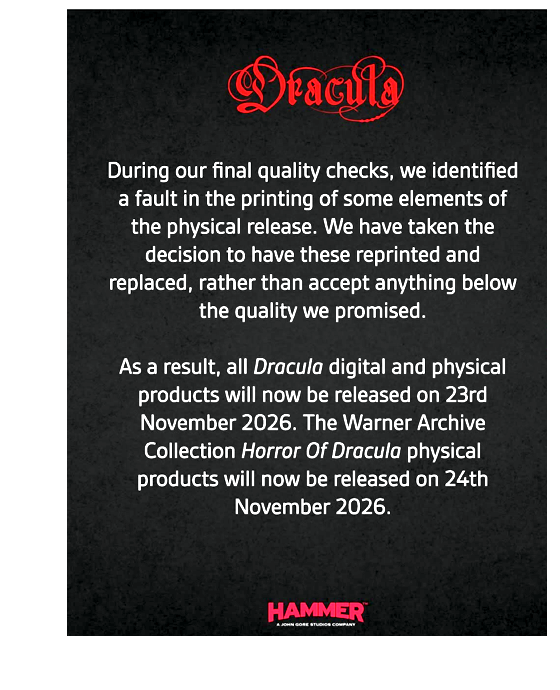
Whoa, it appears that this year’s Halloween thrills have been put on hold … Hammer and the Warner Archive have delayed the street date of both releases of Terence Fisher’s Horror of Dracula by a full month, due to a flaw caught in the production line QC.
Our first thought is to roll our eyes at the weirdness of fandom — with all the horrible things going on in the world, is this something to suffer over? We instead choose to suggest that Hammer’s tale of the bloodthirsty count might qualify as an ideal Thanksgiving movie. All that’s needed is some kind of rational connection, which at the moment escapes me.
I’m frankly impressed that these complicated disc sets go out with so few errors. I’m halfway through watching 20 years of Law and Order episodes, delivered in 20 keep cases with at least 5 discs each, and so far nothing is missing and everything plays. As for the Hammer Dracula discs, I wouldn’t want to think of the mess that would result if a major recall were to take place. So I’m glad they caught the flaw before discs shipped. I’ll just have to settle for Christopher Lee with Cranberry Sauce instead of Candy Corn.
Hunting down a haunted film location.
If you’re lucky enough to go to Paris, what kind of movie-related special discovery would you want to make? The city is so concentrated, anybody who likes movies can’t help but recognize places one has seen. This means a lot to some people and less to others. Here in Hollywood, my tour of film-related sights is a hit with some visitors. Besides, almost nothing here seems to last more than 30 years. I often complain that most every place I worked in my ‘career’ has been redeveloped into something less interesting.
Not so in Paris. Yes, they pulled down the Bastille, but a giant monument marks the spot. On an early morning apart from the organized tour, we set out walking to try and hit two movie-related locations. The first was easy to find: the Promenade Plantée of the Coulée verte René-Dumont. It is a long, elevated park created by converting an old elevated railway line. These Parisians, you see, they don’t rip a thing down before seeing what might be made of it as it is. The long park corridor was given extra popularity by its inclusion in Richard Linklater’s Before Sunset. It’s nice, it’s romantic. It puts you above the noise of the traffic. We got to play Ethan Hawke and Julie Delpy for a few minutes.
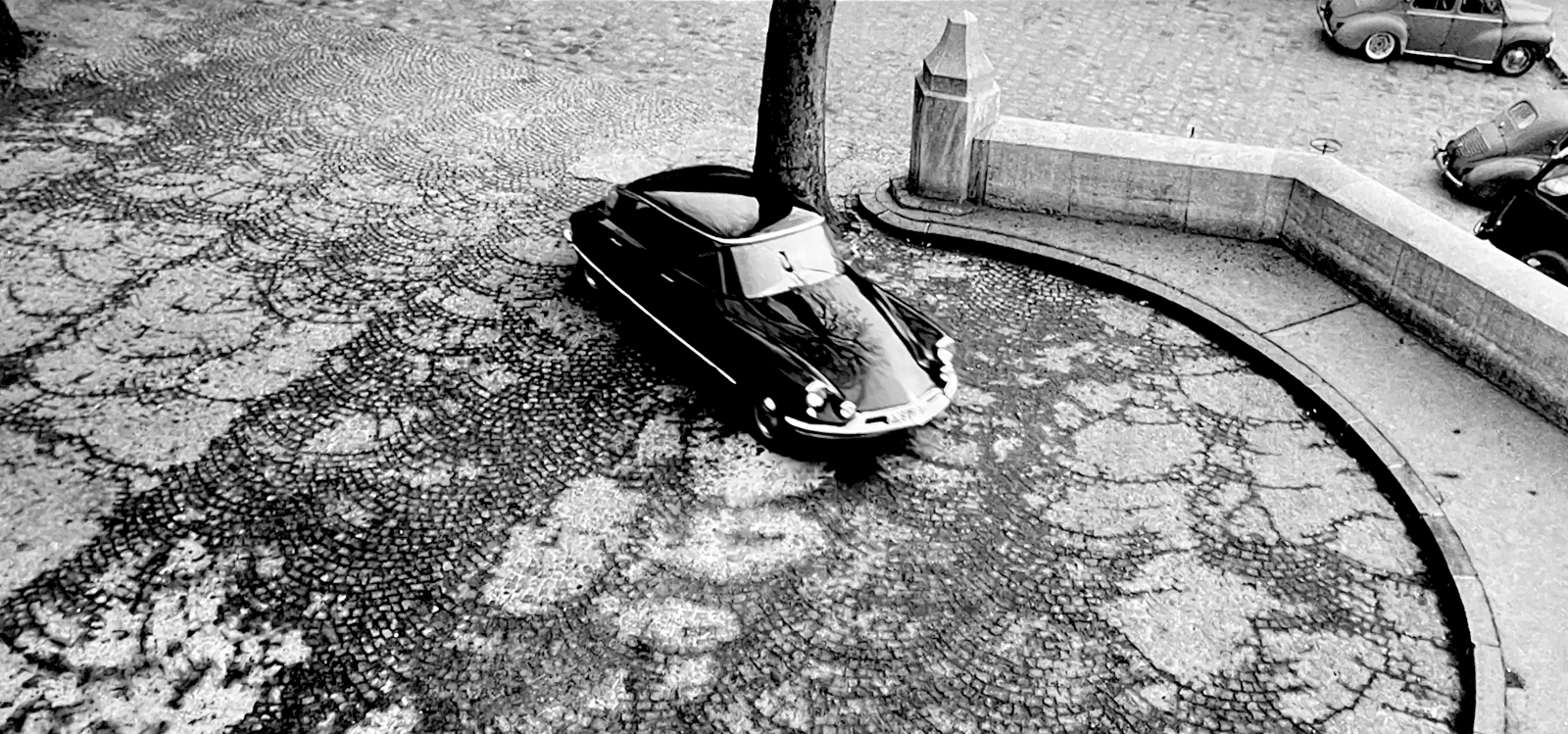
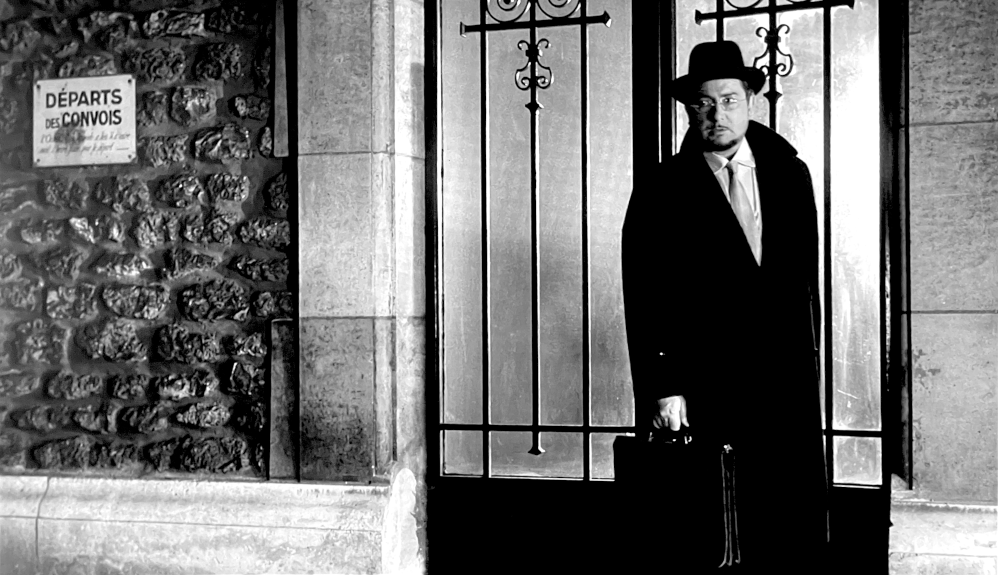
We bopped off the Coule about halfway through and made a sharp right turn for the river Seine. The object was to see what remained of an iconic setting from a 68-year old horror movie, iconic to me anyway. The image above, the down angle of the car, has been lodged in my brain ever since seeing a midnight show (in crummy 16mm and English dub) of Georges Franju’s Les yeux sans visage aka Eyes without a Face. That circular brickyard driveway was the focus of critic Raymond Durgnat’s statement that Franju’s B&W movie operated on contrasts of texture: clammy rough bricks, the skeletal black trees reflected in the shiny Citroën car, rough bandages, smooth skin. The driveway belongs to what in the film was a morgue.
Was it really ever a morgue? We didn’t know. The building appeared to still exist. It was listed as ‘Institut Medico Legal,’ which we thought might be an archive for medical records.
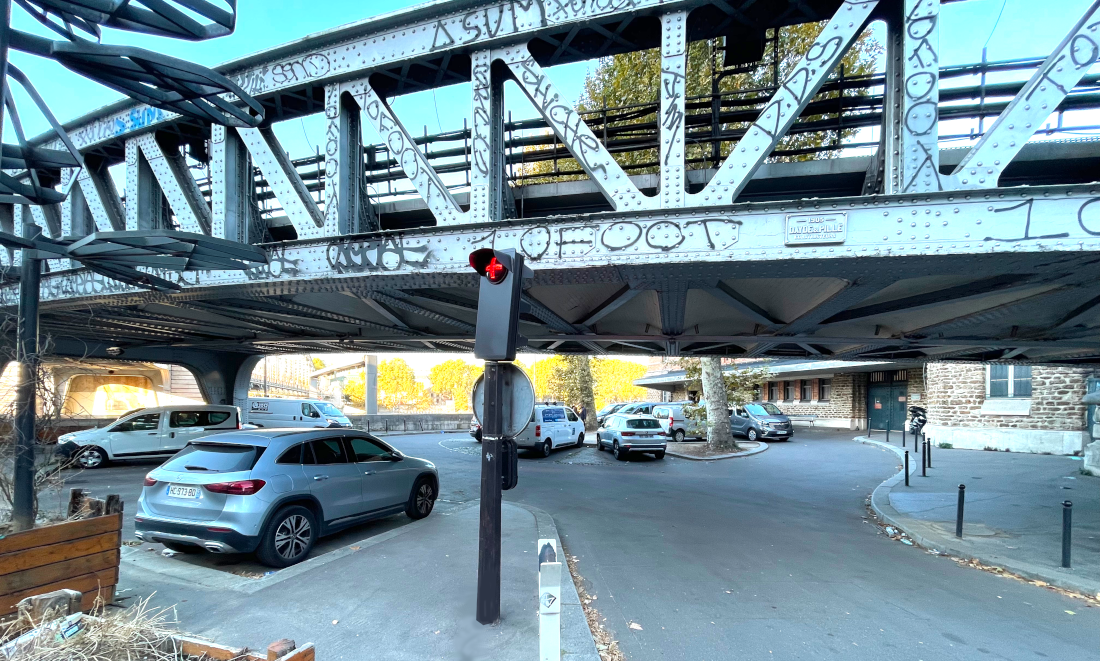
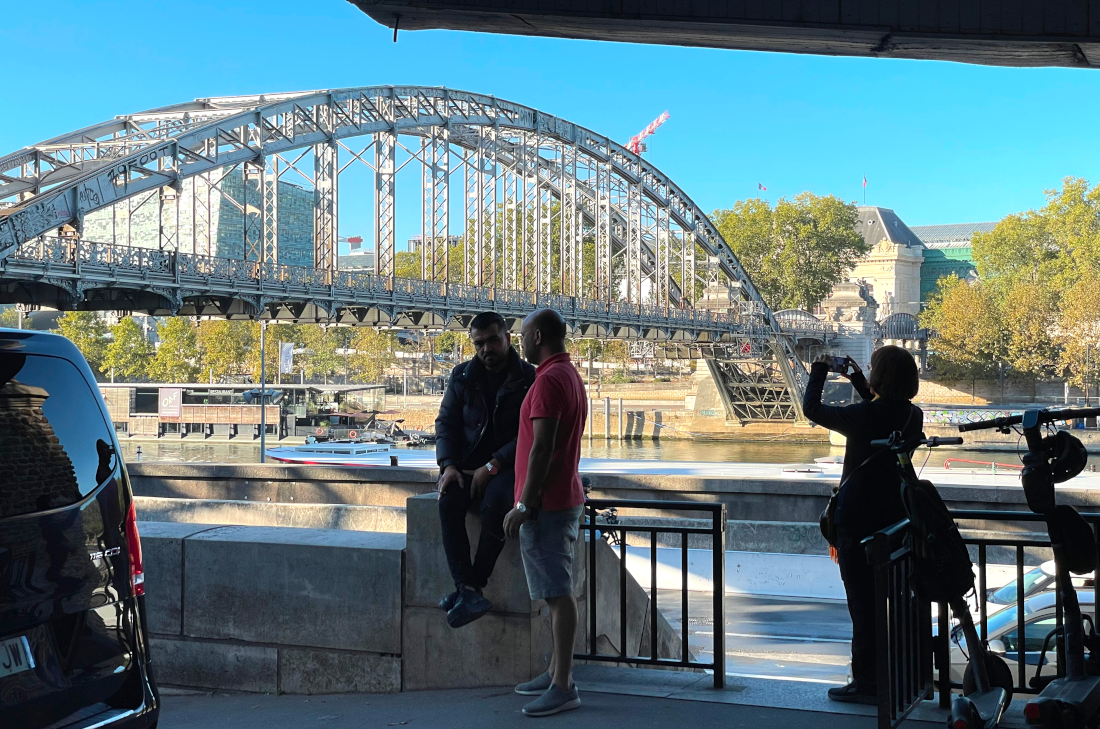
When we got to the river we found what we were looking for squeezed into a tight space partly under an iron railway bridge over which trains pass every minute or two. The trestle for the bridge goes right over the building’s parking lot. The trains are only a few feet above us. There is only ten feet of clearance under the trestle, for vehicles to enter.
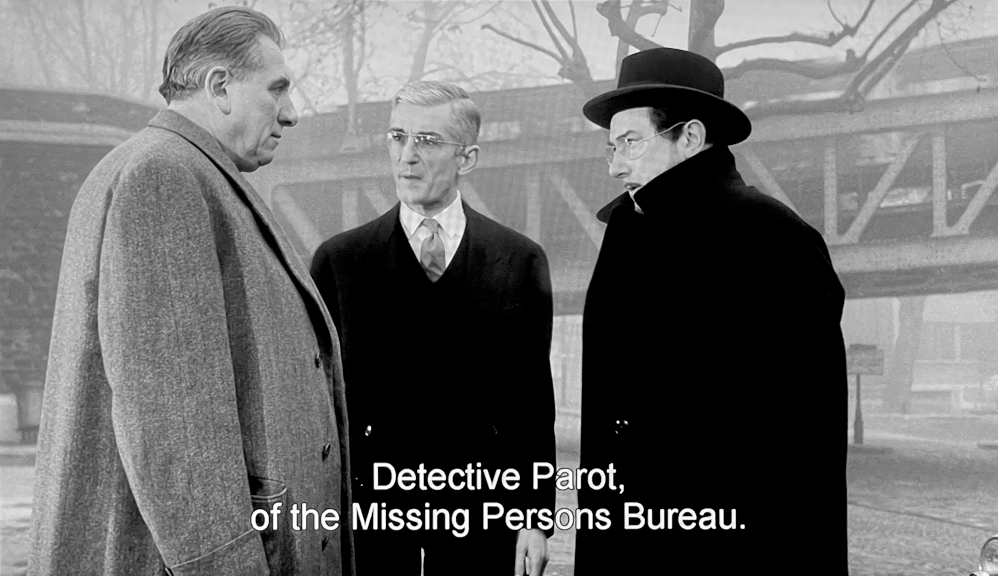
There was no barrier to access, but we stopped short when we saw a large coffin carried from the building. We then realized that the ‘Institut’ was indeed a morgue, and that it must have been one since long before 1959. Paris hearses aren’t stretch limos, just black vans. We hung around the perimeter trying to look invisible. When it looked like I wasn’t going to be disturbing either the bereaved or the chauffeurs waiting on the sides, I took my pictures. the only angle I couldn’t get was the down view of the car … I’d have to climb on top of the building to get that.
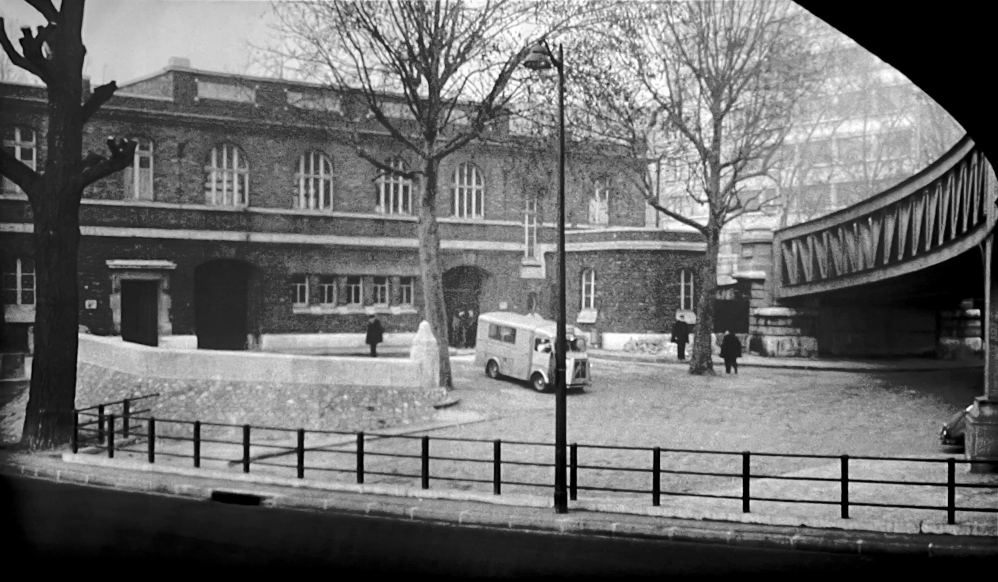
The building looks different only in that they added a partial overhang, presumably so people waiting in the rain wouldn’t be soaked. The movie scene was filmed in a foggy twilight but we were there on a bright September morning. The driveway yard has been somewhat reconfigured, with asphalt instead of bricks, but it’s still in a circular pattern. A downward driveway seen in the movie no longer exists. Did that at one time connect with a dock, to service funeral processions on the river?

My wider-angled lens makes the area look larger than it is. It was a little larger in 1959. A road has been widened, reducing the size of the lot.

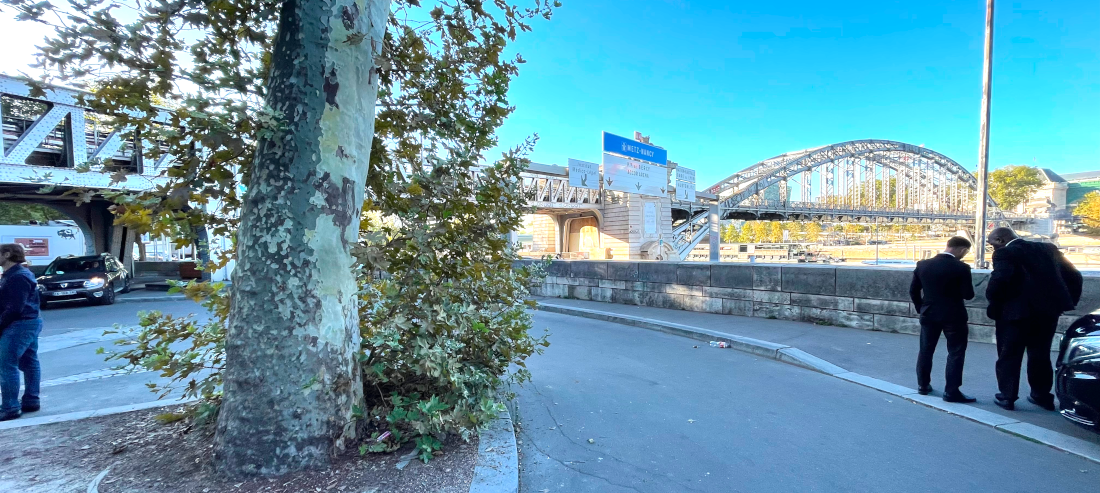
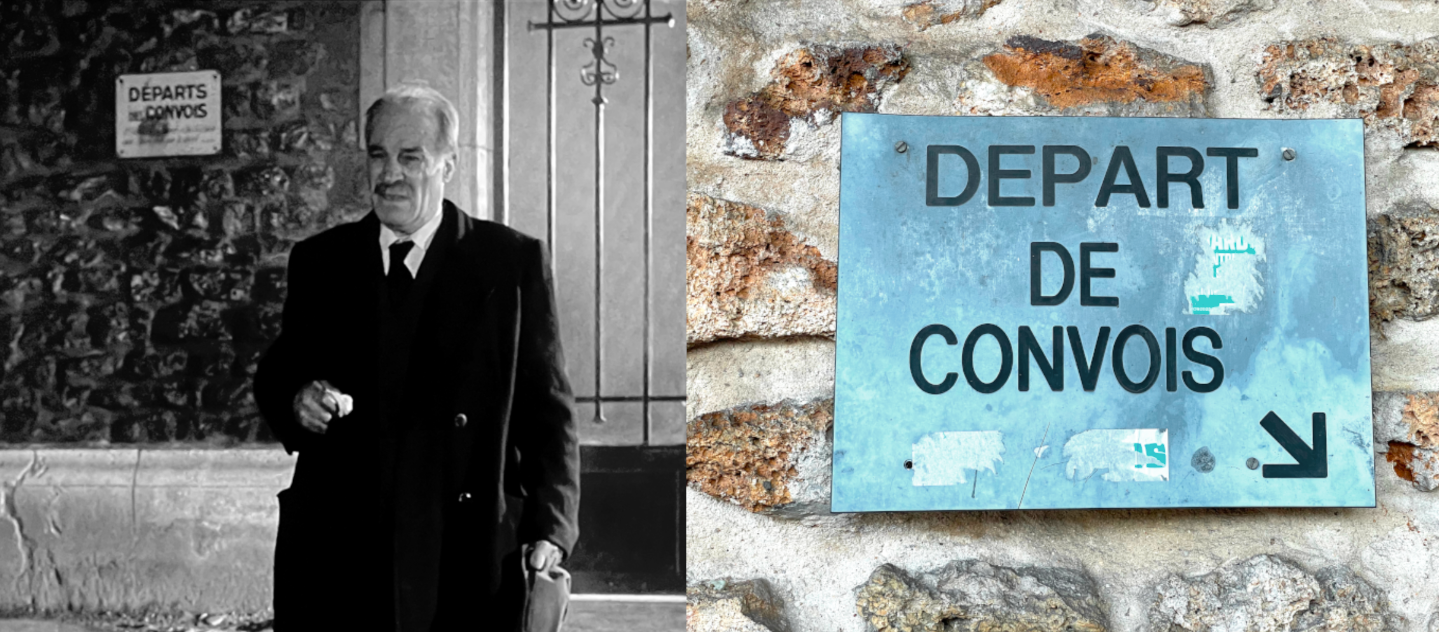
The trains that rattle by every two minutes or so do lend the feeling that the morgue is some kind of departure point, to cross the Seine Styx and reach ‘that distant shore.’ The poetic effect works in broad daylight, in 2026.
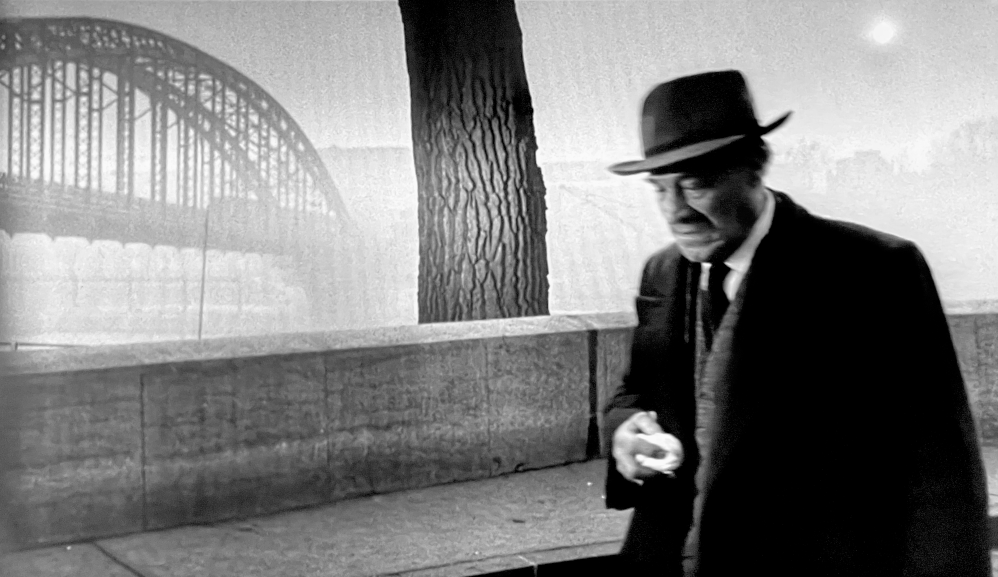
A plaque on the wall today has the same message as the one in the movie: ‘Départ de Convois.’ Did Charon have the same sign next to his boat, written in Greek?
Some morgue interiors appear to be real. Through these windows we see a corridor where the bereaved might wait …
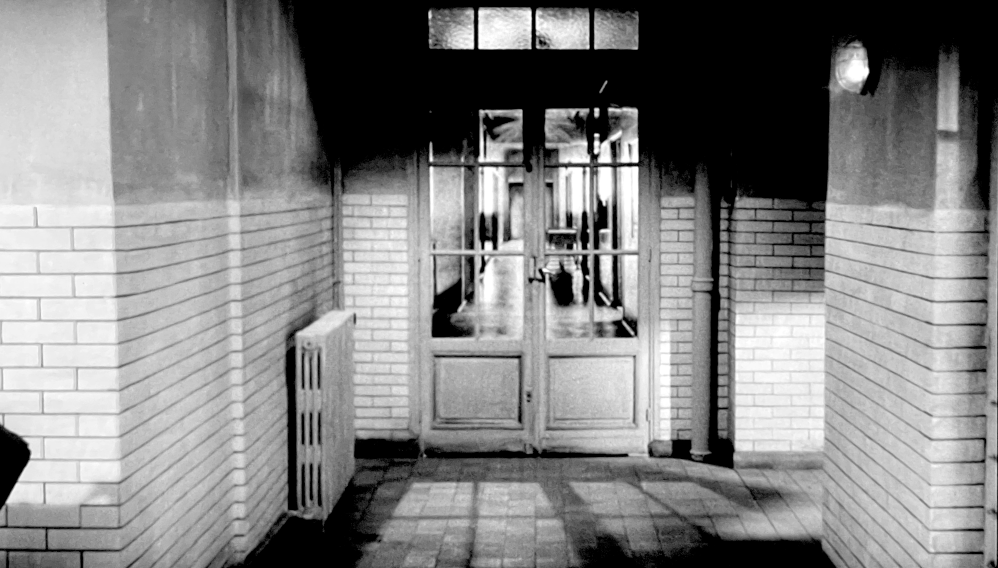
… and it matches the view from the other side.

Around the building from the ‘Départ de Convois’ hearse dock is a different parking lot, leading to this reception room for the next of kin.
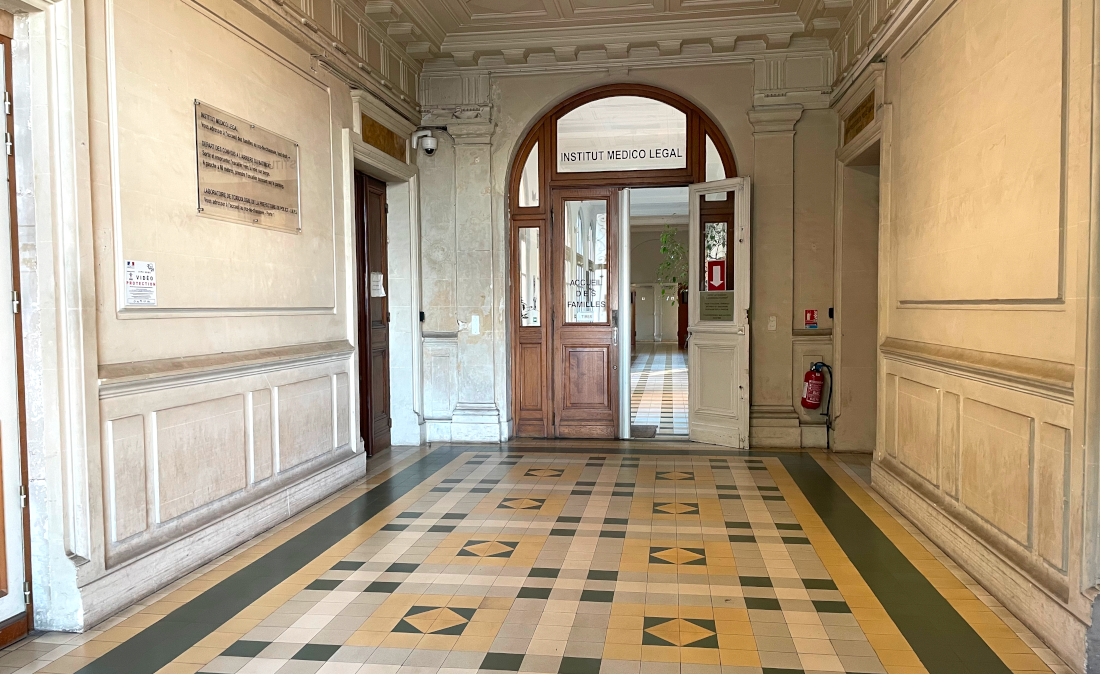
Good old Dr. Gennessier wishes us to ‘Have a nice day.’ We spent part of our Paris time with a tour group. Had they known us better they might not have been so surprised by my enthusiasm to find the real-life morgue seen in the classic movie.
Thanks for reading! — Glenn Erickson