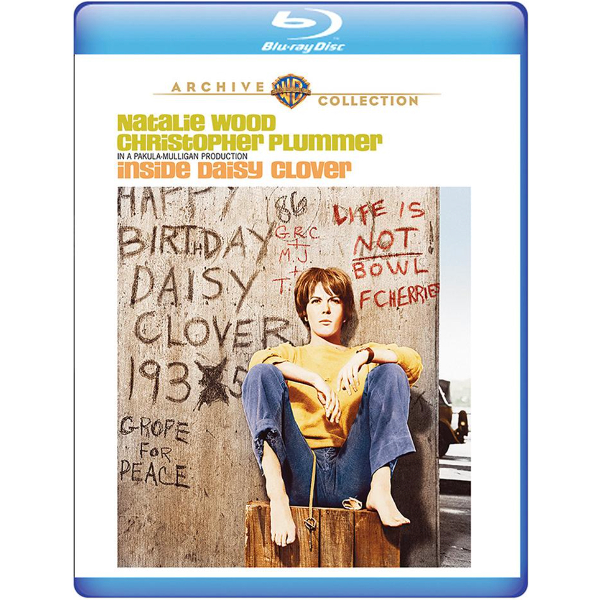
Inside Daisy Clover 05/26/20

The Warner Archive Collection
Blu-ray

It’s a Hollywood rags-to-riches tale seen as a cruel coming-of-age story — when Natalie Wood’s feisty street kid becomes a child star, she learns that tinsel town is not only fake, but oppressively evil as well. Cut off from her dotty mom (Ruth Gordon) and surrounded by the sinister minions of studio head Swan (Christopher Plummer), Daisy Clover finds that major stardom is hollow and dispiriting. Gavin Lambert & Robert Mulligan’s beautifully made movie does everything but make an audience feel good, especially when the dazzled Daisy falls in love with a sexually dishonest dreamboat matinee idol (Robert Redford). It’s a great picture and also a big downer. With Roddy McDowall and Katharine Bard. On Blu-ray from The Warner Archive Collection.
05/26/20

Film Noir The Dark Side of Cinema II 05/26/20

KL Studio Classics
Blu-ray

Although only one of these 1950s B&W thrillers falls within a mile of a hard definition of film noir, all give us glamorous actresses in interesting roles. Claudette Colbert takes her turn at playing a nun in Thunder on the Hill, a whodunnit in a convent during a flood disaster. Merle Oberon tries a femme fatale role in the complicated The Price of Fear. Hedy Lamarr does very well for herself as a man-hungry movie star in the inside-Hollywood drama The Female Animal. Kino gives all three excellent transfers, and one comes with an appropriately gossipy audio commentary. Also starring Ann Blyth, Lex Barker, Jane Powell and George Nader. On Blu-rayfrom KL Studio Classics.
05/26/20

CineSavant Column

Tuesday May 26, 2020

Hello!

Well, it looks like Scorpion Releasing definitely has a Blu-ray coming for Night Visitor, which might include an added value extra I was involved with. I enjoyed the afternoon I spent talking about the making of the movie, that part of the filming I could know about from inside an editing room. Meeting the new-generation crew of extras-creators currently cooking up featurettes and interviews for labels like Severin and Scorpion was fun, too. Some of them are really crazy about anything to do with Cannon Films, either that or they figured it was the right attitude to take when interviewing someone who worked for the company for a while.

Back when commentaries were recorded at professional post houses, I once worked for a disc producer from the ritziest label out there (no names) who was insultingly patronizing. But he was the exception. This bunch for Scorpion Releasing didn’t even treat me like too much of an old man. Much appreciated.

I had no idea that 1989’s Night Visitor had fans of any kind. I saw it again to prep for the session, and was pleased that it had some good qualities… the name actors involved always impressed me. I still like the late Allen Garfield’s performance, a lot. I’ve seen too many actors that hired on for films they thought were beneath them, and then took out their frustration on anybody within earshot. All of the acting talent in this modest satanic thriller did their best. Allen Garfield was very friendly in person, and his scenes were really fun to edit: look, a real performance!

Night Visitor was originally called Never Cry Devil, as seen in this sales poster by the original production company. MGM/UA’s title change insured that the film would forever be confused with a much better known Max von Sydow / Liv Ullmann movie.


And I’ve been thinking about the Memorial Day holiday that has just past. To help you get ready for our next war, I found something we’ll need to get more familiar with — a genuine Ration Book!  Rationing is what happens when an entire nation’s production capacity is realigned toward the war effort. Because the military’s needs are so great, civilians are allowed to consume less of the country’s output of food, gas, auto tires, etc..

And who knows, in the glorious economic disaster that looms ahead (?) we may need rationing, with or without a war. For years after victory in England, rationing remained imposed. Both staples and luxuries were tightly controlled, to squeak out a positive balance of trade and prevent the entire country from going bankrupt.

I’m kidding, yet I’m also feeling nostalgic for a time when the U.S.A., imperfect as it was, could actually face up to a calamity in a responsible way. They put up with the frustrating rationing system because it was fair, and patriotic.

My parents left me a ration book from 1945. I regret that I never asked exactly how the stamp system worked. I know they weren’t like money, but served only as permission to purchase something. This page of stamps has little images of tanks, but others have a cannon and an aircraft carrier. I have no idea what these particular stamps were for. Any experts out there want to fill me in?

The stamps always remind me of something else long-gone that I do remember: the old ticket system from Disneyland. Each standard book of ride tickets included a few ‘E-Tickets’ for the desirable rides (‘Matterhorn Bobsleds’), various mid-range tickets, and finally ‘A-Tickets’ for the Main Street vehicles and minor walk-through exhibits. The sock drawers of many of us kids in Southern California filled up with unused A-Tickets because one could ride a Fire Engine or see ‘Sleeping Beauty’s Castle’ only so many times.

Did these WWII Ration Book ticket pages survive because they were of lesser value?  Maybe there was a number system… would two pages of tickets entitle one to buy the juicy steak that shows up in wartime Tex Avery cartoons? ←

(opening the images in a new window makes them much bigger.)

And there you go, yet another Column entry that actually has nothing to do with Blu-rays. But let nobody say that CineSavant is not patriotic.  Now get out there and collect scrap metal and rubber.

Thanks for reading! — Glenn Erickson

Saturday May 23, 2020

Feeling cooped up? Irritable? Are you channeling your inner Vince Edwards? CLICK on it.

Danger: Diabolik 05/23/20

Shout Factory
Blu-ray

Oh Joy, Oh Rapture!  Mario Bava’s comic book thriller makes the jump to Blu-ray in fine shape, with knockout visuals and eye-popping color. John Philip Law, Marisa Mell, Terry-Thomas and the late Michel Piccoli are all irreplaceable in this one-of-a-kind show. Bava’s film translates action comic fantasy into cinematic terms, pictorial appeal and dynamism intact. The disc comes with a pair of excellent commentaries, featuring Nathaniel Thompson, Troy Howarth, Tim Lucas and John Philip Law himself. As for the review, expect my usual enthusiastic over-analysis and personal memories. On Blu-ray from Shout! Factory.
05/23/20

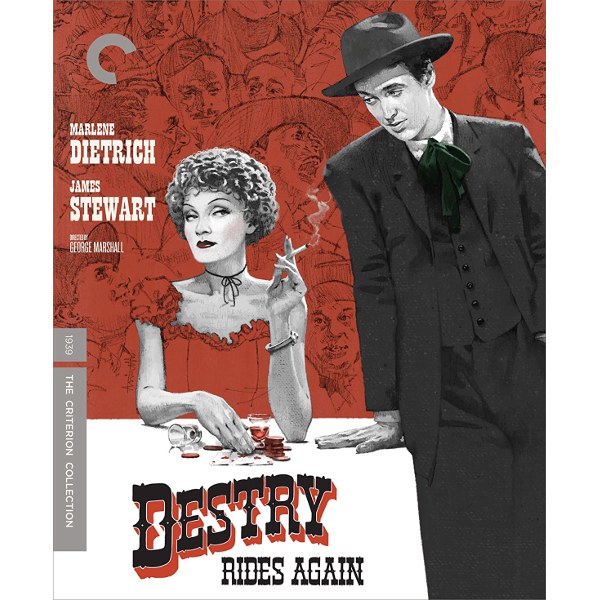
Destry Rides Again 05/23/20

The Criterion Collection
Blu-ray

Yes, a western than can make grown men cry! Reviewer Charlie Largent celebrates the wonder of Marlene Dietrich’s major career comeback, a big hit that also marked a pre-war high point for James Stewart, not to mention terrific turns from Brian Donlevy and Una Merkel. The nearly perfect screenplay slides from sly cynicism to knockabout comedy to high tragedy, giving viewers a full emotional workout. Dietrich is great whether singing with her Adam’s Apple or engaging in a no-holds saloon catfight with Una; Jimmy Stewart has honed his laconic, down-to-Earth ‘cute’ act down to perfection. With this picture the unheralded George Marshall beats the icon Howard Hawks at his own game — it’s rowdy, smart and sentimental at the same time. On Blu-ray from The Criterion Collection.
05/23/20

CineSavant Column

Saturday May 23, 2020

Hello!

Ah… ya got me.  I burned up all my prep time writing, re-writing and re-re-writing my little essay on Danger: Diabolik, so haven’t prepped the usual links. We’re all stuck indoors to one degree or another, but I guess I’m lucky because I always have plenty to do. This isn’t 2004, when I’d write up ten DVDs a week for the old DVD Savant page, but we try to be as productive as we can.

Some good reviews are done and ready to go: Kino’s Film Noir the Dark Side of Cinema II and The Warner Archive’s Inside Daisy Clover are only a few hundred typos away from finished, as is Paramount’s 4K Ultra HD of Spielberg’s War of the Worlds.

I’m willing to be influenced by reader requests — I’ve already had The Night My Number Came Up recommended to me, and had almost skipped it because the trailer was kind of lame. I’ve got a long list of desired titles to cover: Return from the Ashes, Me, Natalie, The Song of Songs, Lonely Are the Brave, An Inspector Calls, Sunday in New York, Watermelon Man. Going back much farther are It Always Rains on Sunday, Perfect Friday and Un Flic. Those I really ought to cover just out of principle.

I’m waiting on my favorite The 1,000 Eyes of Dr. Mabuse, but it depends on whether the company selling it can get product from the U.K.. Titles not yet arrived but that have me sticking my nose in the mailbox and being really nice to the delivery men are Funeral in Berlin, the Columbia Classics 4K Collection, The H-Man / Battle in Outer Space double bill, Brittania Hospital, Olive Signature’s Hair, and of course, in early July, Criterion’s 1953 The War of the Worlds, Kino’s The Day the Earth Caught Fire and Scream Factory’s Kiss of the Vampire.

Thanks for reading — Glenn Erickson

Tuesday May 19, 2020

Why is this picture here? CLICK on it.

The Curse of the Werewolf 05/19/20

Scream Factory
Blu-ray

Rip-roaring Oliver Reed’s silver-coated were-beast is one of Hammer Films’ very best screen monsters, which is more than enough reason to sample this colorful 1961 shocker. It was apparently ripped to shreds by the U.K. censors, a horror-crime spared us lucky Americans. The movie has been released more than once on Blu-ray but Shout’s new 4K scan restores it to prime condition. Numerous extras trace its stormy path through the slights and deletions of The Curse of the BBFC. With Clifford Evans, Yvonne Romain, Catherine Feller and Anthony Dawson. On Blu-ray from Scream Factory.
05/19/20

Cisco Pike 05/19/20

Powerhouse Indicator
Region B Blu-ray

Easy Rider terrifies twenty confused studio executives because they don’t understand it. Hoping to keep their jobs, they rush to hire more longhairs to make movies ‘the kids’ will see. Ex- UCLA film student B.L. Norton parlayed his way into writing and directing on the streets of Los Angeles, with new stars Gene Hackman and Karen Black, and singer-songwriter of the year Kris Kristofferson in his first starring role as a musician forced to deal marijuana by a corrupt cop. A time travel trip back to the City of the Angels circa 1971, it’s realistic and honest, and Kristofferson turns out to have terrific camera presence. With Harry Dean Stanton, Viva, and Joy Bang. On Region B Blu-rayfrom Powerhouse Indicator.
05/19/20

CineSavant Column

Tuesday May 19, 2020


Hello!

Gary Teetzel says that a Kino Blu-ray announcement has been circulating on the web for the 1916 Stuart Paton/Ernest & George Williamson version of Jules Verne’s 20,000 Leagues Under the Sea, with a release date of July 28. A 4K restoration sounds pretty exciting, even if the clips we’ve seen over the years make the movie look more like a curio than a silent classic. The announcement also listed an Anthony Slide commentary, and a music score by Orlando Perez Rosso. I’ll be happy to report on this one … in fact, I ought to catch up with reviews of some other silent & sound sci-fi obscurities I’ve gotten around to seeing lately.

The Hardy Encyclopedia lists the show at 113 minutes (!). The adaptation adds a subplot in which the Nautilus rescues Nemo’s daughter (!) from Arab kidnappers. The underwater effects were reportedly filmed in a special tank in Nassau; the Williamsons were hired by MGM in the late 1920s to help film special effects for the part-sound The Mysterious Island.


Is this what they call a slow news day?  I’ll spare you more personal remarks or thoughts about the lockdown / opened up / lockdown, which is of course is more important than anything you read here. For the core subject matter of CineSavant, all it means is that some disc providers are able to keep the movies flowing, while others cannot. And shipments from overseas are a little iffy — hopefully just delayed a couple of extra weeks. Does anybody out there order enough product to know what’s being delivered in a timely fashion?

Thanks for reading! — Glenn Erickson

Saturday May 16, 2020

Never despair! CLICK on it.

Pool of London 05/16/20

KL Studio Classics
Blu-ray

I’d never heard of this gem of a British production; now it goes on my list of highly recommended titles. A dock area on the Thames is ‘the pool,’ and the sailors that disembark from the cargo ships are susceptible to the temptations of black market trade. A single eventful weekend traces the fates of a half-dozen young people, the women that learn to like the sailors, and the sailor that gets mixed up in a deadly serious crime. Director Basil Dearden’s excellent cast is mostly unfamiliar to us Yanks; but we get really tied up in their problems. This picture should be much better known: it’s the first English movie to depict an interracial romance, and it does so without sensationalism or special pleading. The best new extra is an interview with actor Earl Cameron, who at 103 years of age has his act (and his memories) totally together. With Susan Shaw, Renée Asherson, Moira Lister, James Robertson Justice, John Longden, on Blu-ray from KL Studio Classics.
05/16/20

Blood on the Moon 05/16/20

The Warner Archive Collection
Blu-ray

Robert Mitchum intercedes in a range war in this ‘A’ western, and he’s got the pro team of director Robert Wise and cameraman Nicholas Musuraca on his side. All but one action scene plays out at night, which is why this is sometimes called a Noir Western. The dark visuals fit that mold but the story values are strictly traditional, starting with the hero’s laconic do-it-don’t-say-it sense of personal honor. Partly filmed in Arizona, the fine production further advanced the laid-back Mitchum persona, this time as an honest cowpoke, not a cool-dude hipster. His top-rank co-stars: Barbara Bel Geddes, Robert Preston, Walter Brennan, Phyllis Thaxter, Frank Faylen, Tom Tully, and Charles McGraw. On Blu-ray from The Warner Archive Collection.
05/16/20

CineSavant Column

Saturday May 16, 2020


Hello!

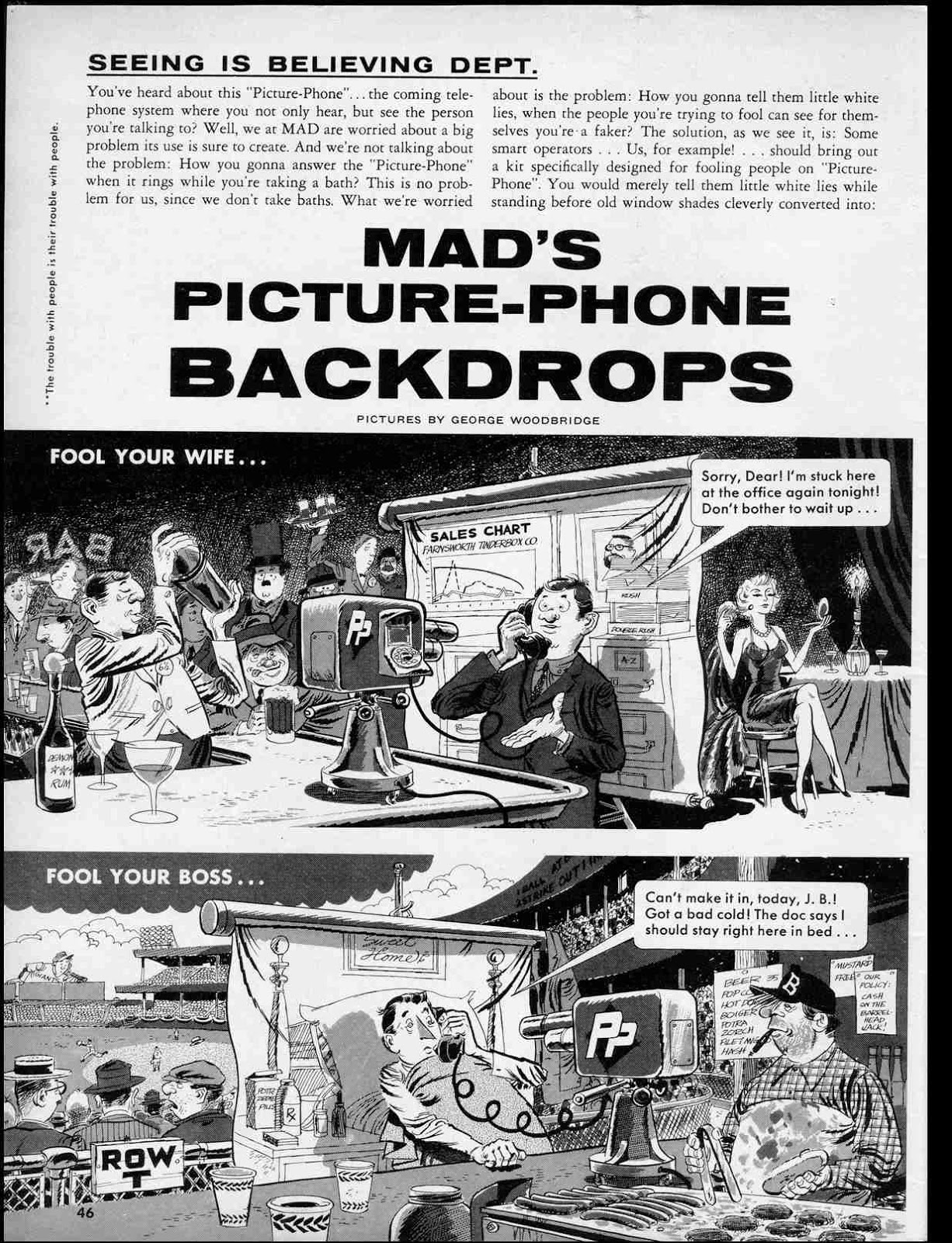
I knew it! When I asked in the last CineSavant Column about an old Mad Magazine article lampooning the use of background screens to fake out people in ‘futuristic’ picture-phone communications, I got a bunch of responses, from reliable correspondents Edward Sullivan, Tom Giegel, ‘B’, and Christopher Rywalt. Several sent me a partial copy of the specific Mad cartoon article, from August, 1957, and a place called ‘crywalt.com’ has both Page One and Page 2 in readable quality. “This time I remembered it fairly well,” Glenn said, patting himself on the back. “The memory isn’t entirely gone.”

And I also forgot to mention last time, that the original steer to the BBC video backdrops page came from the eagle-eyed Charlie Largent.


I also have a Book Review to present today. It’s a compilation of essays edited by our CineSavant reviewer Lee Broughton, entitled Reframing Cult Westerns: From The Magnificent Seven to The Hateful Eight. The book is indeed a collection of academic-oriented essays, a category of writing traditionally aimed at other academics, or at least for writers and teachers looking to see what new thoughts are circulating in a given field. This might have been just another exercise in genre studies, if the subject weren’t so interesting, and the writing so varied. I only read one chapter that I thought on the dry side; the others address interesting aspects of the Western movie.

Happily, Reframing Cult Westerns doesn’t re-plow tilled ground. Genre writing long ago advanced beyond the revelation that the movie western was in decline. Lee Broughton’s introduction neatly outlines the book’s aim to look at what westerns have become in the decades beyond the days of big screen glory and television domination. Although many of the essays reference classic westerns, only the first segment of the book has articles focusing on older fare. Paul Kerr examines the production climate for 1960’s The Magnificent Seven and Peter J. Hanley finds out to what degree Leone’s The Good, The Bad and The Ugly relates to actual U.S./Civil War history.

Genre investigations take a social and revisionist turn with examinations of exceptional western fare. Matt Melia asks to what degree Alejandro Jodorowsky honors or trashes western tradition in El Topo; Hamish Ford gives Rainer Werner Fassbinder’s stylized western Whity a going-over. If that movie is not familiar, reading about the westerns of the obscure Dean Reed will be an even bigger surprise. Sonja Simonyi introduces us to the work of the highly unusual Reed, an American singer and political activist who found himself celebrated as an ‘international communist rock star.’ Tossed out of Argentina, Reed acted in several Italian westerns before taking up residence in East Germany, where he starred in a number of features, including two westerns. It’s a fascinating story of an American who became a genuine Soviet superstar.

The essays introduce new viewpoints while examining ‘new era’ westerns that stand out from the crowd. Craig Ian Mann finds political messages in Heaven’s Gate, The Long Riders and Tom Horn. Cynthia J. Miller writes a mini-treatise on McCabe & Mrs. Miller that doesn’t center on the cult of Robert Altman, or the celebrity hookup of Warren Beatty and Julie Christie. Chelsea Wessels sorts out the genre mutations that occur in Australia’s The Proposition. Jenny Barrett opens up a discussion for what might be called World Film westerns: Danish director Kristian Levring’s The Salvation, Argentina’s Lisandro Alonso’s Jauja and the New Zealand-filmed Slow West by the Scotsman John Maclean.

Lee Broughton’s contribution is a search for the Supernatural in westerns. He finds it in Curse of the Undead and films with a relation to the U.S. Civil War. Herschel Gordon Lewis’s Two Thousand Maniacs! carries out a Confederate curse during the Centennial Celebrations, while an Italian Django western is revealed to align to that country’s cultural/political memory of the final years of World War II.

The book finishes with discussions of movies too recent to be relegated to academic categorization. Jack Weatherston aligns the big hit The Revenant with a renewed awareness of climate, while Thomas Moodie examines the depth of racial politics in Quentin Tarantino’s controversial The Hateful Eight.

Reframing Cult Westerns is a sturdy hardbound volume. Only a few illustrations are included in this serious reader, an exceptional look at what has become of the contemporary western.

Thanks for reading! — Glenn Erickson

Tuesday May 12, 2020

This antidote for the quarantine doldrums is downright Stupefyin’… CLICK on it.

Taza, Son of Cochise 05/12/20

KL Studio Classics
3-D Blu-ray

Great 3-D thrills — Hollywood was working to perfect 3-D movies just as the craze died out. An impeccable Blu-ray 3-D restoration, the glory of young Rock Hudson and some of the best Utah scenery in depth makes this a very enjoyable disc. Director Douglas Sirk was itching to do a western, and the swiftly rising star Rock Hudson wanted to work for him again, even though it meant playing another Indian role. Were these men that desperate to get out of Hollywood for a month? At least they avoided filming in nuclear test sites. With Barbara Rush as ‘Oona.’ On 3-D Blu-ray from KL Studio Classics.
05/12/20

The Bat (1959) 05/12/20

The Film Detective
Blu-ray

An old-fashioned haunted house thriller is given a new lease on life in writer-director Crane Wilbur’s creepy re-imagining. Vincent Price and Agnes Moorehead headline a time-honored tale of buried treasure and the bloodthirsty fiend who’ll stop at nothing to lay his claws on it. Predictable but light-hearted entertainment, The Bat remains ghoulish fun for the whole family. Charlie Largent’s review is of a 2016 disc release, just for the record. On Blu-ray from The Film Detective.
05/12/20

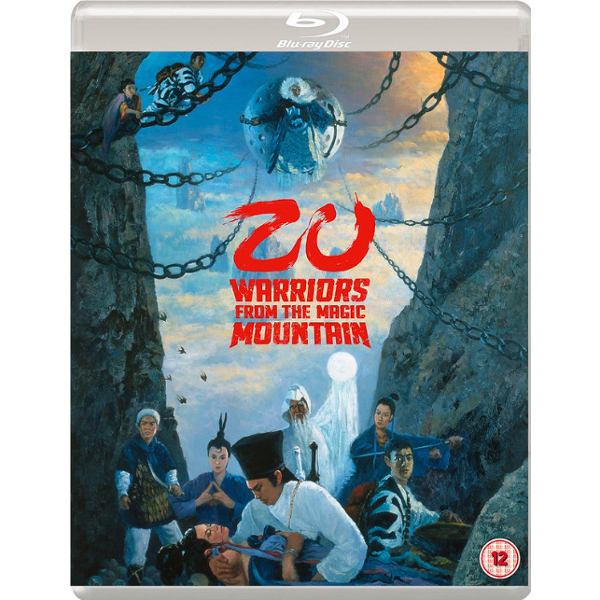
Zu Warriors from the Magic Mountain 05/12/20

Eureka Entertainment
Blu-ray

Guest reviewer Lee Broughton returns with a Region B review of Tsui Hark’s mystical tale of derring-do in ancient China. Hark revived a once popular variant of the wuxia film form — the Chinese shenguai wuxia films from the late 1920s that paired chivalric martial arts with more overtly mystical and mythological elements. The groundbreaking and stylishly executed result is said to have been John Carpenter’s chief inspiration when making Big Trouble in Little China. On Region B Blu-ray from Eureka Enterainment.
05/12/20

CineSavant Column

Tuesday May 12, 2020


Hello!

The beginning of what I hope will be more of the same… good friend Bill Shaffer contributed an article to yesterday’s Greenbriar Picture Shows called From the Annals of Grassroots Showmanship.

Bill is graced with the perfect credentials to harmonize with Greenbriar’s John McElwee: John is the undisputed authority on American Film Exhibition history, and Bill is from a family that was big in theaters during the grand days of moviegoing.

Best of all, Bill has kept documentation and photos and clippings from the era. This first photo-feature article talks about his father’s promotions for Alfred Hitchcock’s 1956 The Man Who Knew Too Much, with a sidebar look-in at the teen delinquency delights Dragstrip Girl and Rock All Night. Every time Bill showed me a ‘family theater heritage’ photo it was a real treat — they made their theaters look like the most inviting neighborhood movie palace in the country. I’ll be keeping an eye out for more of these articles, and encouraging Bill to maybe turn it all into a book.


Recognize the above setting?  Note the interesting specimen of a Martian insect creature mounted prominently on the lab table.  It’s a set still production reference photo from the original 1958 BBC serial of Quatermass and the Pit, a classic of vintage English TV that’s the equal of the 1967 Hammer film version. A featured page at the BBC Archive coyly entitled The Joy of Sets has collected an unusual, rather brilliant array of free giveaway images: large jpegs of empty sets from famed BBC productions.

Why?  Since so many of our personal social lives have been reduced to remote videoconferencing, people are reaching for interesting background art to key in behind themselves during calls or Zoom meetings. For instance, a teacher I know took a picture of her (now abandoned) classroom, and uses it when teaching online, just to create an appropriate visual context.

So just for fun, the BBC has uploaded an entire gallery of archival reference stills of the empty sets from BBC productions, old and new. Large set stills are offered for children’s shows, variety shows, sitcoms, even a ‘Top of the Pops’ music show with drums set up for The Hollies. The science fiction section offers empty background images from Blake’s Seven, Dr. Who, and a cerebral sci-fi show from 1961 called A For Andromeda that I believe introduced Julie Christie. ( ← ) She plays a woman cloned in a biology lab by a computer program sent from another galaxy.

All this forces me to again reveal my age: I’ve never forgotten an ancient Mad Magazine feature satirizing video phone calls. In the late ’50s or early ’60s when this cartoon feature was published, video calls and teleconferencing didn’t exist, and weren’t expected in the near future.

The joke in Mad’s article examines EXACTLY what is happening now… it fantasizes a roll-up photo screen backgrounds to hide one’s real surroundings while making a video call. If your house is messy, a background screen can substitute an image of a sleek modern apartment. I recall that another comic panel showed a man using another screen to hide from his wife the fact that he was hosting a wild party. Anyone out there have access to that old Mad issue?  A month or so back I slightly mis-remembered another Mad article about 3-D cameras. Be assured that an obnoxious scold correction or two came in on that one almost immediately.

Thanks for reading! — Glenn Erickson