The Landlord 05/11/19

KL Studio Classics
Blu-ray

It’s the brightest debut feature of 1970, and perhaps the warmest movie ever about the American race divide. Hal Ashby and Bill Gunn’s work is inspired: rich boy Beau Bridges buys a slum tenement and launches a wonderful ensemble comedy-drama in confrontation with the fantastic quartet of actresses — Lee Grant, Diana Sands, Pearl Bailey and Marki Bey. The humanist picture doesn’t cheat on its subject matter. The cast list contains fresh debuts and and more best-of-career showings: Louis Gossett Jr., Melvin Stewart, Susan Anspach, Robert Klein. On Blu-ray from KL Studio Classics.
05/11/19

The Big Clock 05/11/19

Arrow Academy
Blu-ray

Clever plotting goes into overdrive for this light-comedy proto-paranoid film noir about a magazine publishing empire so organized that it seems a sci-fi invention from the future. Ray Milland’s charismatic fall guy finds himself embroiled in a murder plot filled with false identities, and a manhunt that he must supervise… to catch himself. Maybe Robert Zemeckis and Bob Gale watched this from their cribs, and applied its chaotic symmetry to their pretzel-plotted comedies!  Charles Laughton’s performance is priceless, as are the contributions of Maureen O’Sullivan, George Macready, Rita Johnson and the hilarious Elsa Lanchester. On Blu-ray from Arrow Academy.
05/11/19

The House of the Seven Gables 05/11/19

KL Studio Classics
Blu-ray

MGM’s biopic about Clark Gable’s raucous childhood went through several title changes including The Seven Little Gables and Snow White and the Seven Gables before settling on The House of the Seven Gables. Wisely, MGM deep-sixed the production altogether when Universal released their adaptation of Nathaniel Hawthorne’s 19th century potboiler. It stars a young Vincent Price and George Sanders, but in this outing lovely Margaret Lindsay easily outclasses her cast-mates. PLUS, a link to a TV version of the story with a cast that impressed reviewer Charlie Largent as ‘psychotronic’: Shirley Temple and Jonathan Harris? On Blu-ray from KL Studio Classics.
05/11/19

CineSavant Column

Saturday May 11, 2019

Hello!

I’m sure that by now all green-blooded Godzilla fans have seen this photographic evidence, but here’s a snapshot of the Cinerama Dome taken on Thursday last — they seem to be preparing a massive visual aid to tout the upcoming premiere of a certain monster movie. I’ll have to arrange a drive-by tomorrow… maybe I’ll stop off at Amoeba Records and pop out the front door with my camera — it’s right next door on Sunset Blvd. I’d guess this giant ‘sculpture’ can’t be a balloon, because if so why would they need a crane to install it?   I’ve told Gary Teetzel that I’m willing to go see the Big G monster-thon fresh and new, just for a fun outing … let’s see if it happens.


I have proof that the German Explosive Media Blu-ray of These Are the Damned is indeed on its way, scheduled for May 23 and available from Amazon.de as Sie sind Verdammt. It’s the first HD release of Joseph Losey’s powerful sci-fi classic, and it ought to look sensational. I’m excited about the release because I provided an essay for a seven-page insert pamphlet. I’ve had an article published before in translated German, but it’s pretty neat seeing my words reconfigured this way: “Helft uns! Bitte, HELFT UNS!”


And I’m flattered that Craig Reardon has been helping me by lending his exacting eye and photoshop skills to my collection of original 2¼ transparencies from fave film Major Dundee. They never looked better — and I happily take the opportunity to show off a couple of cropped samples.

Thanks for reading! — Glenn Erickson

Tuesday May 7, 2019

Why is this picture here? CLICK on it.

Robbery 05/07/19

KL Studio Classics
Blu-ray

Why do crime caper films have so much appeal?  Are we all closet criminals, eager to watch less timid souls risk life and limb to get the big payout and live happily ever after?   Peter Yates’ stylish re-telling of England’s Great Train Robbery makes for an excitingly detailed, nonsense-free heist straight from real life, with a just-the-facts clarity. The show begins with an influential car chase — straight through the heart of London. Starring Stanley Baker, Joanna Pettet, James Booth, Frank Finlay and Barry Foster. On Blu-ray from KL Studio Classics.
05/07/19

The Ghost Lovers 05/07/19

88 Films
Region B Blu-ray

Guest reviewer Lee Broughton returns with an assessment of an obscure period chiller expertly assembled by Shen Hsiang Yu. One of the Shaw Brothers’ early attempts at screen horror, this superior gothic romance with a supernatural twist failed to find an audience upon its initial domestic release — a circumstance that led to the studio changing tack and pursuing a more exploitative line of genre flick. However, 45 years on it plays like the kind of film that jaded and/or discerning genre fans might well take great delight in discovering. On Region B Blu-ray from 88 Films.
05/07/19

No Orchids for Miss Blandish 05/07/19

Powerhouse Indicator
Blu-ray

“You crazy rat you croaked him!”  Yes, you’ve probably heard better hardboiled dialogue, but this British imitation of American gangster pictures takes the cake for screwy line deliveries. It’s derived from a book and play that’s already derived from a salacious William Faulkner story. Jack La Rue and Linden Travers try to make a kidnapper-rapist into a sympathetic, romantic figure, with marvelously awkward results. This Brit import comes with significant extras. On Blu-ray from Powerhouse Indicator.
05/07/19

CineSavant Column

Tuesday May 7, 2019

Hello!

Hammer fans may know all about this piece, and it is rather brief, but I like it — Farran Smith Nehme’s 2016 Film Comment article on Bernard Robinson, Hammer Horror Designer. I’m finding it refreshing to read horror critiques from folk other than the same ten or so genre experts.


I’ve had a really good response to the review for Joseph McBride’s book Frankly: Unmasking Frank Capra. Next week’s book review selection isn’t quite as lofty — I’ll be looking at another installment in the Scripts from the Crypt collection — on Son of Dracula.

And with no really hot links to share (and lots of work to do) let me just peruse upcoming titles that I can’t wait to get my mitts on: Flicker Alley’s The Man Who Laughs and The Last Warning, Twilight Time’s Warlock, Scream’s The Alligator People and Universal Horror Collection, Kino’s The Silent Partner, Cohen Media’s The Bostonians, Arrow’s Nightfall and Criterion’s One Sings, the Other Doesn’t and Blue Velvet. Peeking into June and July, we’ve got War and Peace (Criterion), Alphaville (Kino) and Quatermass 2 (Scream). Unless they’re all purple and upside down, these titles are enough for a ‘best of 2019’ list right there…

Thanks for reading! — Glenn Erickson

Saturday May 4, 2019

Why is this picture here? CLICK on it.

The Mysterious Island 05/04/19

The Warner Archive Collection
DVD

1929.  MGM’s gigantic silent sci-fi extravaganza took three years to make, by which time the talkies arrived and everything went to pieces. Lionel Barrymore emotes (EMOTES!) in his early sound footage, and terrific effects take us to the bottom of the ocean where monsters and a race of Donald Duck creatures menace our heroic adventurers. And don’t forget a few sundry other elements: a Russian revolution, torture scenes, and cool steampunk nautical hardware. All this Life Aquatic lacks is Steve Zissou!  On DVD from The Warner Archive Collection.
05/04/19

The Nightcomers 05/04/19

KL Studio Classics
Blu-ray

Did you enjoy watching Marlon Brando molest an actress in Last Tango in Paris? Well, he’s up to similar tricks in Michael Winner’s tacky prequel to the classic The Innocents. Don’t expect another masterpiece of subtle, literate horror, as when Brando isn’t using wrestling holds on the helpless Stephanie Beacham, he’s happily clowning and mugging for the camera. Four out of five critics agree that director Winner takes the prize for inappropriate camera placement: he has a knack for finding the worst angle in any given scene!  On Blu-ray from KL Studio Classics.
05/04/19

Summer Stock 05/04/19

The Warner Archive Collection
Blu-ray

I don’t know if Garland fans still go around chanting ‘Judy Judy Judy’ at her every appearance, but they do have a timeless song ‘n’ dance number to celebrate here. Her last MGM movie is only a so-so vehicle but Gene Kelly and the studio’s top music & dance talent work hard to put it over the top. Garland’s lack of stability is still an issue. For much of the movie she looks visibly overweight, yet in the showstopper ‘Get Happy’ she suddenly slims down to the best — maybe not the healthiest — look of her career. On Blu-ray from The Warner Archive Collection.
05/04/19

CineSavant Column

Saturday May 4, 2019

Hello! A Book Review Today.

What? A book about the writing of a book?   Critic and scholar Joseph McBride has written definitive critical studies on several film directors; I reviewed his critical bio on Ernst Lubitsch just last year. But his writing ranges farther afield than just film, taking in a conspiracy study about the JFK assassination, and an earlier autobiographical study. McBride’s new Frankly: Unmasking Frank Capra also falls into the autobio category. It is not a typical book about film; it’s a book about the ten-year effort to write his earlier biographical exposé Frank Capra: The Castastrophe of Success. To tell the truth as he found it, McBride had no choice but to expose a famous film director, a university archivist and at least one editor at a prestigious publishing house of lying to him and conspiring to suppress his book.

Frankly is not a sour grapes story, for McBride’s tenacity and professionalism eventually won out and his very important book was published in its intended form. McBride’s story goes beyond the personal in that it decries the situation a biographer has today when writing about any famous person: inconvenient truths can be suppressed by heirs and corporate entities that hold a stake in the subject’s reputation.

Joseph McBride’s research for his The Castastrophe of Success confirmed that the famous director’s highly popular 1971 autobio The Name Above the Title was a collection of self-serving lies from one end to the other. Capra falsified and fantasized facts about his origins, his school achievements, and his claims of full authorship of his films: ‘One Man, One Movie.’ But the popular book cemented his reputation as a genius filmmaker whose humanity and spirit defined American values. It arrived just in time for the cultural revival of It’s a Wonderful Life to once again make Capra a household name, twenty years after his fame had faded. As it turns out, Capra did not embody any of the values he claimed to represent — all those sentiments came from the writers that his book marginalized, or ignored. Although Capra’s sterling service to the war effort must be applauded, the dark corners of his personality overturn the values put forth in movies like Mr. Smith Goes to Washington.

In Frankly, McBride explains the political & professional pitfalls he encountered when researching what would become The Catastrophe of Success. He spells out the process by which he contracted with the archive of a major university to gain access to Capra’s personal papers. He saw the documentation instructing the archive that the papers were to be made available for academic researchers like himself.

When McBride went through Capra’s files he was surprised to discover that they had not been sanitized for controversial material, and in fact presented a disturbing portrait of a misanthrope and racist with anti-Democratic values. The director of the beloved It’s a Wonderful Life was a fan of Mussolini, and his actions suggest that he held the ‘common man’ in contempt. And this hypocrisy shows through in his professional life. While touting himself as a patriotic defender of ‘the little guy’ against political despotism, he volunteered to secretly inform on Union activities.

Capra continued to inform secretly on his Hollywood associates during the Red Scare, perhaps to protect himself from political attack for having produced wartime propaganda that praised the Soviet Union as our ally. Remember the revelation of the FBI file about the supposed subversive messages in It’s a Wonderful Life? The witch hunt was so strong, it would go after anybody. But Capra continued secretly denouncing the writers that deserved credit for his big successes. McBride’s research showed that he maliciously informed on the son of one of his former writers, based on hearsay about a college prank.

McBride maintains that, not long after beginning his book the head archivist at the University began to conspire against him with his own publisher, as both had a vested interest in keeping Capra’s dirty laundry from being made public. Certain files suddenly became unavailable; the archivist (herself a well-known film writer) reneged on promises made, and contradicted documents McBride had seen about the archives’ clearance to grant access to materials. It also became obvious that Capra’s heirs were involved as well. At this time Frank Capra was still alive and talking to McBride in lengthy interviews, but all the while trying to get himself included in the the publishing deal, for both money and to gain control. McBride spent the better part of ten frugal years walking a legal tightrope, establishing a paper trail of evidence to keep his book free from interference — or being shut down entirely. In short, he found himself in the center of a situation like that described in The Keeper of the Flame: for both profit and careers, the guardians of Capra’s legacy conspired to suppress McBride’s reporting of the true story. They tried (too late) to control the narrative of the Capra Legend, to suit their interests.


Frankly: Unmasking Frank Capra is not a dry account of an author’s publishing battle — it’s more like a detective story. It soon becomes clear that McBride was saved by his own meticulous record keeping. He documented all of his correspondence and phone calls through years of hostility and passive-aggressive obstruction and interference. He had help from his wife and a brother who happened to be an attorney. The only reason he succeeded was by having the ammunition (legal knowledge, hard paperwork) to keep formidable powers from steamrolling his project.

Besides Keeper of the Flame, McBride’s book also reminds me of Henry James’ The Aspern Papers, in which a poet’s heirs sit on his revealing letters and deny that they exist. I think that Frankly has wide relevance for anybody trying to create in a corporate atmosphere, where everything can be reduced to ‘intellectual property’ and controlled by rights holders. The university archivist wanted to keep the Capra heirs happy, which meant perpetrating the ice cream happy-myth about Frank Capra. How could the archive attract the papers of other famous filmmakers and artists, if they didn’t defend Capra’s good name?  Besides, the archivist-writer had big plans to write her own books using the Capra materials. To protect the potential franchise, it was essential that Joseph McBride’s unauthorized biography be curbed, stalled, stonewalled, obstructed.

Intellectual property is one thing, but conglomerates have been reaching beyond that concept to privatize reality as a corporate asset: ‘He that owns the copyright determines the truth.’  The featurettes I made for film studios often became lightweight, deceptive fluff because their content was put through a sieve by lawyers, removing mention of anybody or any thing that might place the studio or the film in a less-than-glowing light. In other words, they were ‘authorized.’  When McBride revealed that he wanted to tell unpleasant truths about Frank Capra he found individuals and institutions arrayed against him. Ten years of careful gamesmanship were required for McBride to come out on top.

Frankly: Unmasking Frank Capra is highly readable. Joseph McBride’s recall of events is amazing. We see the workings of an organized mind, trying to filter out his own emotions and stay focused on his goal. Most of us don’t keep the sales receipts necessary to return a defective product. McBride ‘won’ by showing his adversaries that he could prove that they had been lying for years, about almost everything, in most every letter and phone call.

For years I have tried to understand my personal antipathy toward Frank Capra’s so-called ‘important, political’ movies. When I say that I think Mr. Smith Goes to Washington has fascist underpinnings, I get the same weird looks as when I argue that E.T. The Extraterrestrial is an unhealthy movie for children (I was protective of my small children). For all their directorial brilliance and powerful performances, Mr. Smith and You Can’t Take it With You and Lost Horizon still feel dishonest and patronizing, and I have little patience for studio- authorized hosannas to Capra’s humanity and sincerity. McBride’s first Capra book drove a stake through the heart of the director’s lies. His second, more personal book could be titled Mr. McBride’s Struggle to Tell the Truth.

I was inspired by Capra’s The Name Above the Title just as I was getting into film school, when the UCLA archive was restoring It’s a Wonderful Life. To me Capra could do no wrong, and when he came to talk to Bob Epstein’s class his exuberance held us in thrall. So the disillusion was complete when McBride brought us the true story, that much of what Capra claimed in his autobio is false. During our visit Capra told us his most frequently repeated anecdote — that after a bad preview of Lost Horizon, he grabbed the film’s offending first reel, ran down to the basement, and threw it into a furnace. I knew enough about film to realize that destroying a print wouldn’t do anything to the negative back in the lab, but I figured that Capra was just embellishing a good story with a harmless exaggeration. An offhand observation in Frankly puts to rest the big lie about the first reel of Lost Horizon: all movie film in 1937 was made of highly combustible nitrocellulose: a full reel tossed into a furnace would have exploded like a bomb, blowing up Capra and starting a big fire. Joe McBride points out that Frank Capra self-aggrandized everything about his life in the exact same way.


I highly recommend Frankly: Unmasking Frank Capra for serious film students, for writers of any stripe, and anyone eager to read a tale of a knock-down-drag-’em-out battle with the ‘powers that be.’ The welcome spoiler is that the author’s ordeal has a happy ending.

And read my review-essays on the above ‘wonderful movies,’ to see how I struggle with their slippery, sometimes deceitful values. Also see my review of Mr. Capra Goes to War: Frank Capra’s World War II Documentaries. Joseph McBride’s hour-long lecture about the director’s wartime work satisfies me that the author has no built-in animus against the director. He champions Capra’s immeasurable patriotic contribution to the war effort.

Thanks for reading! — Glenn Erickson

Tuesday April 30, 2019

Why is this picture here? CLICK on it.

Highway Patrolman 04/30/19

KL Studio Classics
Blu-ray

The prize for best direction of 1991 ought to have gone to Alex Cox, whose visual economy in this show is to be applauded. Cox’s camera is fluid, expressive yet technically invisible and unencumbered with fancy tricks: the frame never goes static, yet the film has only a couple of hundred cuts! Filmed in Spanish in Mexico, we get a non-cynical image of a culture and a story that’s universally applicable. Mexican neorealism? Roberto Sosa is an idealistic young recruit, who learns that reality is pretty rough out on the lonesome, deadly highway.. On Blu-ray from KL Studio Classics.
04/30/19

The Strange Door 04/30/19

KL Studio Classics
Blu-ray

Karloff’s Back and Laughton’s Got Him! Or, isn’t this the movie about Ray Manzarek? Words and wit fail me, but Charlie Largent comes through with the full rundown on Universal’s early-’50s gothic chiller, perhaps designed to test the water for a horror rebirth. It looks like they went the Sci-Fi route instead: no socko showcase performances, just monsters and bugs. Charles Laughton is the depraved nobleman with the castle-of-macabre-surprises, and Boris Karloff plays, what else, a resentful, brooding servant. And I always think it’s directed by Joseph Newman, when the aww-tour in this case is Joseph Pevney. With the anticipated Tom Weaver commentary. On Blu-ray from KL Studio Classics.
04/30/19

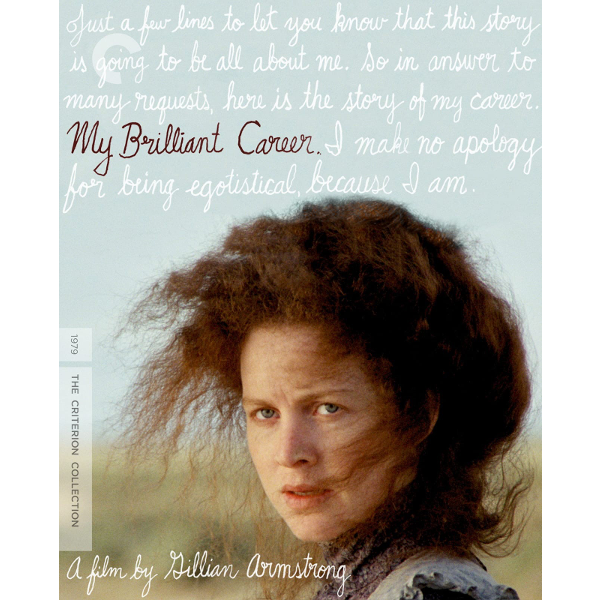
My Brilliant Career 04/30/19

The Criterion Collection
Blu-ray

Gill(ian) Armstrong’s breakthrough feature does a leapfrog over stories like Little Women, with heroines that prevail even when adhering to the Meek Sex role of their time. Judy Davis’s Sybylla Melvin knows that she’s a freckle-faced pain in the neck: despite being proud that she’s attracted the local male catch, her every sinew is committed to her goal of artistic expression and self-fulfillment. The setting is the turn-of-the-century Australian Outback but the story is universal. Sam Neill is remarkable in one of the most ‘thankless’ romantic roles ever.  On Blu-ray from The Criterion Collection.
04/30/19

CineSavant Column

Tuesday April 30, 2019

Hello!

Fearless undercover CineSavant agent Gary Teetzel lets me know that a disc I won’t be able to resist is on its way … this announcement at Sci-Fi Japan has all the info for a Mill Creek steelbook Blu-ray of the ’61 Toho hit Mothra. All the versions and language options appear to be in place, so it’s just a matter of finding out how good it looks — the version showing on TCM is very good.

After hearing some bum reports I skipped the Blu-ray disc of Battle in Outer Space, but I’m enough of a gone goose for the furry flying Japanese piñata and her two pint-sized ‘Peanuts’ girlfriends, that I think I’ll give this a try sight unseen. Expect a review.


Correspondent Jeff Knokey offers an amusing story about a movie I’d really like to see again, if only to find out if the cemetery exit that Whit Bissell’s Dr. Frankenstein uses with his hearse, is really the West/Gower exit in the Forever Hollywood graveyard a few blocks from CineSavant Central, just behind Paramount Pictures. Mr. Knokey has the floor:

“Anyway–in case you haven’t heard this one: producer Herman Cohen was visiting a film class at an Eastern Ivy League College not long after I Was a Teenage Frankenstein was released. The professor was (ironically?) covering the equally recent A Face in the Crowd that day, and demanded of Cohen he he could possibly produce such cultural trash as a teenage Frankenstein movie.

Cohen turned to the class and asked how many had seen “A Face in the Crowd.” A few raised their hands. Then he asked how many had seen “Teenage Frankenstein.” And almost every hand in the room went up. Cohen turned to the prof and said ‘That’s why.’

I wonder if Herman Cohen was the one who spread the original story. The situation on those two titles certainly has changed: the Elia Kazan is readily available, while the Herbert L. Strock is at present out of circulation in a decent presentation. Withholding vintage films from the public kills our cultural legacy.

Thanks for reading! — Glenn Erickson

Saturday April 27, 2019

Why is this picture here? CLICK on it.