Law and Order — (1932) 06/14/25
KL Studio Classics
Blu-ray
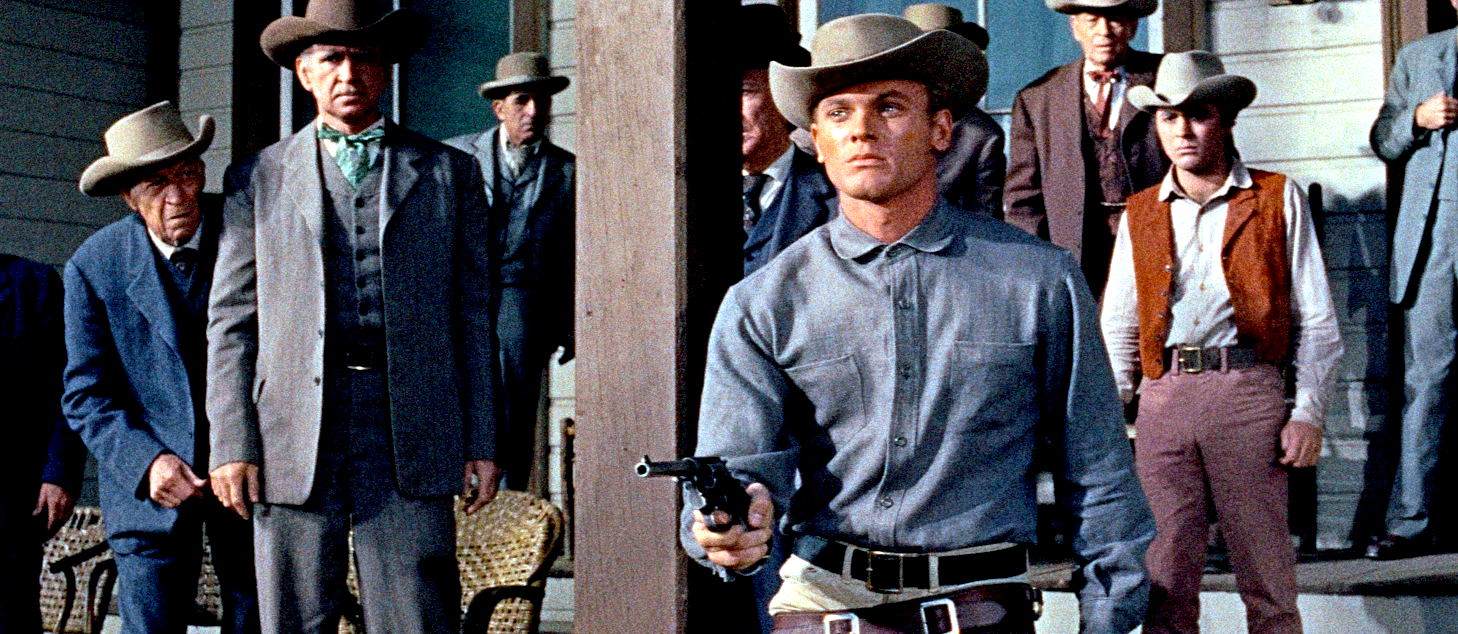
What a surprise … an early sound western that’s solid gold genre entertainment. John Huston adapted W.R. Burnett’s violent retelling of the Wyatt Earp story without an ounce of moralizing. Walter Huston is magnificent as the lawman ‘Saint Johnson,’ a town-taming killer who can’t abide thugs and despots. The show is serious, and so is the body count. Terrific input from Harry Carey, Andy Devine and in a bit part, Walter Brennan. It’s a flawless 4K restoration with perfect audio. The director is none other than Edward L. Cahn, of ’50s exploitation fame. On Blu-ray from KL Studio Classics.
06/14/25

Three Comrades 06/14/25
The Warner Archive Collection
Blu-ray
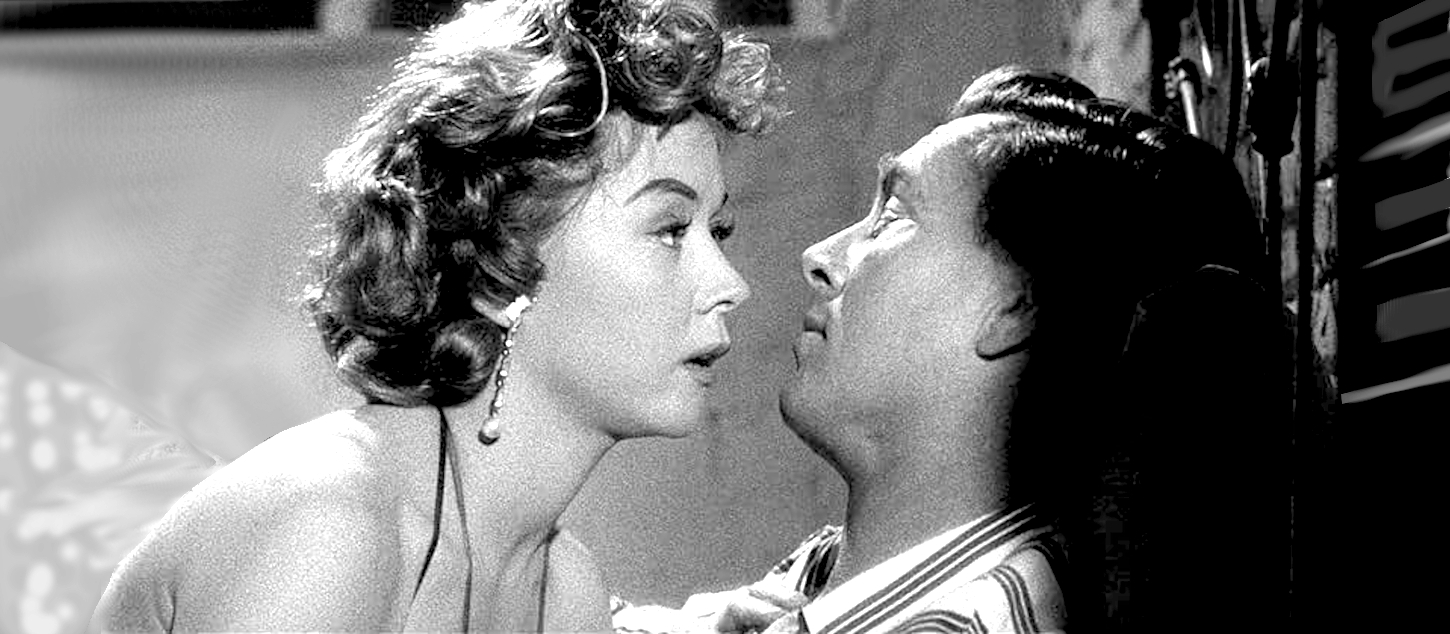
Filmed in the high MGM style, this polished tragic romance stars Robert Taylor, Franchot Tone and Robert Young as Germans having a rough time in the 1920s Weimar Republic, while Margaret Sullavan’s disillusioned beauty succumbs to a dreaded Movie Disease. It is also a prime example of the negative effect of Hollywood’s Production Code. MGM wanted the name value of Erich Maria Remarque’s best seller, but not his message: conservative politics forbade any mention of (shhh!) Nazis. It’s still a very good movie, but it needs to be known that its content was changed to please a Nazi influencer. On Blu-ray from The Warner Archive Collection.
06/14/25
CineSavant Column — No Kings Day

Hello!
To show you how normal things are in Los Angeles, I reported to Jury Duty downtown on Thursday, and the only sign of unrest was a line of police cars that drove down Grand Avenue. The photo above (lifted from the web) is where I was, but taken three days before — a big but peaceful daytime demonstration.
The normalization of chaos real and unreal, here and internationally, has gone beyond strange …. Let’s hope things stay reasonably sane today.

We take our vintage space travel movies where we can find them. This one isn’t the most accomplished Sci-fi thriller ever made, but thanks to a link steer from Michael McQuarrie we are finally able to see it …
It’s Hugo Grimaldi’s Mutiny in Outer Space from 1965, an opus we never caught on 2am TV screenings back in the day. Both it and its companion feature The Human Duplicators have been scarce items ever since. A look at Duplicators’ credits reveals a more interesting cast… this one has galloping fungus clogging up an orbiting space station.
We’re not expecting much but it looks competently filmed. I wish the image were larger.

And I couldn’t let this fat pack of fancy Vinegar Syndrome releases slip by. Business for Blu-ray boutique labels must be good, judging by the constant flow of very high-quality editions with curated extras of the kind once found only on Criterion discs. This group contains five 4K Ultra-HD releases in elaborate packaging — stout boxes with booklets and keep cases in card sleeves. Are due July 29.
Let’s Scare Jessica to Death (1971) with Zohra Lampert
Dirty Work (1998) with Norm Macdonald
The Golden Child (1986) with Eddie Murphy, directed by Michael Ritchie
The Dark Half (1993) with Timothy Hutton, directed by George Romero from the book by Stephen King
Jade (1995) with Linda Fiorentino, David Caruso, directed by William Friedkin
Also, in Blu-ray special editions
Iron Angels I-III (1987-1989) directed by Teresa Woo
and
Charley One-Eye (1973) with Richard Roundtree, directed by Don Chaffey
Thanks for reading! — Glenn Erickson

Oliver! — 4K 06/10/25
Sony / Columbia Pictures
4K Ultra-HD + Digital
One of the more prestigious ’60s movie musicals was extremely popular roadshow item, but late-career director Carol Reed wasn’t treated kindly by the critics. It certainly looks attractive on Sony’s new 4K remaster… the stylized art direction comes across well. Ron Moody, Shani Wallis and Oliver Reed star, with Mark Lester and Jack Wild leading the pack of orphinks as the heroic Oliver and The Artful Dodger. The disc comes with a Digital Code, but not a 2nd Blu-ray encoding. On 4 K Ultra-HD + Digital from Sony / Columbia Pictures.
06/10/25
CineSavant Column

Hello!
Just one review today — last Friday we ran East ‘to the river’ on family business, and my one peek at the Colorado lasted just long enough to take this snapshot. (Hey, it’s not even level.) Then we returned just in time for a rough night in L.A.. I don’t know how it was reported elsewhere, but most of our local coverage was pretty sensible.
Thanks for the concerned notes. The city was not in danger of ‘being obliterated.’ We are not ‘a city of criminals.’ We’re fine, and thinking about everybody caught up in this. I felt proud of our L.A.P.D. for doing the best they could to keep a lid on this no-win situation. Talk about being caught in the middle.

— A Book Review —
First up today is a look at a new film-related book described by its publisher Summit Books as Historical Fiction. The Director illuminates the life and unique career predicament of the famed European film director G. W. Pabst. His name is now remembered to film aficionados as the genius director of the classic Pandora’s Box, The Threepenny Opera and Kameradschaft. Instead of an academic study, this fictionalization describes Pabst’s strange fortunes … that found him becoming a film director under the Third Reich.
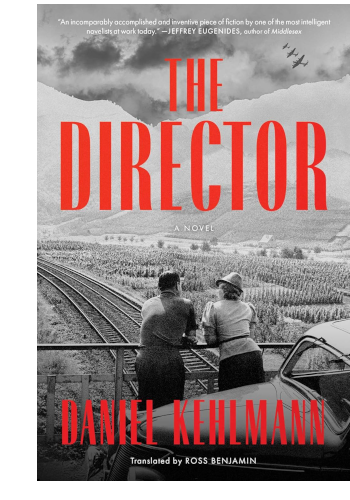
Daniel Kehlmann’s has been translated from German by Ross Benjamin. The novel is formatted not as a straight narrative with one viewpoint, but as several dozen ‘scenes’ from shifting perspectives. More than half are from the viewpoint of Georg Wilhelm Pabst himself, but they range across several associates and family members. Thus we skip the full filmography, the star name-dropping and the dry talk about being hired for this film and not for that one, etc.. For instance, the first chapter is with a former Pabst assistant, now approaching senility. Thrown onto a TV talk show, he is ignored when he tries to clear up some misinformation about the great director. Pabst’s reputation was sustained in postwar Germany for his discovery of Greta Garbo. His greatest films are from the silent and early sound era. His name is sometimes associated with controversy — he spent the war years in Germany, and worked on films for the Nazi establishment.
Kehlmann’s narrative tells a different tale. An Austrian national, Pabst is one of Germany’s biggest director-celebrities. His wife Trude, a former aspiring actress and writer, has sublimated her career to that of her husband. When the Nazis come Pabst decides that the new political climate is not for him, and quietly leaves for Hollywood. But his time at Warner Bros. yields only one film over which he has no control; unlike Fritz Lang or Ernst Lubitsch, he hasn’t the aggressive personality for the struggle of studio politics. He takes his wife and young son to France for several films, before making the defining mistake of his life. Visiting Austria to find a nursing home for his aged mother, the Pabst family is trapped when war is declared. It’s an acute case of bad timing. The borders are closed to everyone, and his papers and visas are meaningless.
The real subject of The Director goes beyond ‘The Movies,’ to the psychology of political oppression. Author Kehlmann has a lot to say about the consequences of ‘going along to get along.’ Depending on what one reads, Pabst was either a voluntary convert to the Nazi system, or he was forced to make movies for the Reich. It didn’t matter that his reputation was that of a ‘Red’ director, having filmed Kurt Weil’s musical play, as well as the sharply pacifist (and Reich-banned) Kameradschaft. Josef Goebbels very much wanted Pabst as a PR boost for his Nazi film industry.
At his home in Austria Pabst is intimidated by a peasant caretaker, a Nazi zealot who forces the Pabsts to live in their own servants’ quarters. A Nazi representative soon arrives to courts and cozen Pabst into taking a meeting with Goebbels, whose manner is terrifyingly faux-hospitable. Pabst doesn’t have to make political entertainment, but the subjects are bland. He’s asked to co-direct a ‘mountain’ film with Arnold Fanck, which gives us several episodes with actress / director Leni Riefenstahl. She is characterized as a manipulating egotist. These encounters are almost like play-scripts, with rich dialogues. G.W. and Trude cannot speak their mind in public for fear of being denounced and imprisoned; although Pabst is in his ‘fifties he could be also be conscripted and sent to the Russian front. In Berlin, poor Trude must attend tea parties with Nazi wives intent on enforcing the Party Line. Her fear and isolation worsens. We also are present for Pabst’s son’s experience in school, learning how to be a cruel Hitler youth, so as not to be victimized by other aggressive boys.
What we get is a convincing transformation of G.W. Pabst into a shell of his artistic self. He is still the smartest person in the room. He retains some authority yet knows he must bend to the will of his masters. At times the text expresses Pabst experiencing waking hallucinations, with action repeating itself, as if he is attempting to ‘direct’ a reality he cannot control. Kehlmann’s imaginings of Pabst’s encounters with a dozen vivid personalities. Back in his Hollywood exile, he visits with his former muses Louise Brooks and Greta Garbo. One is the secret love of his life, now unable to get work and practically a nobody. The other is such a big star that he is no longer qualified to direct her. The final debacle in wartime Czechoslovakia is Pabst’s fixation on a single film project. He obsesses over it as a way of blotting out the chaos and madness around him. Thus when Czech partisans break through, Pabst is caught with other fleeing Germans, trying to escape with his precious film cans in tow.
Kehlmann reserves several ironies for later chapters. He doesn’t touch on what most of us know as Pabst’s ‘twilight’ film Der lezte Akt, about Hitler in his bunker. We instead get a sad episode with G.W. producing and directing a film written by his wife Trude. Ironic postscripts show the lack of closure for Pabst, as his lost and uncompleted film haunts his later years. In her subsidized apartment in Rochester, Louise Brooks’ recounting of G.W. Pabst’s glories can only go so far — she appreciates art too, but what does it all really matter?
We found The Director to be an excellent read. Kehlmann’s publisher accurately defines the subject at hand as ‘art, morality and the human condition.’ Author Daniel Kehlmann plays his game honestly, reminding us in a postscript that The Director is indeed fiction — many story specifics and characters are invented, including one of the major players. But the story of an artistic life under a crushing political regime feels real. In a format of extended sketches, we’re given a fully rounded experience — an insightful one for troubling times.
The Director is published by Summit Books. We found it on Amazon here:

More Book Business.
This second column item is for a book I wanted to order for my daughter … but it’s not going to be available until next January. The University of Minnesota Press has an announcement up for The Luminous Fairies and Mothra. It’s actually a publisher’s announcement, apparently for academic appraisal. The book’s cover graphic is quite appealing.

The movie Mosura, it seems, is not a screen original, but taken from a story by Takehiko Fukunaga, Yoshie Hotta and Shin’ichiro Nakamura. It’s fairly well-known in Japan, and has been described somewhat on audio commentaries for the movie. But this is the first time it will be available in an English-language translation, by Jeffrey Angles.
The basic story is similar, with fairy tale qualities imposed on a giant monster tale with political implications. The film’s storyline has a political message on its surface: a predatory capitalist-gangster from the powerful and exploitative country ‘Rolisica’ exploits a magic island, kidnapping a pair of tiny princesses to perform in a stage show in Tokyo. When the island’s gargantuan insect God Mosura swims to Japan to rescue them, Japan is the first nation to suffer. Without too much effort in decoding, ‘Rolisica’ would seem to be a conflation of Russia and America. Japan is an honest and innocent world citizen, caught in the crossfire.
For some tots it’s Winnie The Pooh, but there are other classics …
Years ago I wanted to take my then very young daughter to a revival screening of Mothra at the Alex Theater in Pasadena. To help her get the basic story down, I drew a little comic book she could read. Afterwards, I made a video of her narrating the story. It was a big hit. The video survived, and then we even located the original comic a few years back …
Coming in January — ? —
Thanks for reading! — Glenn Erickson

Dark City — 4K 06/06/25
Arrow Video
4K Ultra-HD
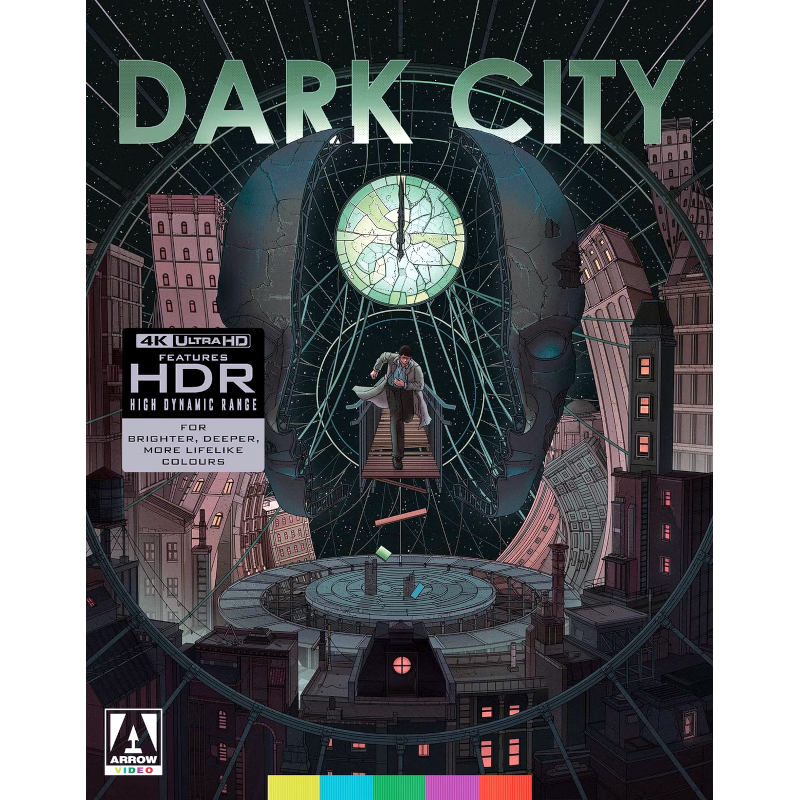
Let’s go back to the days of ‘The Matrix’ when the newfangled CGI toolbox was employed to visualize virtual Sci-fi fantasy dystopias, the kind that operate by the rules of an all-powerful writer … we can almost hear the ghost of Philip K. Dick rattling its chains, just off-camera. Alex Proyas’ enclosed virtual domain may corral 10 ideas too many, but several are very nicely rendered. It suffers from exposition overload, and it may be too art-directed for its own good, yet we really enjoy a lot of what we see. Rufus Sewell, William Hurt, Kiefer Sutherland, Jennifer Connelly and Richard O’Brien star; this new 4K disc has both the theatrical and director’s cuts. On 4K Ultra HD from Arrow Video.
06/06/25

007 James Bond Sean Connery 6-Film Collection — 4K 06/06/25
Amazon MGM Studios / SDS
4K Ultra-HD
It’s a ‘first look’ review: we’ve managed to borrow a copy of the 4K remasters of the Sean Connery 007 blockbusters. The average reader mostly wants to know what the new remasters look like, so we’re skipping a lot of the review-essay business. We’ve seen them all on screen and in every possible video configuration, and have some thoughts about the new transfers, which are loaded with pleasant surprises. One feature has an original alternate soundtrack. What’s it all about, CineSavant? How do they hold up? On 4K Ultra HD from Amazon MGM Studios / SDS.
06/06/25
CineSavant Column

Hello — a day early, as we will explain next time around …
A YouTube post by Matthew B. Lamont gives us something that’s apparently well-known to Forrest Ackerman’s fans, but that escaped me until now …
… it’s Monsters on the Moon, a 5-minute item that shapes up as a trailer-promo for an unproduced Sci-fi fantasy. The professionally-finished (for 1940) promo combines live action and stop-motion animation. The stop-motion isn’t bad … the effects may be crude, but the table-top moon vistas are potentially more interesting than what could be achieved by Hollywood live action at the time. It apparently never had a chance at attracting big-studio interest. Hollywood in the war years had no use for such ‘trick films’ except maybe as advertising shorts, as Ray Harryhausen learned, before Willis O’Brien hired him.
The promo is essentially silent, with a bunch of professionally lettered text cards. We don’t know if it was originally silent or if it always had this music soundtrack of cues from Flash Gordon / Buck Rogers serials. It’s certainly elaborate, especially for its year. It’s amusing that the invading Martians have robot servant-minions identical to George Lucas’s wastepaper-basket droids.
An impressively thorough background story on the odd little film can be found in a Steve Stanchfield post at Cartoon Research {Scroll down a bit}.

And a new issue of the digital magazine Noir City is out …
Number 43 continues with a gallery of authoritive articles and features, including a piece on David Lynch by Zach Vasquez; I migrate fairly quickly to the Blu-ray reviews of Sean Axmaker.
Subscriptions are aligned with The Film Noir Foundation; the info is all at the link.
Thanks for reading! — Glenn Erickson


World Noir Vol. 3 06/03/25
Radiance Films
Blu-ray
This is exactly how Blu-ray boutique labels like Radiance help collectors find great foreign films beyond the top acknowledged classics. This 3-disc collection gets our attention with a notable item we have heard of, Peter Lorre’s one stab at feature film direction, The Lost One. But the other two films are what carried us away: Not Guilty and Girl with Hyacinths. Both are excellent, and one is a genuine masterpiece. On Blu-ray from Radiance Films.
06/03/25

Steppenwolf (2024) 06/03/25
Arrow Video
Blu-ray
We’re glad we were steered toward this violent 2024 film from Kazakhstan, as it’s not one we would have chosen for ourselves. Adilkhan Yerzhanov’s dystopian bloodbath is a reality check on ‘Mad Max’ glamour: not a post-apocalyptic fantasy, just a reflection of the world beyond our national newsfeed. A traumatized woman wants to retrieve a kidnapped son in the midst of appallingly merciless street fighting; an involuntary police torturer goes freelance to help her. Yerzhanov makes up his own rules in this suspenseful, very stylish tension piece … the killing quotient is so high, it’s a marvel either of survives more than a few minutes. The disc has good extras plus an entire second Adilkhan Yerzhanov feature, Goliath. On Blu-ray from Arrow Video.
06/03/25
CineSavant Column

Hello!
Steve Guariento forwarded this link to a ‘Classic British Telly’ YouTube encoding of an entire BBC production from 1965, George Orwell’s 1984.
I’ve only had a chance to see the first five minutes. It looks very polished, with the progressive graphics we expected from the BBC back then. It’s technically an episode of ‘Theater 625’ and stars David Buck, Jane Merrow ( The Lion in Winter) and Joseph O’Conor ( Gorgo).
The script is basically the same as that for a famous 1954 BBC broadcast that made a TV star of Peter Cushing. The writer was none other than Nigel Kneale, of the Quatermass productions. Kneale contributed a second teleplay to the Theater 625 show, entitled The Year of the Sex Olympics.
This link is to an Imogen Sara Smith article posted on Criterion’s page, on a subject that always grabs me — movies by blacklistee directors like John Berry, Joseph Losey and the focus of this article, Cy Endfield, that back in the day were sometimes labeled ‘anti-American.’
Now mostly known for his epic Zulu, Endfield delivered a one-two punch of features in 1950 that still make one’s skin crawl, in no small part because the ‘social issues’ his writers lament are now in the news every day. The article discusses Try and Get Me! (aka The Sound of Fury) with Frank Lovejoy and Lloyd Bridges, the equally disturbing The Underworld Story with Dan Duryea, and Endfield’s searing English attack on capitalist greed, Hell Drivers.
Ms. Smith’s essay is a good entryway into a subgenre that makes us wonder if civilized values exist anywhere: “There ain’t no law against what’s right!”
Thanks for reading! — Glenn Erickson


Prophecy — 4K 05/31/25
KL Studio Classics
4K Ultra HD
Known as a major critical disaster, John Frankenheimer’s eco-horror picture is conventional monster exploitation given high production values and a screenplay laden with environmental lectures. Tossed into a credibility-challenged wilderness ordeal, Talia Shire, Robert Foxworth, Armand Assante and Richard Dysart battle a 12-foot mutant bear on an urgent ursine killing spree. The film’s fixation on horrible birth defects is appropriate to the context, yet still unpleasant. One compensation is cinematographer Harry Stradling Jr.’s impressive Panavision forest vistas. On 4K Ultra HD from KL Studio Classics.
05/31/25

Mystery Street 05/31/25
The Warner Archive Collection
Blu-ray
Terrible title, excellent noir: certain movies just seem to come out perfect. This mainline noir finds suspense and excitement in a police-lab manhunt that begins with just one clue: a human skeleton picked clean. John Sturges had an early hit, directing Ricardo Montalban in the starring role and shaping memorable parts for Jan Sterling, Elsa Lanchester, Bruce Bennett, Edmon Ryan, Marshall Thompson, Sally Forrest and Betsy Blair. The focus on forensics and autopsy detail may be a Hollywood first; it’s now required on every TV crime show. Filmed by the master cinematographer John Alton, on location in and around Boston. On Blu-ray from The Warner Archive Collection.
05/31/25
CineSavant Column

Hello!
Two worthwhile Michael McQuarrie links today. He first steers us to G.W. Thomas’s Darkworlds Quarterly website, which on May 28 floated a quick article offering a stack of links for adaptions of novels and stories by author John Wyndham.
That includes several BBC TV shows and radio shows we’d never heard of. The links go most to trailer and TV blurbs, but the lineup starts with episode 1 of a 1957 radio adaptation of The Day of the Triffids by Giles Cooper. We love the 1981 Triffids BBC miniseries, and Thomas links to a vintage on-air promo.
It’s hard to believe that John Wyndham goes in and out of print. Triffids was one of the first books I remember reading, at age 12. In 1972 when I was keen to read The Midwich Cuckoos a bookstore in Westwood imported a little hardbound edition from London for me. It was a top Wyndham experience.
The link round-up includes a 7-minute BBC TV clip from 1960, a brief interview with Wyndham. He comes off as a very proper fellow who warms up as he talks. The chat isn’t deep but we get a nice glimpse at his personality.
We agree with Thomas that the Wyndham stories are neglected. We still need a definitive Triffids adaptation, and The Midwich Cuckoos could use a creative remake or re-think too.
Thomas’s home page helps promote his own fantasy novels.

And here’s a link to a decent web encoding of a German Science fiction show that was once a mystery … clips from it ended up edited into odd documentaries. We remember getting a first glimpse of it on L.A. TV’s Engineer Bill kiddie show, re purposed as stock footage for a syndicated science series called The Space Explorers.
The original movie is Weltraumschiff 1 Startet from 1940. The 23-minute film was once obscure because it was produced by the Nazi film industry. The translation is ‘Spaceship 1 Launches.’ The director was Anton Kutter.
The film emphasizes that the Third Reich prioritized rockets and promoted the idea that a victorious Germany would use its avowed technical superiority to conquer the heavens as well. At the SFE website we learn that Weltraumschiff became a short film after two feature space adventure projects were cancelled. The Nazis dropped them because the resources for the elaborate special effects were needed for the war effort.
The visual effects are not bad, especially the hangar reveal and the launch up an inclined ramp, the ‘roller coaster to heaven’ idea favored by Soviets, Americans and Englishmen.
Thanks for reading! — Glenn Erickson