
CineSavant Column
Hello!
A Book Review at CineSavant today.
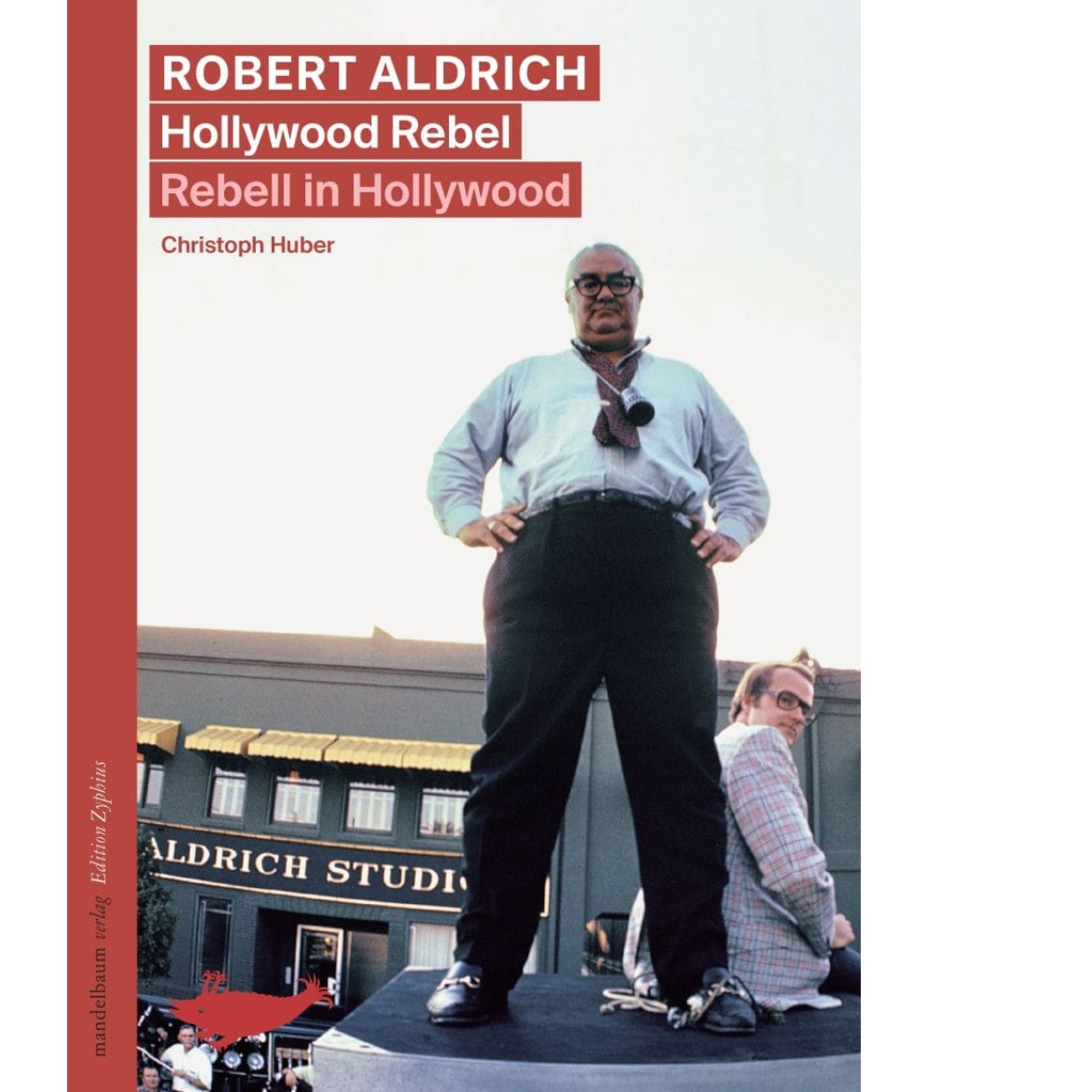
The subject of this book, newly published in Vienna, is a favored director: Robert Aldrich Hollywood Rebel. The author is Christopher Huber, a curator at the Austrian Film Museum. It’s a handsomely designed dual-language book; the soft-bound copy we received for review is very attractive.
We were curious because of my background in noir awareness via my earlier association with the established critics Alain Silver and James Ursini, who with Elizabeth Ward and Robert Profirio launched the first encyclopedic overview of films noir back in 1979. Their 1995 book ‘What Ever Happened to Robert Aldrich?’ is still definitive, and has the benefit of interviews conducted when Aldrich was running his own studio.
Ursini and Silver’s examination of the Aldrich filmography is organized by theme, like the classic film criticism books of the 1960s and ’70s. Christopher Huber’s new investigation of Aldrich takes a different path. Its biographical section is much shorter and each film is individually covered in notes of just a few pages. What distinguishes the new book is the added depth afforded by many quotes by Aldrich and others. Huber’s biographical section goes deeper into Aldrich’s post-college split from the politics of his prestigious family. The Aldriches were related by marriage to the Rockefellers; we get direct quotes referring to young Robert’s rejection of social elitism. Aldrich complied with his father’s dictate to excel in college by playing football, but had no intention of going to work in a bank. He instead nabbed an entry-level job at RKO by tapping a family contact — who reportedly then said, “I never want to see you again.”
We also learn more about Aldrich’s Hollywood apprenticeship under a terrific group of director-mentors: William Wellman, Jean Renoir, Abraham Polonsky, Robert Rossen, Charlie Chaplin, Joseph Losey. When the HUAC witch hunt began, we read Aldrich’s own words on why he thought he hadn’t been singled out for the career-stopping harassment that bedevilled some of the directors he had assisted.
The book is laid out in a semi-academic format, that in this case makes it easier to read. The information content involves quotes and references with sources that need some explaining. Rather than make us constantly reference a glossary of footnotes, Huber places the numbered notes in the page margins, making them sidebar extensions of the main text. They can be accessed when the reader wants them, without disrupting the flow of Huber’s primary train of thought. It’s an efficient way to knock down the wordiness and repetition of film books that approach a subject from several angles, one at a time.
The book reads well because the author’s narrative line is always clear; information and quotes from previous sources have been organized to support Huber’s throughline. We get a feel for the personality of Robert Aldrich, a workaholic director forever lining up properties and actors, to keep moving among industry sharks with the same idea. In between films, we learn about projects that Aldrich could not make happen. After he invested time and money, some became prominent films by other directors.
We get a handle on Aldrich the fighter, in search of the control and power needed to make his movies his way … to have real authorship. Huber does recognize the familiar Aldrich themes: the underdog rebel, the sports metaphors, and the social criticism that Aldrich seemingly inherited from his mentors during his assistant director years. The French considered him an ‘auteur.’ Aldrich strived to earn that distinction, while saying that only a few of his pictures delivered on the promise. But not for lack of trying … how many directors loved moviemaking enough to invest in their own studio, instead of simply angling for bigger paydays?
Aldrich was also a committed liberal. A key quote is, ‘I can’t imagine how people, certainly working people, can be Republicans.’ Liberal film critics were not merciful to his violent and cynical movies. Toward the end he could be really crude. Anti-authoritarian or not, The Longest Yard plays to the cheap seats, and The Choirboys is all but unwatchable.
Yet Twilight’s Last Gleaming is definitely a film by a man with a message he thinks is important. The book laments that we no longer have committed directors like Robert Aldrich, who take issues seriously and express their thoughts openly. Well, little else of the Hollywood we knew remains either. Today’s film directors can’t afford to stray from commercial demands. Aldrich said he had to score a hit every third or fourth film to stay in business … whereas one non-performing feature today pretty much finishes any but the most established director.
I found the insights and observations in Huber’s book to be a real boost. His capsule investigations re-evaluate the individual films from fresh perspectives. He makes a case for seeing Sodom and Gomorrah as one of the best films of its kind, and nails the ‘dog food apocalypse’ conclusion of The Legend of Lylah Clare as a triumph of independent production — it’s exactly the kind of filmmaking a 1968 studio wouldn’t allow.
The bilingual book hasn’t a bit of fat. The English version comes first, followed by the German text. I don’t see it listed at Amazon.us, but it can be imported through the Austrian film museum link, just below. It is also available at the German Amazon, Amazon.de.
Thanks for reading! — Glenn Erickson