
CineSavant Column
Hello!
I was given a fine book to read on the road last week. Back in the film culture of the early ’70s, new books about movie directors appeared at Larry Edmunds almost every day. Many film students read Joseph McBride’s study of Orson Welles, eager to learn about the man’s masterpieces, and the stories behind movies compromised and sometimes mutilated by their producers. McBride’s book had a firm grip on the man’s personality. A critic whose last name began with an ‘H’ used cheap psychology to claim that Welles had willed his own films to fail, while Pauline Kael’s book was an unfounded smear declaring that Welles had stolen writing credit for Citizen Kane.
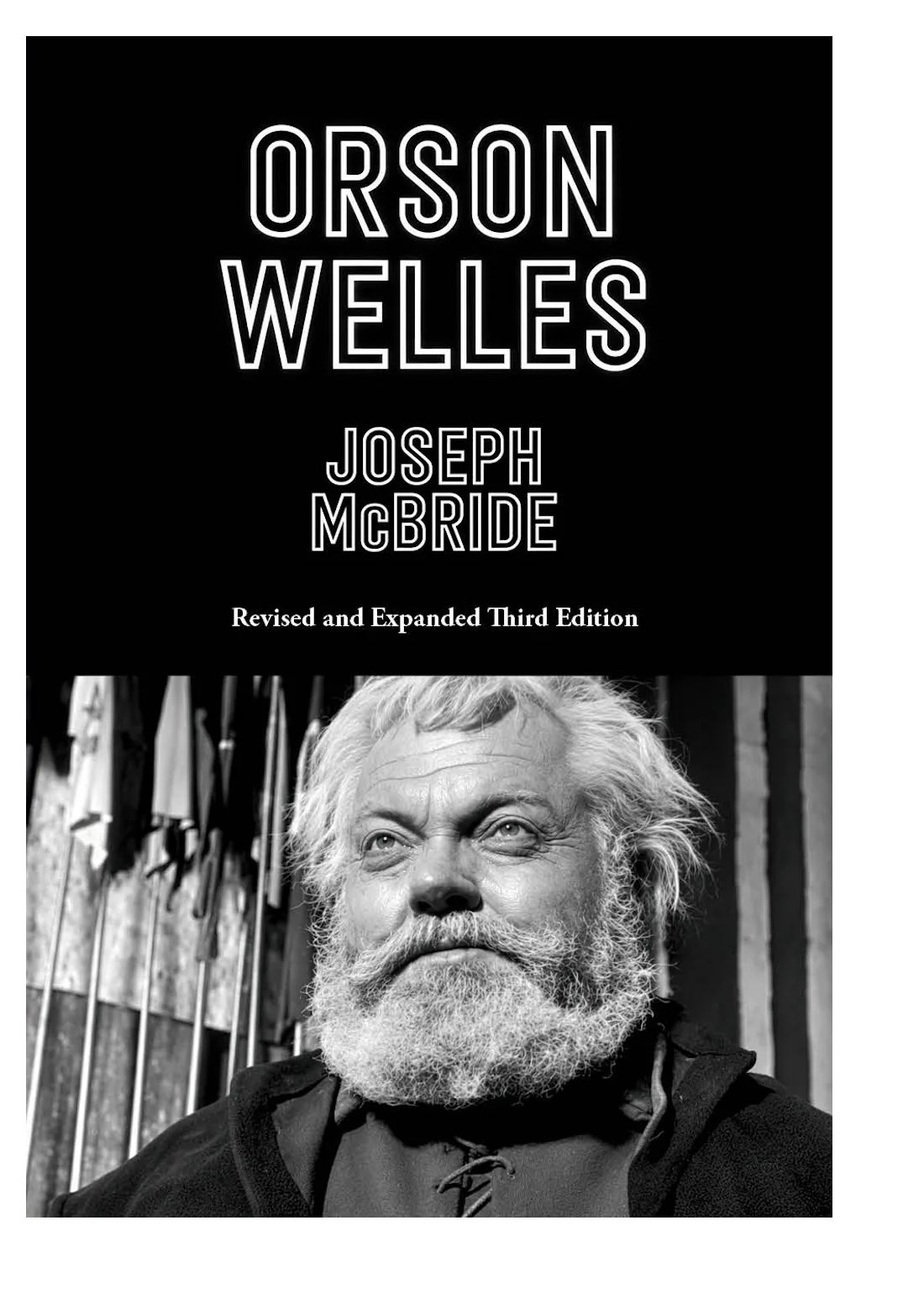
Half a century later, McBride has revisited his book, to expand upon it and alter some previous thinking on some of the movies: Orson Welles – Revised and Expanded Third Edition. Some of these revelations came about because of restorations that brought pictures closer to Welles’ original intentions. Several of Welles’ movies have been found in multiple versions, and/or remastered at a level of quality not available when McBride’s first book appeared in 1972. McBride has reversed his opinion of Welles’ Macbeth, which he had only seen in Republic Pictures’ re-cut version.
Decades of research enabled McBride to reassess Welles from a better-informed viewpoint. The book is a film-centric biography, yet it doesn’t try to explain Welles in knee-jerk ‘Rosebud’ terms. McBride interviewed Welles many times but also worked with him at length, gaining a personal take on the man’s contradictory ways. Other biographers theorized that Welles’ behavior sabotaged his career, whereas McBride argues for a verdict of not guilty. Real artistic crimes were inflicted on so many of his pictures, starting with The Magnificent Ambersons. Being a provocateur by nature surely didn’t help. The furor over Citizen Kane and William Randolph Hearst was the main obstruction to his career, and kicked off near- continuous attacks in the press.
The book also addresses the cause of Welles’ graylisting. Hollywoodites sensitive to liberal causes could find their names on lists even if they were not politically active. To conservative politicians, being pro-labor made one a radical. McBride chronicles Welles’ aborted Brazilian ‘good neighbor’ film from a fresh angle. To the ire of RKO and the Brazilian authorities, Welles insisted on filming an episode about fishermen in a heated labor dispute. Even worse, the fishermen were non-white. Letters and telegrams show the flagrant racism involved. The powers that be expected a musical valentine to Rio, a la Walt Disney’s attractive, non-controversial animated work.

McBride’s criticism explores psychology only to show the complexity of the man. He traces the theme of Welles’ father’s suicide through his work, showing good connections without claiming to have found the director’s personal Rosebud. We do get the idea that Welles’ all-consuming love for moviemaking became a stumbling block, when he expected artistic fervor to overcome commercial reality. Welles himself stated many times that, had he stuck with his theatrical career, he wouldn’t have found himself scrambling for money, or living in a house loaned to him by Peter Bogdanovich.
The book does not aim to be comprehensive on Welles’ theater and radio work prior to his big break with RKO and Kane, yet quite a bit of his school-age creativity is covered. We do see how important cohorts such as John Houseman figured in his work. McBride doesn’t moan the tragedy of Magnificent Ambersons as much as he focuses on the actual events that led to its butchery.
It was totally completed … if they wanted to cut it down, all they had to do was retain an uncut original for future reference.
The text doesn’t exactly blame editor Robert Wise for the cinematic crime against Ambersons. But it does show that Wise presided over the hasty re-edit, jettisoning most of the film’s third act in favor of a different, truncated finale. This unfortunately plays into my (not particularly defensible) view of Wise as a cagey careerist. He became a director by taking over a Val Lewton film already mostly shot by Gunther Fritsch; he later helped Walter Mirisch ‘manage’ new director Jerome Robbins before taking over and receiving most of the credit for West Side Story.
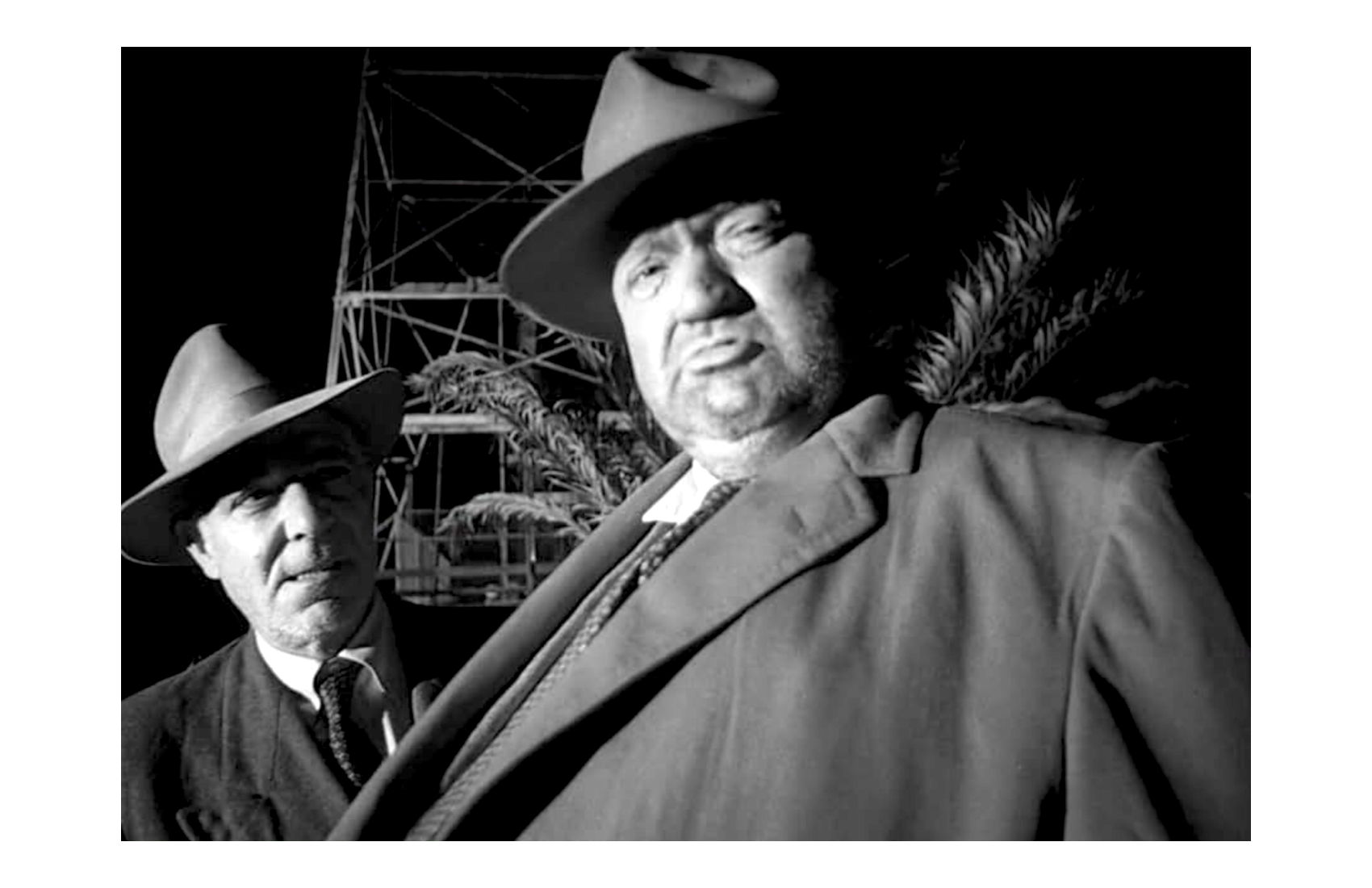
We get detailed making-of accounts of Welles’ Othello, Journey into Fear and Mr. Arkadin, with refreshingly honest appraisals of their strong points and failings. Mr. McBride thinks that Orson Welles sometimes miscast himself in his later movies, with the exception of Chimes at Midnight, which in his view stands with Kane and Touch of Evil as genuine masterpieces.
The criticism also defends Welles as a genuine ‘auteur’: most everything he attempted was highly personal in nature. An exception might be his postwar thriller The Stranger. McBride calls it the director’s one attempt at a commercial product without bigger ambitions, and has plenty of negative things to say about the script, the inconsistent characters, and Welles’ own performance. When it comes to giving credit where due, actor Charlton Heston is revealed as the booster and defender of Welles throughout the troubled Touch of Evil. Five years later, Heston extended that same loyalty to an unfortunately less grateful director, Sam Peckinpah.
McBride cites other biographers that made breakthroughs and pegs talent that helped or influenced Welles along the way. He also identifies companies involved with the restorations of Welles’ work on film and home video. Criterion figures in this frequently, but Joe also pauses to mention some key research by Bret Wood on The Stranger.
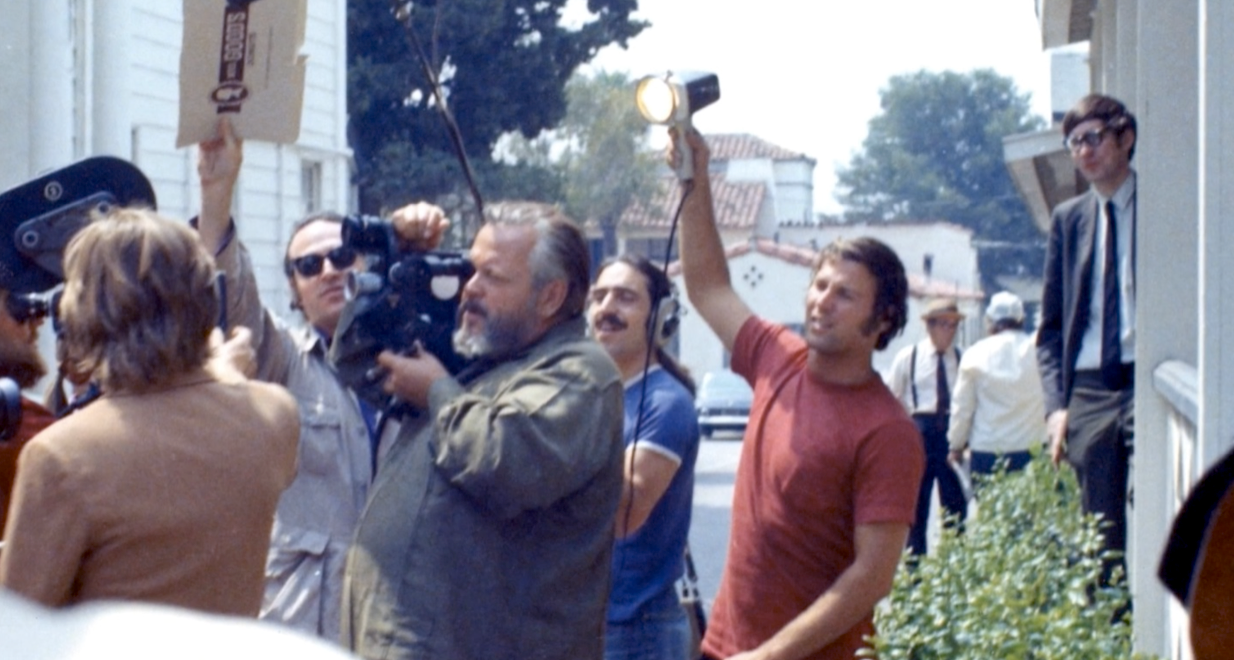
Author McBride has another rare quality: he maintains a reasonable objectivity when writing about his own work with Orson Welles. A big part of the new book is given over to a Welles picture made after the first book was published, The Other Side of the Wind. It was begun in 1970 as a piecemeal production, forever in search of financial backing, by Welles, Oja Kodar, cameraman Gary Graver and a long list of actor-contributors. McBride was invited into the project and played an on-screen role. Most of the film had been shot when it encountered the kinds of tangles that had wrecked Welles’ never-completed Don Quixote project.
Skipping ahead 47 years … When The Other Side of the Wind finally premiered via Netflix in 2018, many of its actors and contributors had already died. Star John Huston passed away in 1985, Susan Strasberg in 1999, Norman Foster in 1976, Lilli Palmer in 1986, Edmond O’Brien in 1985, Cameron Mitchell in 2004, Paul Stewart in 1986, John Carroll in 1972, Stafford Repp in 1974. It’s more than a little strange, watching a movie starring so many ghosts returned from the dead. Art director Polly Platt died in 2011. Welles most faithful collaborator Gary Graver died in 2006, having never seen his work in a final form.
The book covers the genesis, production and the years of rights disputes on The Other Side of the Wind. He sets the story down as straight as he can. We’re not sure how McBride does it, but he avoids making his account All About Him. He does share sharp opinions about some well-known personalities. I’ve digitally dog-eared page 428 for McBride’s two-paragraph capsule on John Milius. A character in The Other Side of the Wind was based on Milius’ public persona.
Our spirits are lifted when the book dismisses Spaniard Jésus Franco as an exploitation hack who made a mess of Don Quixote. And when McBride gets around to directly assessing Welles’ work as an actor, the segment begins with the words, “Let’s start with the nose.” It is a fair and insightful opinion-essay about Welles’ on-screen efforts through the decades.
McBride rightly lauds Welles’ performance as Clarence Darrow in Compulsion, but does not address Richard Fleischer’s account of Orson’s behavior on that show. The same goes for Welles’ purported abuse of the independent director Harry Kümel, who only wanted a chance to work together in harmony. Was Welles chronically abusive or unprofessional? I can’t judge, I wasn’t there.
Joseph McBride has written with authority about numerous directors that piqued his interest. He’s been especially insightful on all things John Ford, but Orson Welles is of course an even more personal subject. McBride’s book gives us a new appreciation of Welles, and new ways of looking at films we thought we already knew well. The great director remains something of an unmanageable genius, but we feel we know him and his movies much better.
Publisher Sticking Place Books has a sales page for Orson Welles – Revised and Expanded Third Edition. I also found sales pages at Barnes and Noble and Amazon.
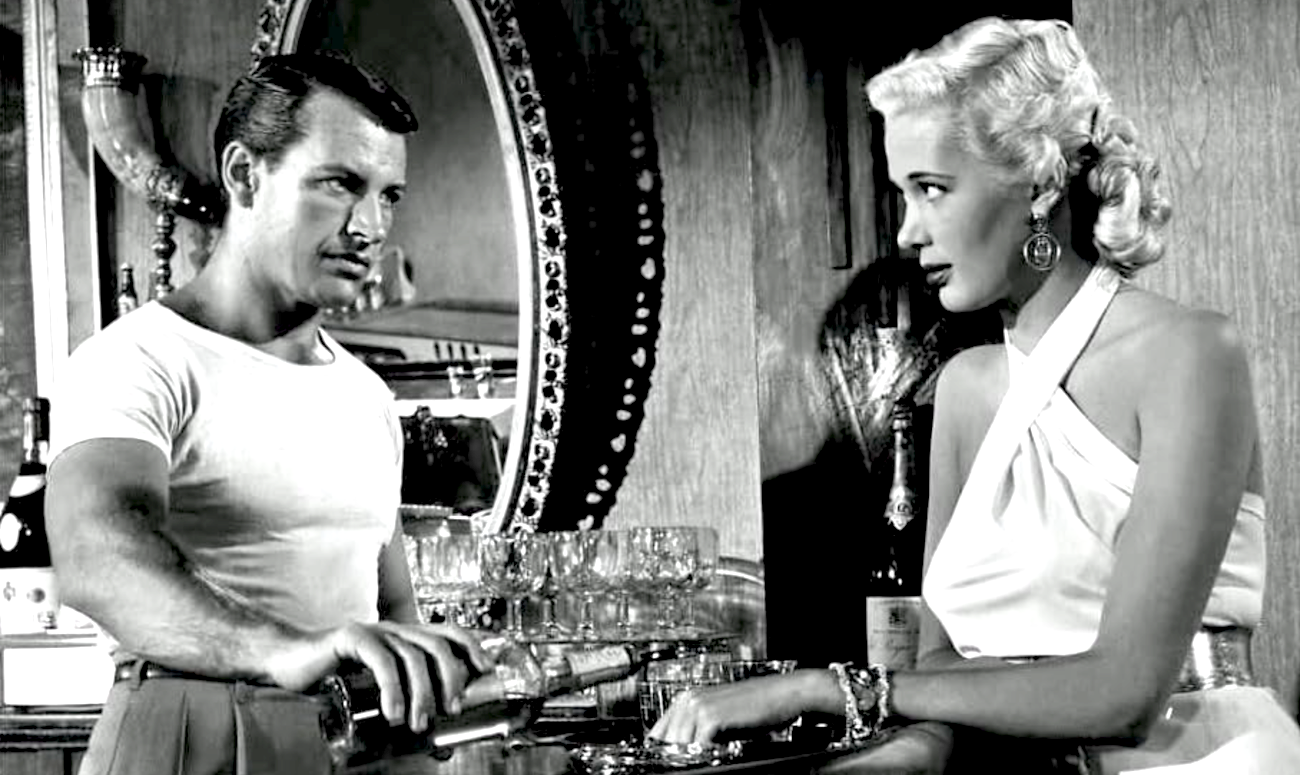
Here’s something to avoid — it’s technically a Disc Review. I was eager to receive a new DVD of the eccentric 1953 ‘domestic noir’ feature Wicked Woman, with Richard Egan and Beverly Michaels. It was a real kick on Eddie Muller’s TCM show Noir Alley, and it was one of the more uproarious Noir City screenings I attended at the Egyptian, years ago. The United Artists release captures the sordid ‘n’ sleazy vibe of cheap pulp fiction about adulterous lowlifes. Nobody forgets the lurid presence of Beverly Michaels, as the beautiful but morally inert drifter who tries to pry saloon owner Egan from his wife. The scenes with her slimy rooming house neighbor Percy Helton are priceless.
There is no legit Blu-ray of this one that I know of, which is a shame, as the movie is so entertaining. My uninformed guess is that there must be some kind of rights roadblock … ?
I had planned to point out how much fun Michaels could be in her Hugo Haas pictures; she also gives a socko finish to MGM’s very good star-laden drama East Side West Side.
But this ‘Shadowplay Enterprises’ DVD is not recommended. It’s the kind of sub-sub-par encoding one would expect to see on an old bargain bin VHS. The image is a mess; it might be a ragged conversion from PAL. It’s not good. I’m only writing this quick coverage because the disc comes from a distributor that asks that I review everything I solicit. Here’s hoping some company gives us a quality release sooner than later.
Thanks for reading! — Glenn Erickson