
CineSavant Column
Hello!
Whoa, it appears that this year’s Halloween thrills have been put on hold … Hammer and the Warner Archive have delayed the street date of both releases of Terence Fisher’s Horror of Dracula by a full month, due to a flaw caught in the production line QC.
Our first thought is to roll our eyes at the weirdness of fandom — with all the horrible things going on in the world, is this something to suffer over? We instead choose to suggest that Hammer’s tale of the bloodthirsty count might qualify as an ideal Thanksgiving movie. All that’s needed is some kind of rational connection, which at the moment escapes me.
I’m frankly impressed that these complicated disc sets go out with so few errors. I’m halfway through watching 20 years of Law and Order episodes, delivered in 20 keep cases with at least 5 discs each, and so far nothing is missing and everything plays. As for the Hammer Dracula discs, I wouldn’t want to think of the mess that would result if a major recall were to take place. So I’m glad they caught the flaw before discs shipped. I’ll just have to settle for Christopher Lee with Cranberry Sauce instead of Candy Corn.
Hunting down a haunted film location.
If you’re lucky enough to go to Paris, what kind of movie-related special discovery would you want to make? The city is so concentrated, that anybody who likes movies can’t help but recognize places one has seen. This means a lot to some people and nothing to others. Here in Hollywood, my tour of film-related sights is a hit with some people but not others. Besides, almost nothing seems to last more than 30 years around this place. I often complain that most every place I worked in my ‘career’ has been redeveloped into something less interesting.
Not so in Paris. Yes, they pulled down the Bastille, but a giant monument marks the spot. On an early morning apart from the organized tour, we set out walking to try and hit two movie-related locations. The first was easy to find: the Promenade Plantée of the Coulée verte René-Dumont. It is a long, elevated park created by converting an old elevated railway line. These Parisians, you see, they don’t rip a thing down before seeing what might be made of it as it is. The long park corridor was given extra popularity by its inclusion in Richard Linklater’s Before Sunset. It’s nice, it’s romantic. It puts you above the noise of the traffic. We got to play Ethan Hawke and Julie Delpy for a few minutes.
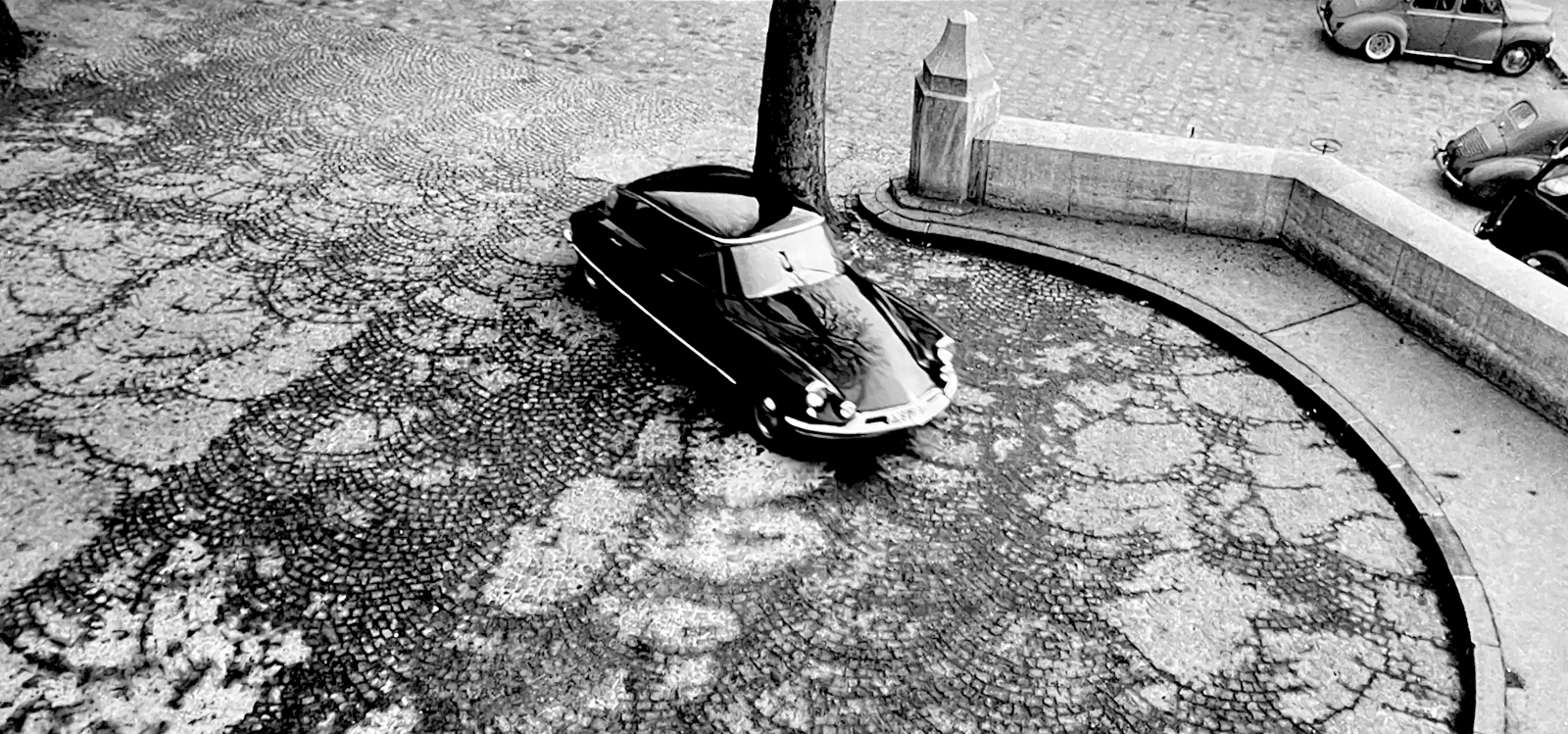
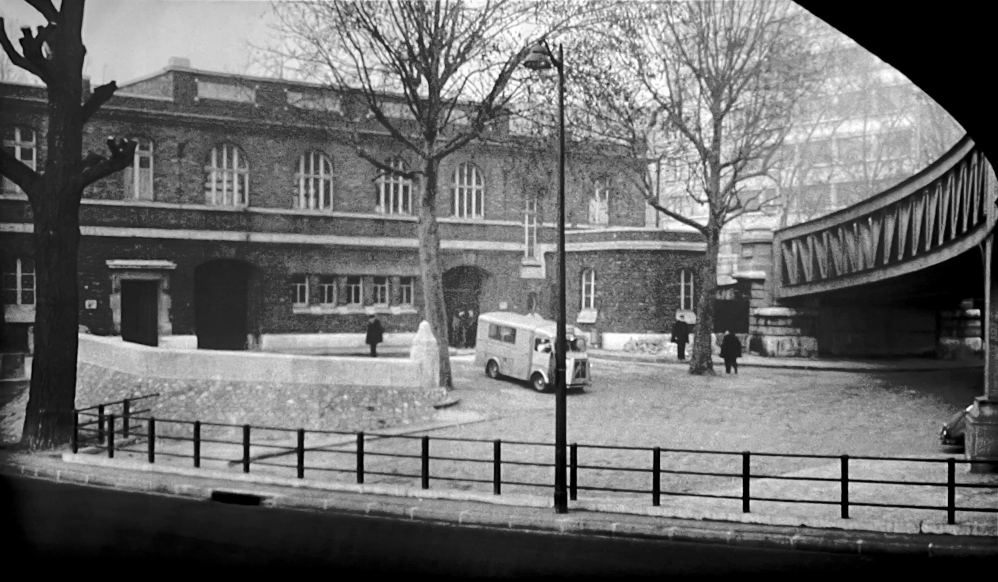
We bopped off the Coule about halfway through and made a sharp right turn for the river Seine. The object was to see what remained of an iconic setting from a 68-year old horror movie, iconic to me anyway. The image above, the down angle of the car, has been lodgeded in my brain ever since seeing a midnight show (in crummy 16mm and English dub) of Georges Franju’s Les yeux sans visage aka Eyes without a Face. That circular brickyard driveway was the focus of critic Raymond Durgnat’s statement that Franju’s B&W movie operated on contrasts of texture: clammy rough bricks, the skeletal black trees reflected in the shiny Citroën car, rough bandages, and smooth skin. The driveway belongs to what in the film was a morgue.
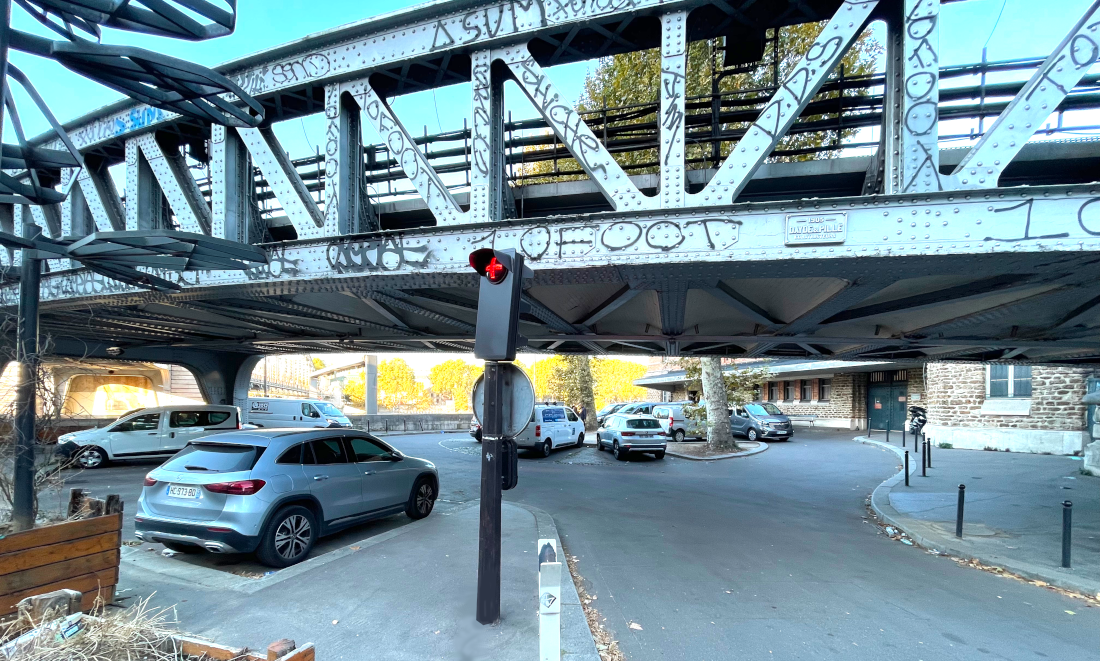
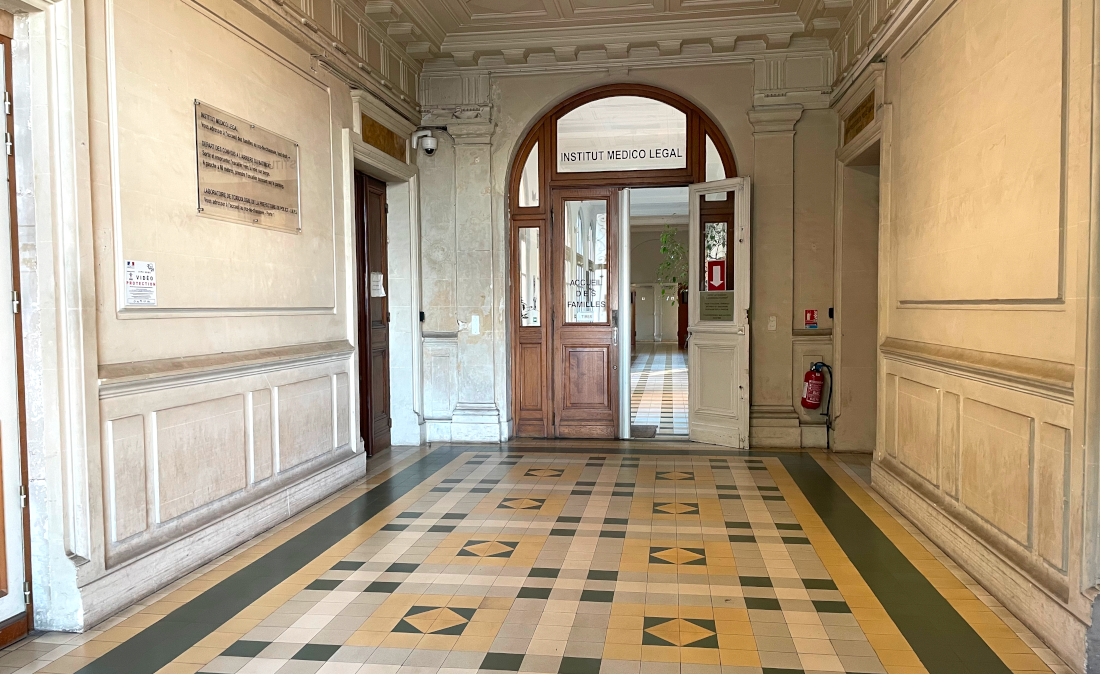
Was it really ever a morgue? The building appeared to still exist. It was listed as ‘Institut Medico Legal,’ which we thought might be an archive for medical records.
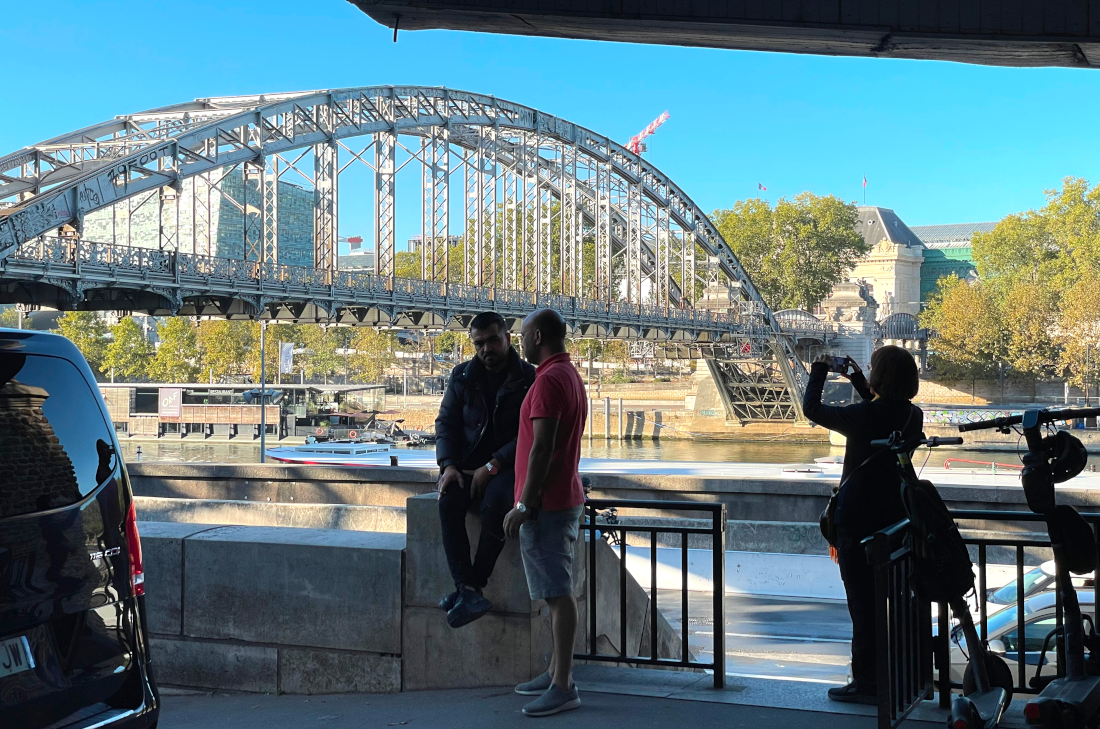
When we got to the river we found what we were looking for squeezed into a tight space partly under an iron railway bridge over which trains pass every minute or two. The trestle for the bridge goes right over the building’s parking lot. The trains are only a few feet above us. There is only ten feet of clearance under the trestle, for vehicles to enter.
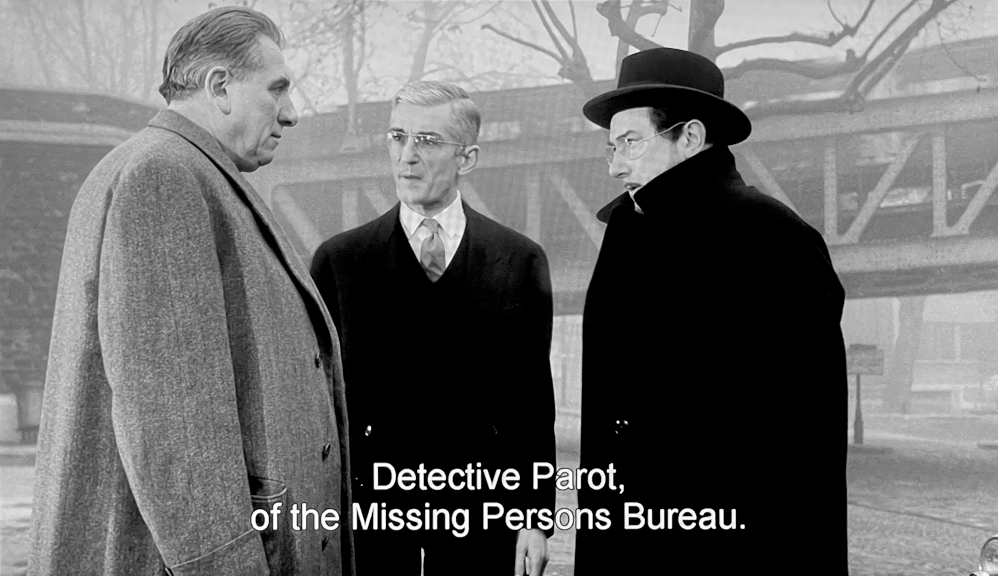
There was no barrier to access, but we stopped short when we saw a large coffin carried from the building. We then realized that the ‘Institut’ was indeed a morgue, and that it must have been one since long before 1959. Paris hearses aren’t stretch limos, just black vans. We hung around the perimeter trying to look invisible. When it looked like I wasn’t going to be disturbing either the bereaved or the chauffeurs waiting on the sides, I took my pictures. the only angle I couldn’t get was the down view of the car … I’d have to climp on top of the building to get that.
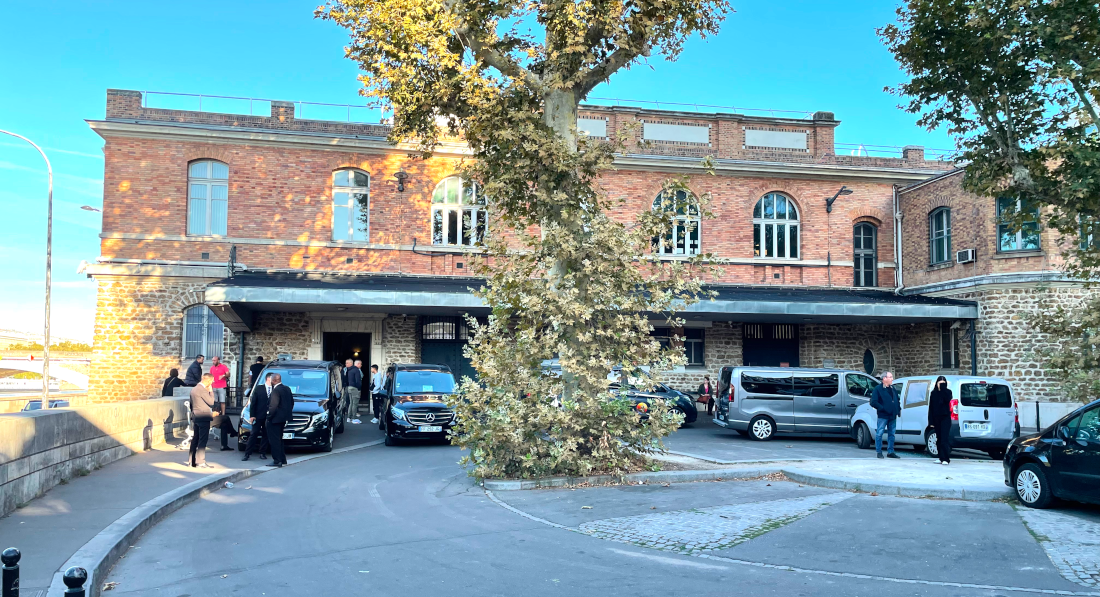
The building looks different only in that they added a partial overhang, presumably so people waiting in the rain wouldn’t be soaked. The movie scene was filmed in a foggy twilight but we were there on a bright September morning. The driveway yard has been somewhat reconfigured, with asphalt instead of bricks, but it’s still in a circular pattern. A downward driveway seen in the movie no longer exists. Did that at one time connect with a dock, to service funeral processions on the river?
My wider-angled lens makes the area look larger than it is. It was large in 1959, too. And a road has been widened, reducing the size of the lot.
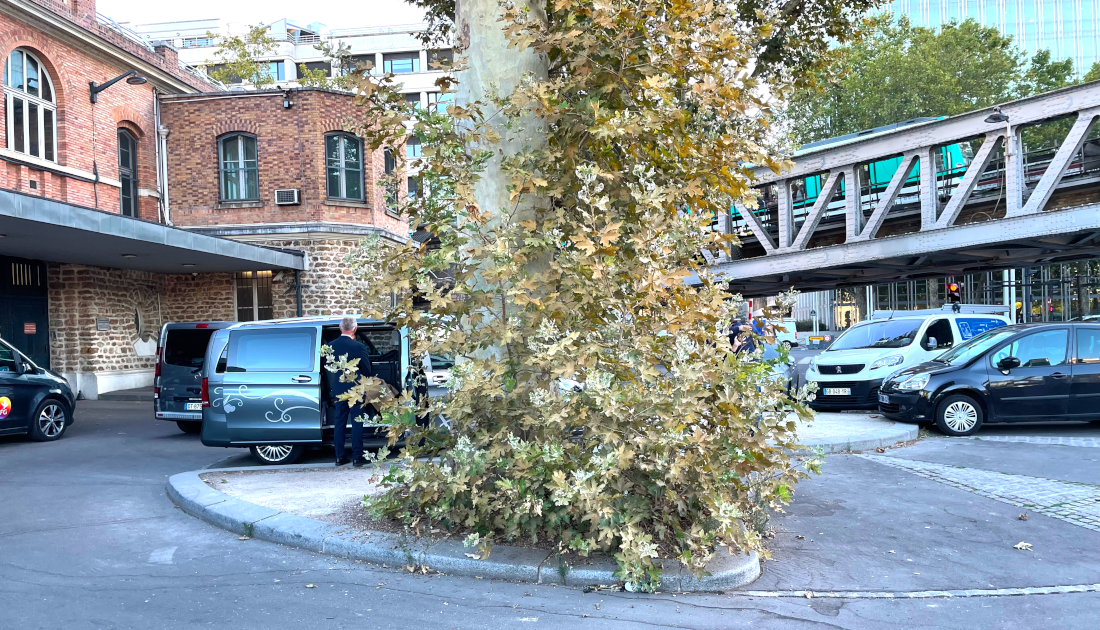
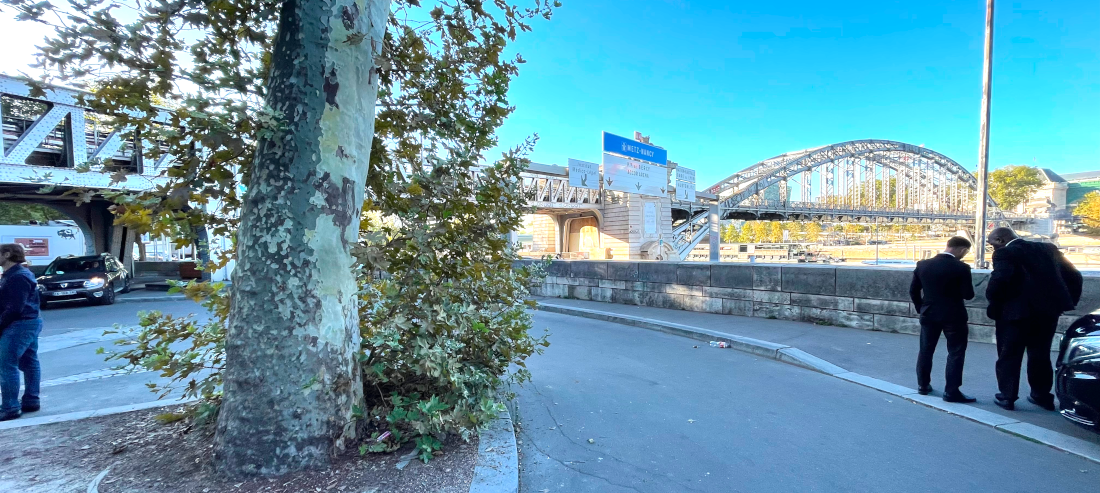
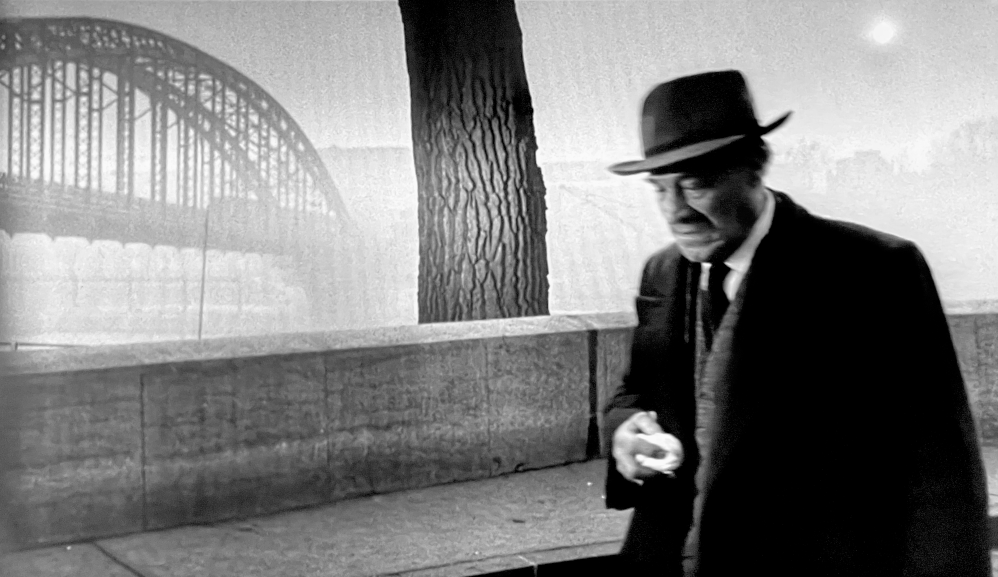
The trains that rattle by every two minutes or so do lend the feeling that the morgue is some kind of departure point, to cross the Seine Styx and reach ‘that distant shore.’ The poetic effect works in broad daylight, in 2026.
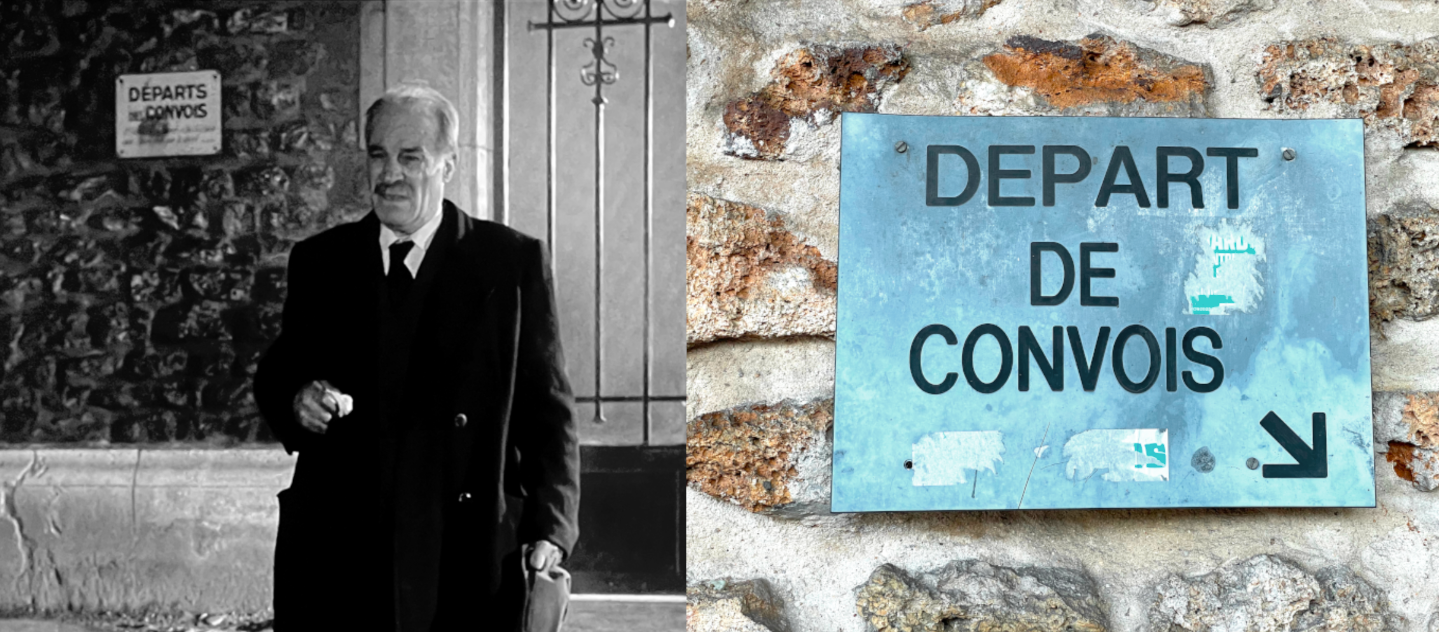
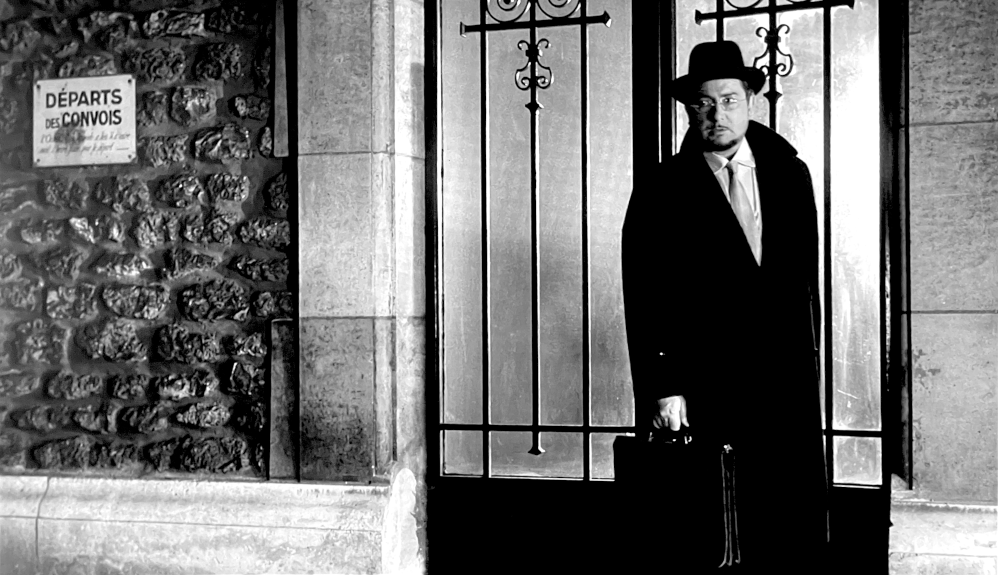
A plaque on the wall today has the same message as the one in the movie: ‘Départ de Convois.’ Did Charon have the same sign next to his boat, written in Greek?
Some morgue interiors appear to be real. Through these windows we see a corridor where the bereaved might wait …
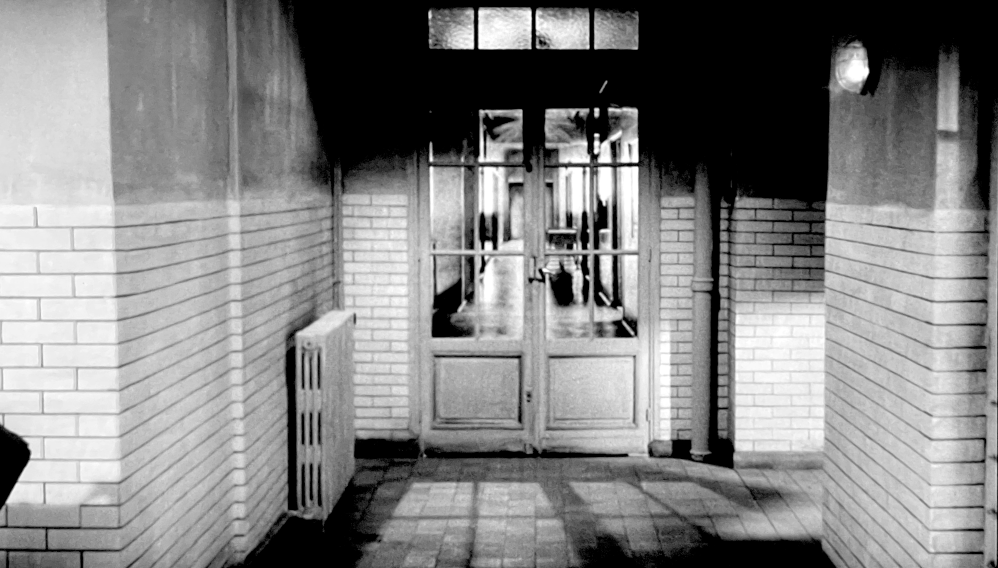
… and it matches the view from the other side.
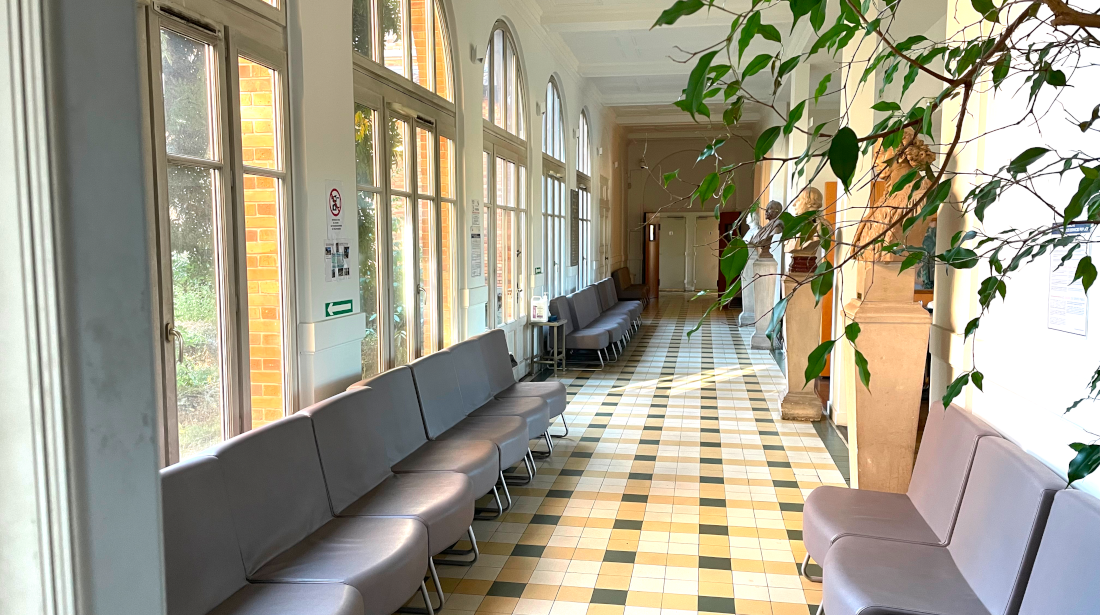
Around the building from the ‘Départ de Convois’ hearse dock is a different parking lot, leading to this reception room for the next of kin.
Good old Dr. Gennessier wishes us to ‘Have a nice day.’ We spent part of our Paris time with a tour group. Had they known us better they might not have been so surprised by my enthusiasm to find the real-life morgue seen in the classic movie.
Thanks for reading! — Glenn Erickson