
CineSavant Column
Hello!
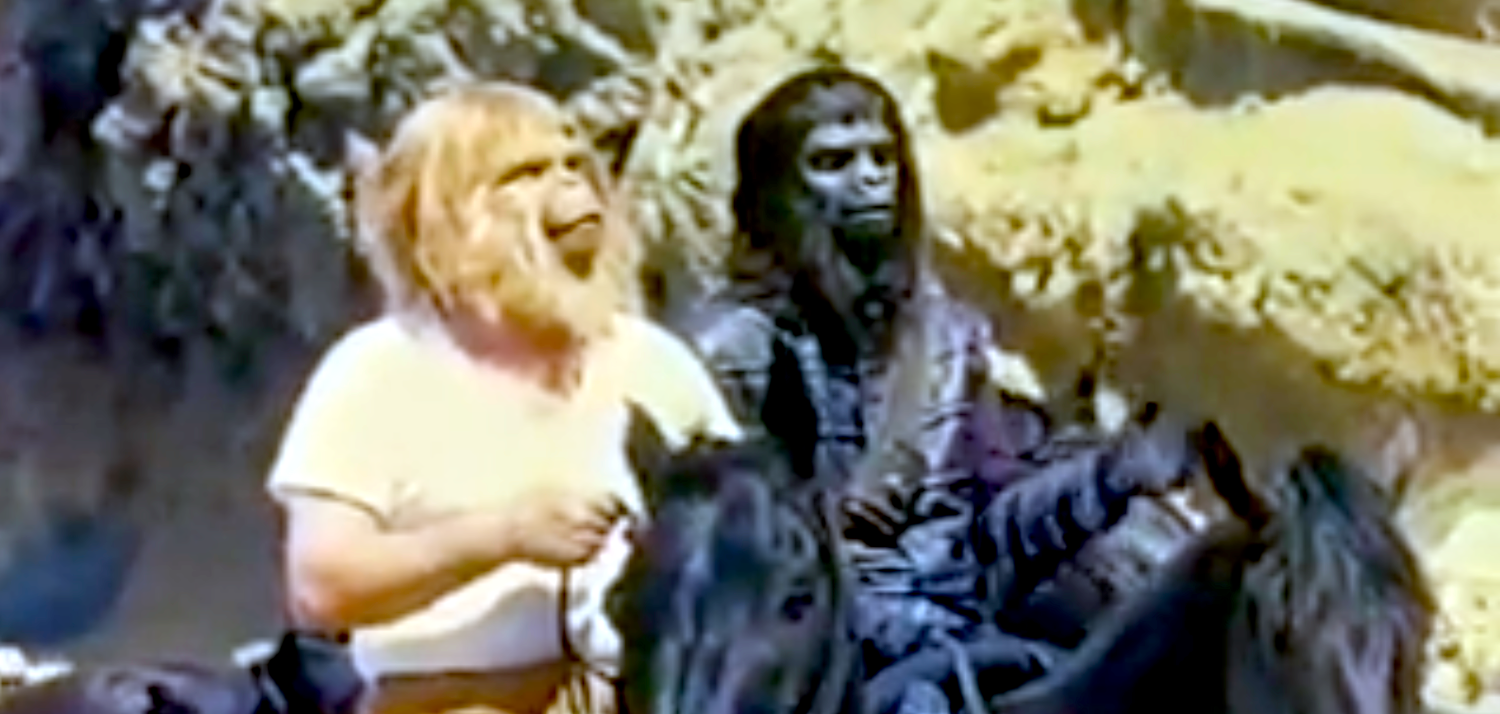
Michael McQuarrie came through again — we’ve been checking out this little video prize: 45 minutes of fabulous 16mm home movies from the set of Franklin Schaffner’s original Planet of the Apes.
It’s the work of actor Roddy McDowall, whose still photos and home movies are legendary. Some of these scenes showed up in featurettes promoting the release of the first Planet of the Apes discs, but this is McDowall’s entire uncut reel.
The location is the Malibu cove that serves as the Chimpanzees’ archeological dig that proves heretical to the Ourang powers that be. If I’m not mistaken, the rocks at the south of this particular beach is the location for the fabulous crane setup and effects composite for the film’s famous final shot.
Everybody cooperates with Roddy and his camera — it looks like a happy set. The 16mm footage was posted by one ‘twilightfan69.’
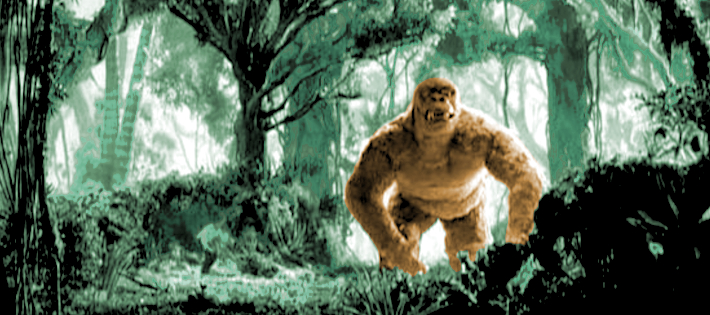
And since we’re on the subject of monkeys, this is a good time for a Book Review that I should have posted a week ago.
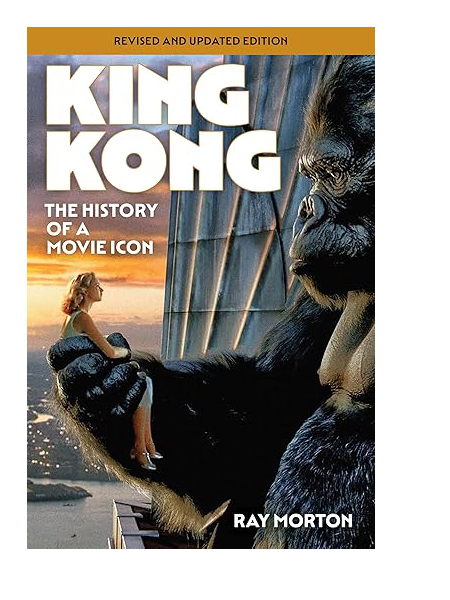
The book in question is by Ray Morton, whose Close Encounters Making-Of Book from 2007 is also a good read. This tome is King Kong, The History of a Movie Icon, published on April 2 of this year. It’s an updating, revision and enlargement of a first edition published in 2005.
Especially with its new material, this overall survey of all things King Kong is a good follow-up to George Turner’s older making-of book, which of course only covers the 1933 original. Morton chronicles the entire Kong saga, through the 1933 sequel, the Toho films of the 1960s, Dino De Laurentiis’s films, Peter Jackson’s 2005 reboot and the ongoing series from Legendary Entertainment.
None of the chapters are given short shrift, not even Toho’s effort. This where the fans divide into two groups, where the ‘Willis O’Brien or Nothing’ purists face off against those that see merit in some of the newer versions, or just choose to be non-judgmental. Author Morton is good at organizing the facts in a logical and entertaining way. We read about what the major players Merian Cooper, Ruth Rose and others did to earn their fandom fame, as well as their backgrounds and other accomplishments.
The book sticks to the major ‘official’ Kong films first, which brings in a great many players in films made in different decades. There’s the infamous John Beck, and the beloved Eiji Tsuburaya, the mogul Dino de Laurentiis with his super-Kong given a 99% to 1% split between Rick Baker and Carlo Rambaldi, and Peter Jackson choosing Kong as his pet project after Lord of the Rings.
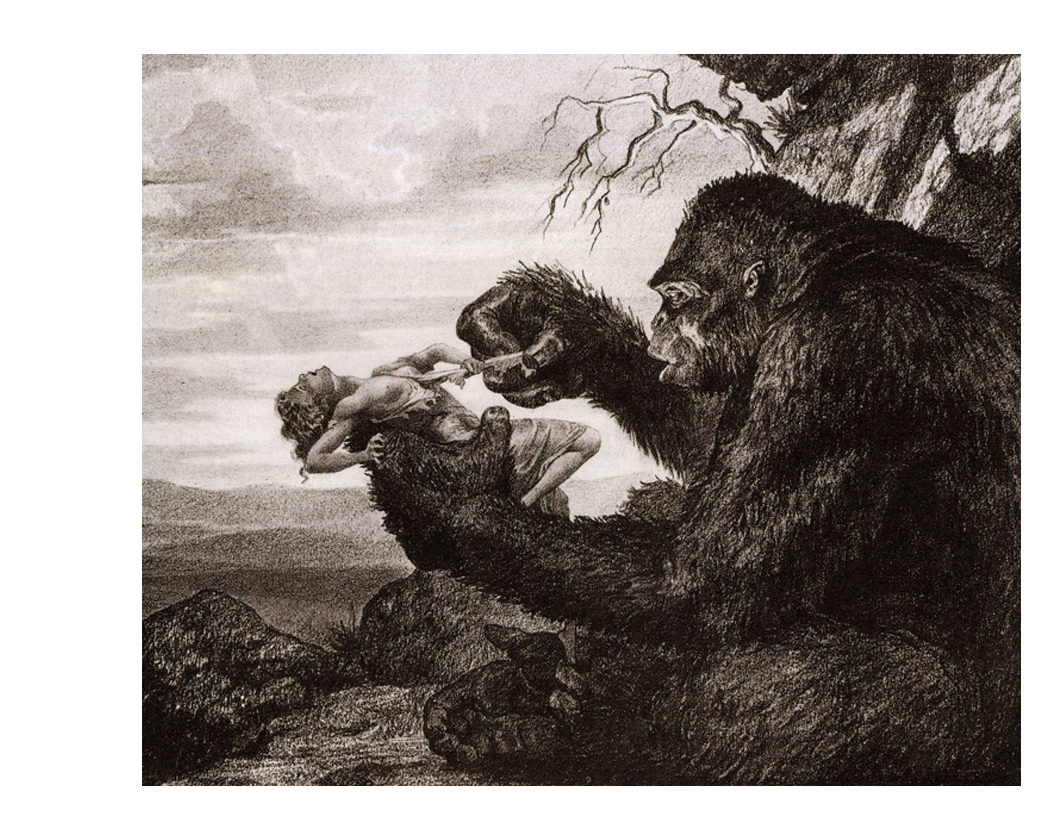
Along the way Morton offers succinct and (to this date) definitive accounts of subjects as diverse as the ‘missing’ 1933 spider pit sequence, Ray Harryhausen’s work on Mighty Joe Young, the non-functioning robot Kong and De Laurentiis’s full-court press to have said robot win an Oscar. Jackson’s Kong and the Legendary reboot are covered just as thoroughly as the classic versions. And the book winds up with what seems like an endless stream of Kong TV shows, special films, and outright rip-off productions that used the Kong name but sometimes didn’t even have a giant ape.
The text offers up nuggets we hadn’t heard. Apparently the rights holder RKO General was going to sue the makers of the rip-off feature Konga, until its producers arranged to buy a lot of advertising on RKO General’s TV stations.
At about 360 pages, Morton’s book is a substantial read and a good reference to all filmic angles on the Big Monkey of Skull Island. The text is accompanied by many B&W photos and illustrations. It can be ordered from most booksellers; the link given here is a direct line to Bloombury Academic:
Thanks for reading! — Glenn Erickson