
CineSavant Column
Hello!
CineSavant is back after our break, and expecting to be back on full review track on Saturday. Meanwhile, the 4 reviews that were posted while we were gone are dutifully linked above. Many thanks to Charlie Largent for helping CineSavant stay on track.
It was a great break, enough to make one forget life back home for a few days — how does this computer work? Since my head isn’t sufficiently together to write a new review today, I thought I’d opt for a quick travelogue and personal reportage. It was a rewarding trip …
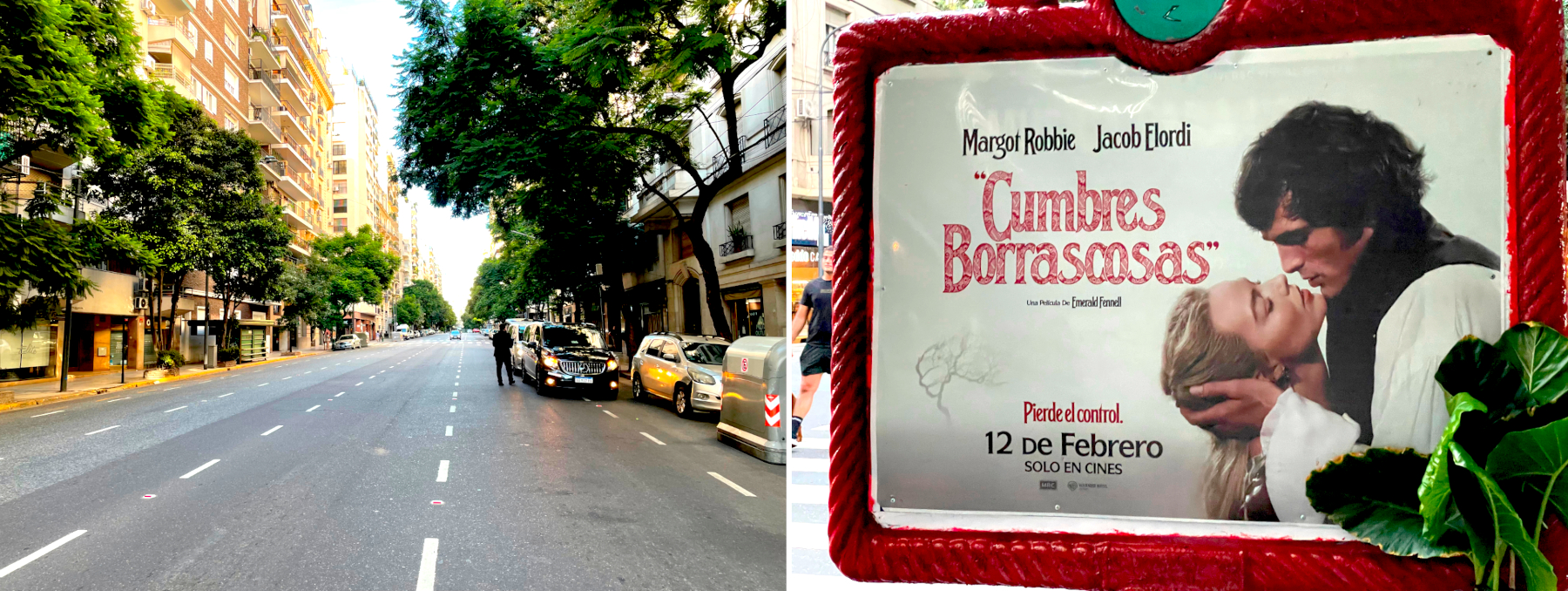
The place was Buenos Aires, which is now enjoying late summer, August-like weather. Other Americans were down there eager to avoid the cold of places like Chicago and New York. The streets of the central city are exceedingly safe and the districts most likely to attract tourists like us could indeed pass for boroughs of Paris. It’s a cosmopolitan, international place and not at all behind the times, as indicated by this impressive street-level movie ad near a bus stop on Avenida Callao. ↗ We had fun negotiating with Argentinian pesos, but most of our fellow travelers paid with U.S. credit cards, no problem.
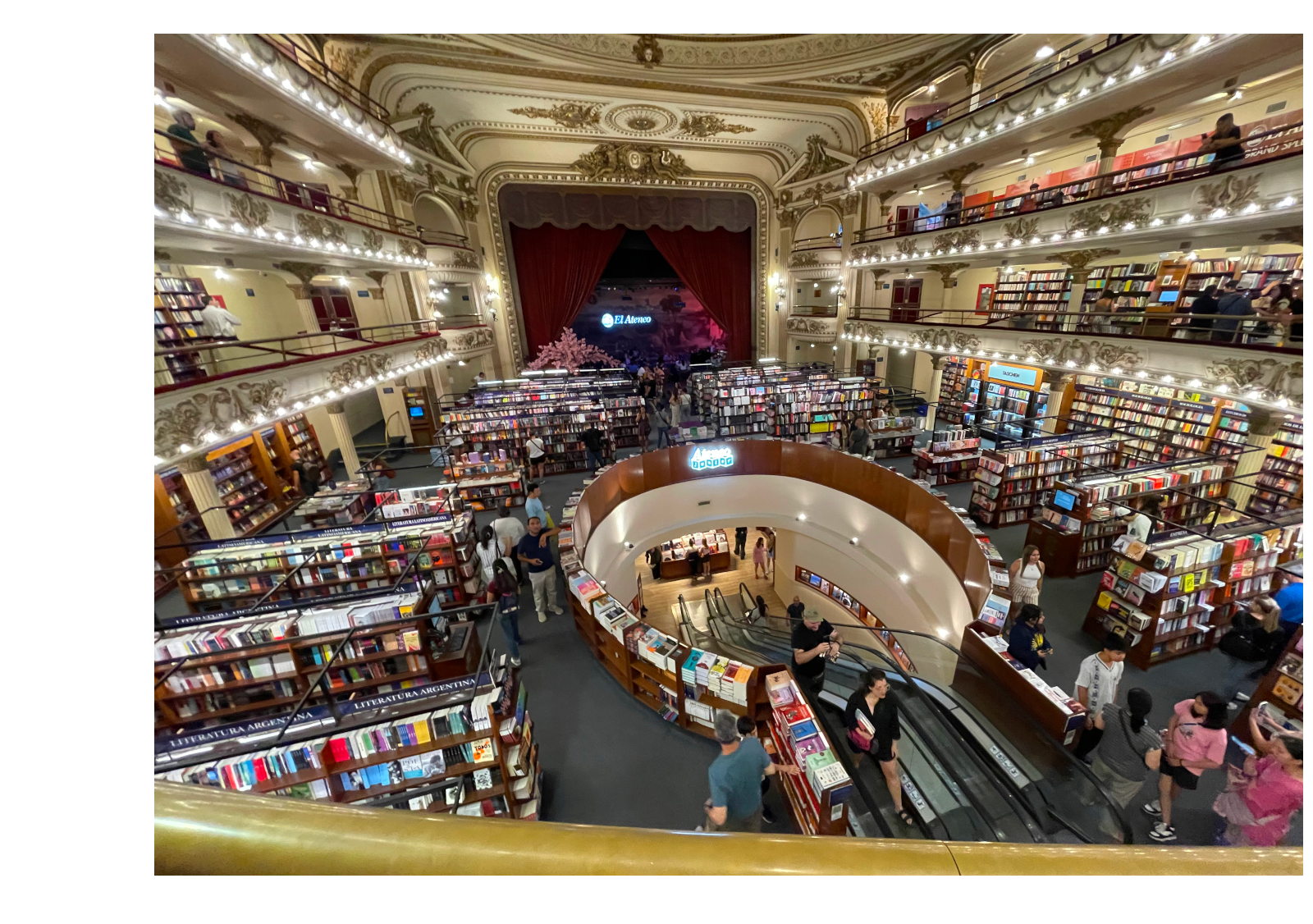
Public buildings and a great many restaurants, stores and businesses are just beautiful to look at. Cafes, ice cream parlors, churrerios had distinctive interiors, often appointed with fine woodwork and floor tiles. → The Ateneo book and record store appears to be a converted opera house / movie theater, which makes for a spectacular interior.
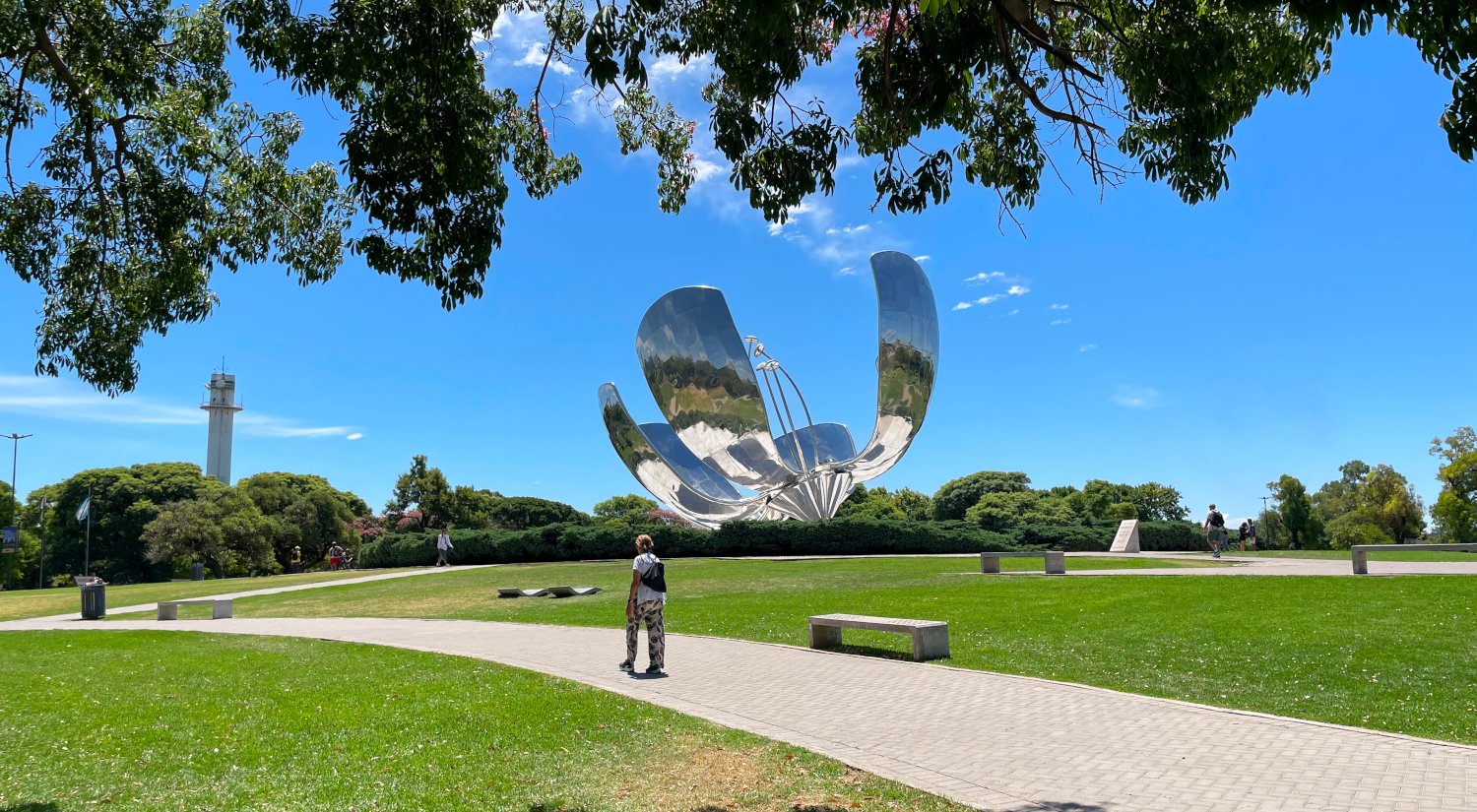
That giant flower-thing is ‘Floralis Generica,’ a 75-foot sculpture by Eduardo Catalano, engineered in aluminum by Lockheed’s Argentina division and erected in 2002. It’s kinetic — its petals were made to open at dawn and close at dusk. The nighttime view at the top of the column was taken after an Electronica music concert held on the grounds; ↑ we passed through what must have been 10,000 kids, students and (to distinguish them from me) young people on their way home. The most mellow atmosphere imaginable. Police helping to direct traffic, all benign.
At the last minute before the trip I asked author and all-around film guru Alan K. Rode for a connection with the Argentinian film archivists that rescued the long version of Metropolis 18 years ago. Within a few hours I had some good news. Film professor María Elena de las Carreras forwarded contact info for Fernando Martín Peña, who was instrumental in getting the surviving Metropolis print from private hands. Fernando also gave me contact information for Paula Félix-Didier, the other main force that got the uncut Fritz Lang classic back to Germany.
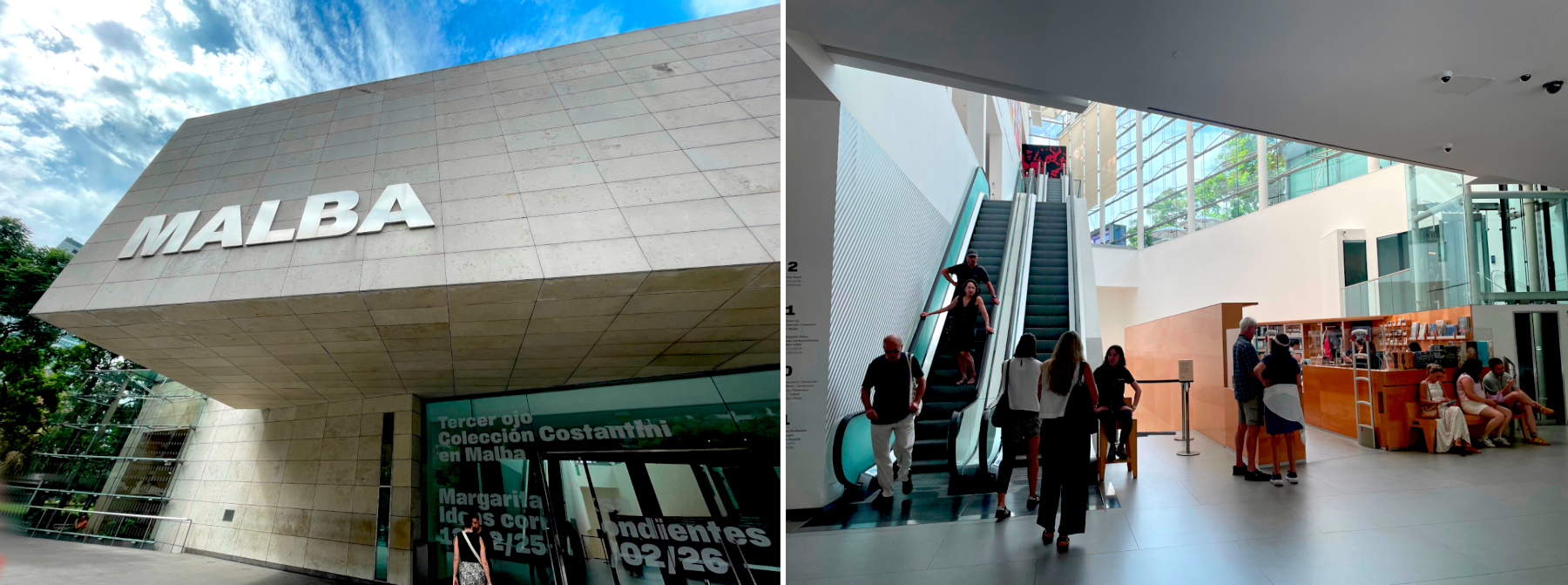
Fernando Martín Peña extended an invitation that we took up immediately; I was able to meet him at one of his archival screenings at MALBA (Museo de Arte Latinoamericano de Buenos Aires). He has an entire film program going there. We attended a 7pm showing of a rare print of El Camino del Infierno (The Road to Hell), which turned out to be a noir-inflected 1946 soap opera about a strange marriage that ends in murder. Señor Peña is the main collaborator with our Film Noir Foundation’s restoration of several Argentinian noirs and their resurrection on disc media, like El vampiro negro and Los tallos amargos. It was just long enough to say hello and express my admiration and approval. One can exchange e-mails, but there’s nothing like trying to make personal contact.
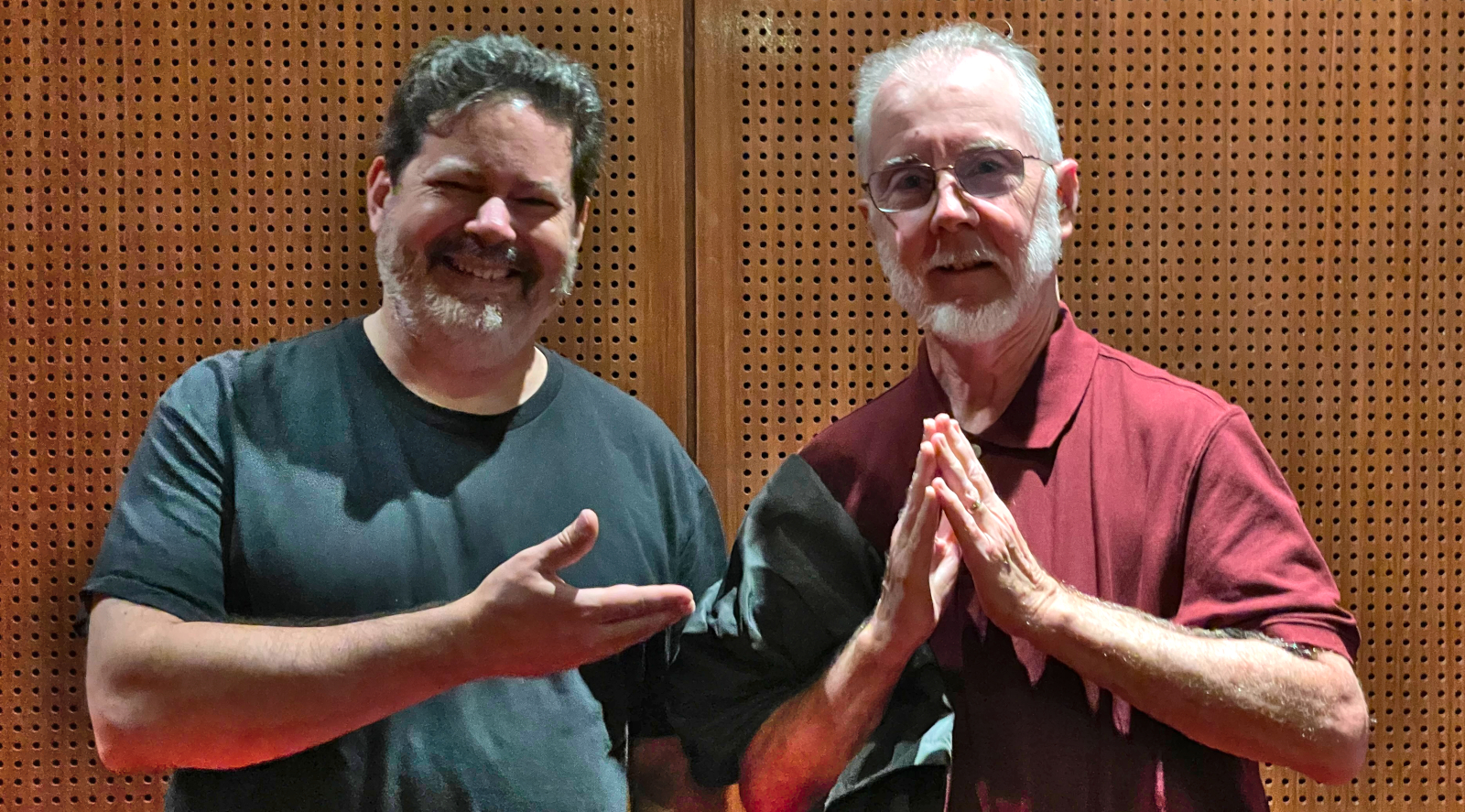
In Buenos Aires, even museum screenings observe Latin hours … when the show broke at 9:30, it was time for dinner for many patrons. Our schedule didn’t make room for the big city nightlife, but we noticed that the last MALBA screening began at midnight — a Spanish print of El gabinete del Dr. Caligari. Had I been able to stay up, I may have been able to see the film’s elaborate original inter-titles — in Spanish.
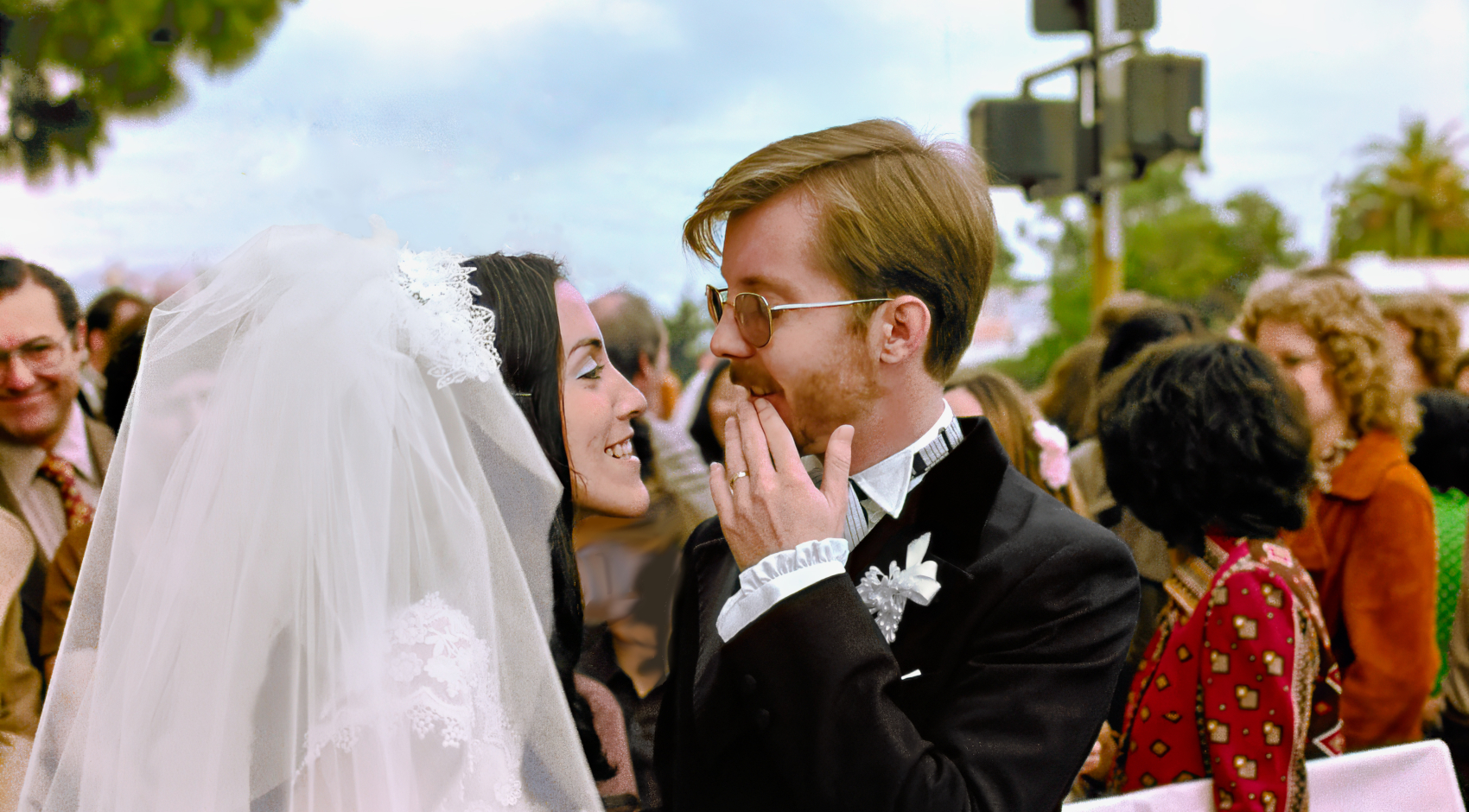
We can promise more film and disc-related content on Saturday, but choose to finish today’s column in a completely self-indulgent way. The trip to Buenos Aires was planned to overlap my birthday and our 50th wedding anniversary. Family-wise, I normally keep a low profile online, for simple privacy’s sake. For instance, I freely showcase my daughter’s car and her dog, but not her. I figured this 50th year marker was a big enough excuse to stretch that general rule.
Back on St. Valentine’s Day in the Bicentennial year of 1976, we had an old-fashioned big church marriage. The great idea of celebrating our 50th on the other side of the world was that of my wife María. So here I post two very personal photos from that day. I was just out of college. The movie job that changed my life was months away. We had the expected gallery of Ushers and Maids of Honor. Four of the Ushers were film-school friends, with whom I’ve shared 40 years of career ups and downs.
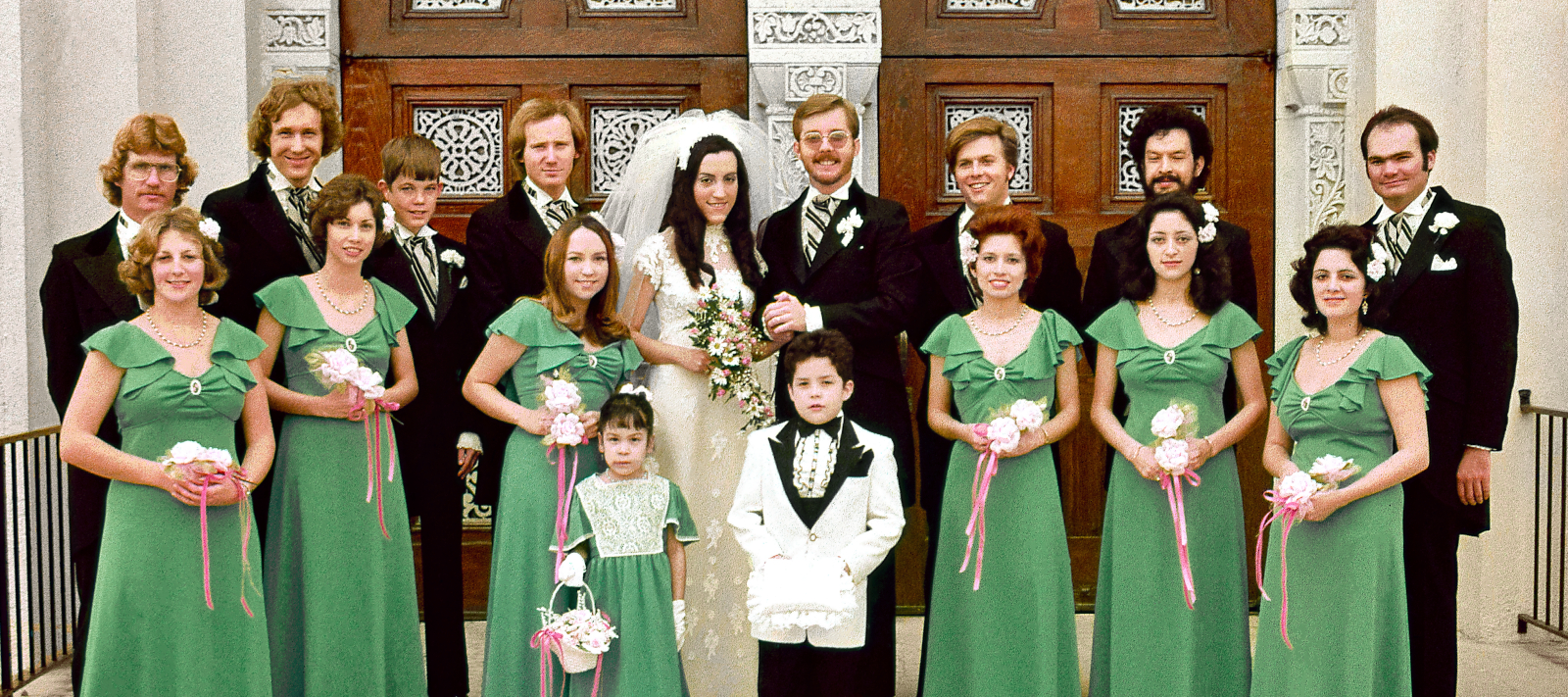
The standard photo of the wedding court has some great faces. I’ll list my UCLA film school cohorts, with comments on their film achievements. Left to right across the eight tuxedo’ed males in the top row, the first is screenwriter Steve Sharon. He worked for years with Clint Eastwood and was the principal writer on Eastwood’s final Dirty Harry movie. The second Usher is Steve Nielson, who would later edit over 50 movies, including a number of weird cult titles. The fourth Usher is my best man Clark Dugger, who at UCLA did film studies for parapsychologist Dr. Thelma Moss, worked for designer Charles Eames and later became a noted art and architecture photographer.
The foolish 5th face is me; even then I knew that this marriage was the best thing I ever did.
Tuxedo number 6 is Randy Cook, or Randall William Cook, a multi-talent already into a career that would see him doing stop-motion animation, acting, special make-up design, animation production with the Disney people, and a dream assignment as one of the key visual effects names on Peter Jackson’s Tolkien trilogy. After earning 3 consecutive Oscars for those shows, Randy directed second unit for the ’05 remake of King Kong.
The 8th and last Usher on the right is Bob Birchard, or Robert S. Birchard. When I first met him in 1971 he was already a noted expert on silent filmmaking with a specialty in early western studios. He corresponded frequently with Kevin Brownlow. Bob got me my first feature editing job, before my own brief time in special effects. He became a busy editor but was better known as a central force in a big community of film collectors and historians, and a key figure in the film society Cinecon. He passed away too early in 2016.
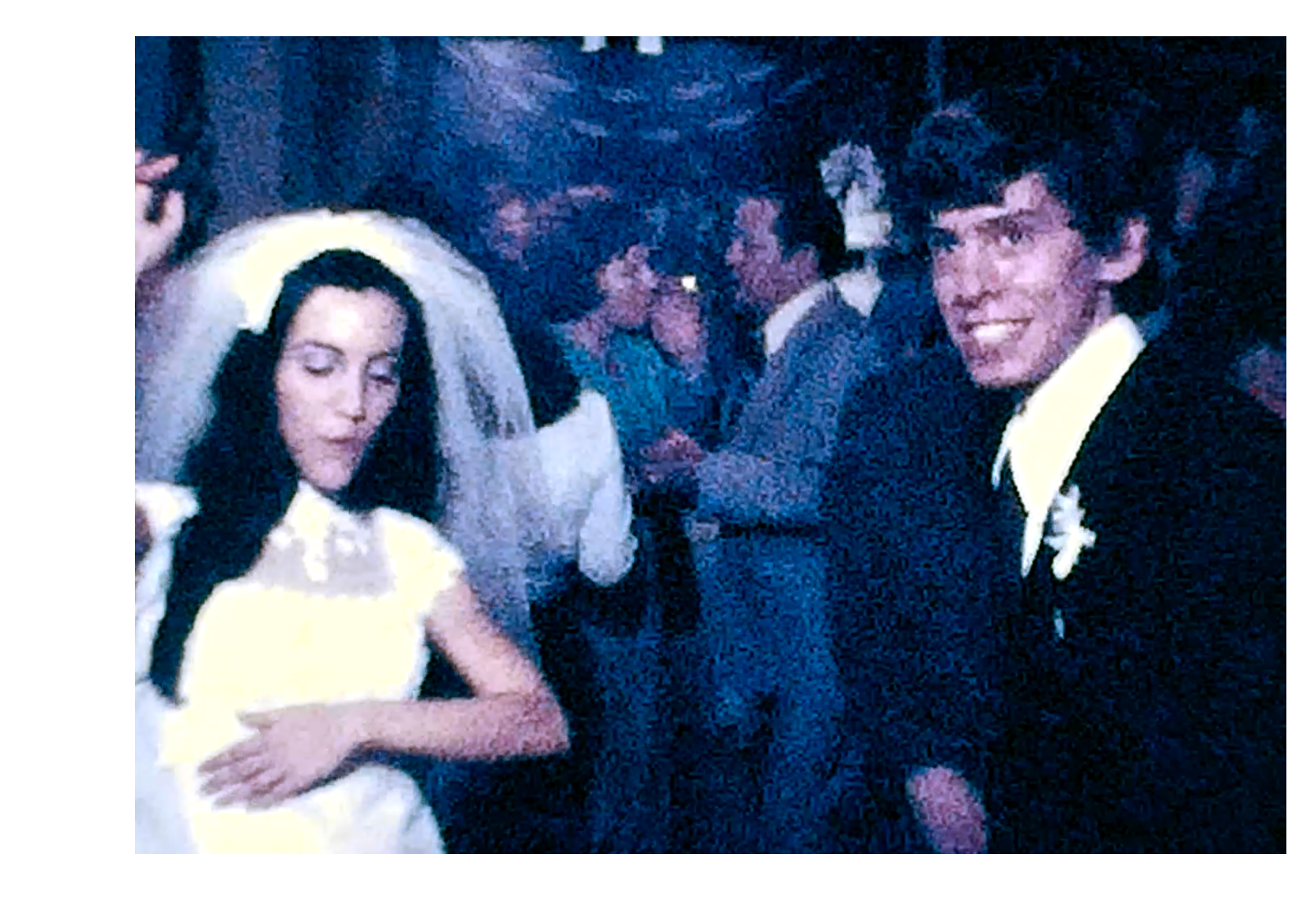
The picture to the right is an 8mm blow-up. The school friend that took the wedding photos was Hoyt Yeatman, → who would later supervise the visual effects on many big pictures, earning an Oscar in the process and also directing a big feature of his own. Hoyt’s photochemical effects on my UCLA project 2 helped me get my important toe-in-the-door job with Douglas Trumbull; I reciprocated by getting Hoyt his first industry entree on the same show. Trumbull took one look at the Texas Instruments calculator that Hoyt had jerry-rigged to become an automatic animation controller, and okayed his hire. It was amazing that we both received entry-level screen credit … something unheard of before Lucas and Spielberg.
It’s also worth noting that friend Craig Reardon resurrected these images from faded negatives … a big help.
All these people have IMDB pages … having their good examples and counsel was a big help in a career spent trying to stay employed.
Okay then, thanks for sticking with CineSavant through my much-appreciated break … you’ll probably see a photo or two of the beloved car again soon, but I’ll stick more to disc news and the inspirations of CineSavant’s generous correspondents.
Thanks for reading! — Glenn Erickson