
CineSavant Column
Hello!
Thanks for sticking with CineSavant …. just making it through a new week feels like an accomplishment, frankly.
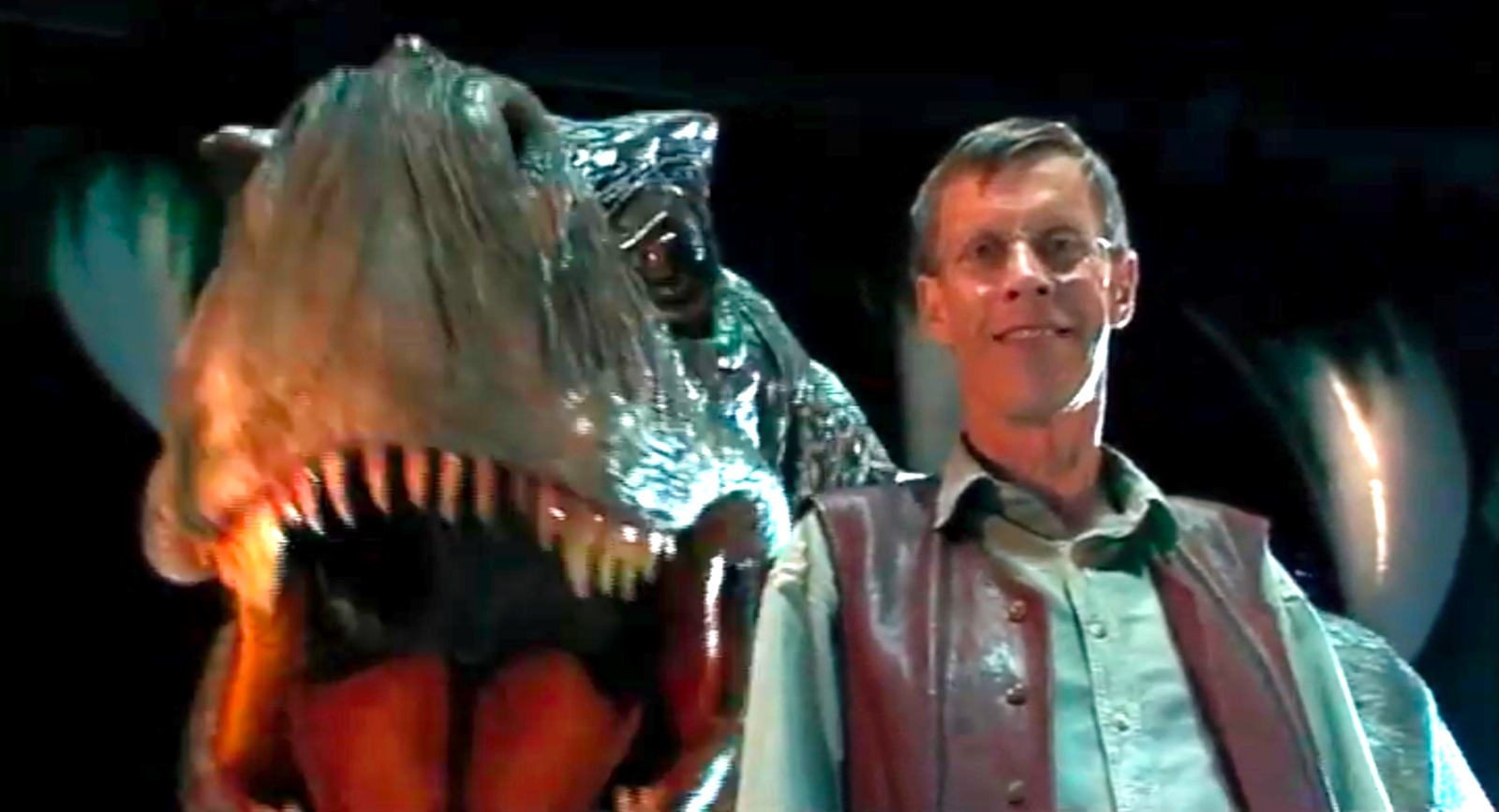
We have another worthwhile link purloined from the estimable David J. Schow — I took one look at Dinosaur Archive’s post documenting the fabrication of those giant display Lizards to be fascinating.
The automatons we see constructed here achive some really smooth motions. We skipped through to ponder the construction and materials strategy involved … it’s pretty elaborate. When it comes time to manufacture my own dinosaur hide, this video will have given me some good ideas. We really enjoyed the Indiana Dinosaur Museum back in South Bend, but I don’t recall it having any animatronic dinosaurs like these.
The video has more on its mind than just the construction … which is the part that held my attention.
The Making Of Walking With Dinosaurs The Arena Spectacular

It’s time for another Book Review at CineSavant. This one is a nice surprise from a frequent review contributor to CineSavant, our UK correspondent Lee Broughton. He’s the editor of a new compendium of academic writing titled Reappraising Cult Horror Films, from Carnival of Souls to Last Night in Soho.
Some of Lee Broughton’s earlier film writing skewed toward the western genre, but in the last ten years I’ve noticed an increased interest in horror and cult-oriented films, such as the excellent commentary he contributed to Steppenwolf, a definite cult item positioned somewhere between a western and a horror film.
Omnibus film digests have the advantage of presenting a range of analytical voices, that offer more than one approach to the given subject. Lee has tapped a good group of writers that help us see where the horror genre has been going in the last quarter-century or so. A number of cult classics are perused, but we were equally engaged by discussions of pictures we’d never heard of.
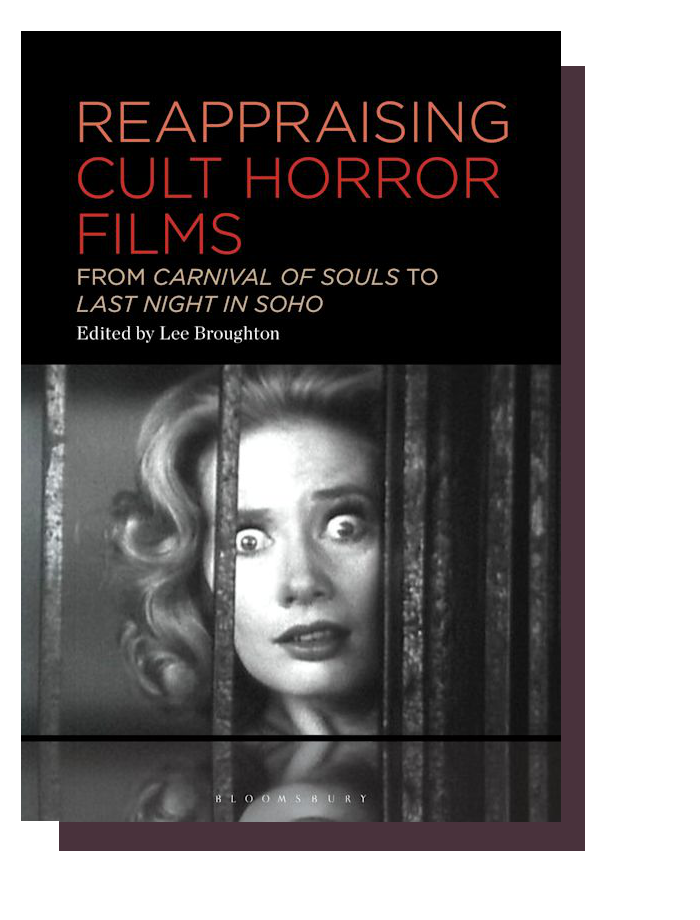
Editor Broughton tempts fate with his lineup of 13 authors. Looking at roster I see more than half are from the UK, most of the rest are from the States, and one is based in Poland. As the book’s title announces, it begins with a well-known classic cult item, but soon veers off in multiple directions. The book does not endeavor to cover the full subject, as have numerous previously published round-ups of Cult Cinema; Reappraising aim appears to be to introduce some new thinking. Divided into sections on individual films, directors, and ‘cycles and clusters’ the approach is academic in nature. Most chapters are indexed with footnote bibliographies, a resource unto themselves. The notes point to film periodicals, trade papers, and for one politically-focused chapter, deleted Twitter tweets by Donald Trump.
The book begins with Bill Shaffer’s production history for Carnival of Souls. It’s the only entry that’s more historical than analytical, but it helps to reminds us of the eccentric origin of many cult pictures. The Polish scholar Kamil Koscielski looks at The Shining from a different direction than the recent pop autopsies performed on Kubrick’s film. Cynthia J. Miller and Tom Shaker plumb the psychological basis for Killer Klowns from Outer Space, and Phevos Kallitsis examines the legacy of race discrimination as reflected in the folk horror of Candyman, including a graphic chart that plots the film’s main concerns, called ‘spaces.’ Craig Ian Mann examines the newer horror item The Hunt (2020), which replays ‘The Most Dangerous Game,’ except with ‘jaded liberals stalking deplorables‘ as defined by Hilary Clinton.
In the directors’ section, Mark Goodall offers a welcome overview of Harry Kümel, the Belgian auteur of Daughters of Darkness and Malpertuis. Matthew Melia invites us to reevaluate the maverick Ken Russell, especially in his later microbudgeted, homemade ‘Garagiste’ pictures.
The third section offers even more new thinking, with articles that examine sub-genre groupings of films by theme and region. Xavier Mendik runs through a vein of ‘White Trash Horror’ theorized to have sprung from the success of John Boorman’s 1972 Deliverance. Pete Falconer looks at the extremes of Australian ‘Ozploitation’ cinema, a movement that resisted Hollywood influence and remained peculiarly local. Alice Haylett Bryan opens our eyes to post- 2000 French cult horror films, which she tells us have content that’s exceptionally extreme, even by horror standards.
Kevin Bickerdike defines a new subcategory, horror localized in public housing projects and ‘terrible towers.’ A seminal film for this horror offshoot is David Cronenberg’s Shivers / They Came From Within. And James Shelton’s article analyzes cult horror in terms of narrative construction, focusing on ‘investigative outsiders’ such as Sgt. Howie in The Wicker Man. He singles out narratives expressing the idea of ‘nemein,’ a concept not all that easy to define … an attempt to give balance to the universe?
Lee Broughton’s own contribution is a full breakdown and analysis of Roy Ward Baker’s The Legend of the 7 Golden Vampires. Following up on his own study of gender typing in westerns, Lee illuminates the curiously negative role given Julie Ege’s ‘adventuress’ in that hybrid-Chinese Hammer horror film.
As should be obvious, this cult horror digest is not a place to read about horror personalities. There are very few illustrations. But it provides some progressive thinking to the horror discussion, in directions some of us traditional horror fans haven’t examined. The book is available both soft and hard-bound; here’s the link for Bloomsbury Academic:
— Plus the Amazon US sales link.
Thanks for reading! — Glenn Erickson