


The Adventures of Tom Sawyer 07/28/18
KL Studio Classics
Blu-ray
David O. Selznick’s Americana classic came together in the run-up period before Gone With the Wind, getting terrific results from early 3-strip Technicolor. They’re all here — Tom, Huck, Becky Thatcher, Aunt Polly, Muff Potter and Injun Joe — plus that prissy little SOB, Sid. The unforgettable cave sequence by William Cameron Menzies cinched the big GWTW gig for the world-class designer. Mark Twain’s tale is presented in two versions, the uncut original and a later reissue cut-down. On Blu-ray from KL Studio Classics.
7/28/18

The Revolt of Mamie Stover 07/28/18
Twilight Time
Blu-ray
Now it can be told! Or maybe, now it can’t be told? William Bradford Huie’s novel of creeping American ambition in Honolulu ends up as a tame vehicle for Jane Russell, who in one of her last big starring movies gives the Hawaiian scenery a run for its money. Raoul Walsh does well in the direction department, but the story has been cleaned up for Sunday School. Co-starring Richard Egan, Agnes Moorehead and Michael Pate, plus gorgeous Oahu locations in CinemaScope and Color by Deluxe. On Blu-ray from Twilight Time.
7/28/18

The Complete Hal Roach Thelma Todd Patsy Kelly Comedy Collection 07/28/18
ClassicFlix
DVD
Vintage ’30s comedy returns, with a beautiful blonde, a sassy brunette and elaborate location filming in a bygone Los Angeles. Producer Hal Roach found a good match for his ‘female Laurel & Hardy’ comedy team in gorgeous Thelma Todd and the smart-mouthed Patsy Kelly. The relatively expensive shorts were filmed all over Los Angeles. It’s hours of vintage comedy, plus several bonus shorts with Pert Kelton and Lyda Roberti, on the ‘Silver Series’ label. On DVDfrom ClassicFlix.
7/28/18

A Clever, Resourceful Special Effect Surprise 07/28/18
Savant Article
It’s another special effects-related CineSavant piece, like last year’s on Close Encounters. ‘Fifties effects mavericks Jack Rabin, Irving Block and Louis DeWitt cleverly repurposed CinemaScope scenes from a drama about Hawaii in 1941, for use in a 1957 Science Fiction film set in Mexico. Get set for explanations about mattes, reformatting and mystery aspect ratios. A CineSavant Article.
7/28/18
CineSavant Column
Hello!
Continuing his deep-dive research activities into film arcana, the indomitable Gary Teetzel has turned up a winner, a publicity blurb for Flint, Michigan’s The Daily from 1958. Apparently the assistant manager of a theater showing the first-run engagement of Horror of Dracula took one of those pressbook publicity recommendations seriously: to tout the booking of Hammer’s Technicolor horror picture, he ran around downtown Flint dressed as Dracula. The theater got the desired publicity, maybe a little too much of it.
The scan of the clipping chopped off the right extreme, but CineSavant never shirks its journalistic responsibility. Here’s a transcript:

Backfires in Flint
Special to THE DAILY
FLINT, Mich., May 28. — A street publicity stunt for the opening of Universal’s “Horror of Dracula” at the Capitol Theatre cost the Butterfield circuit $100 when it backfired here.
At the police station Kern drew a suspended sentence — but not until Henry Capogna, advertising head of the circuit, had paid $100.
That’s a great story, sort of a real-life prequel to the ballyhoo celebrated in Joe Dante’s Matinee, which also features a slightly irresponsible assistant donning a monster suit to scare up business for a new horror attraction. Assistant manager Kern sounds like a typical millennial gore hound, one with a sick, sick morbid imagination — or an average young art student. There’s every possibility that the news story was partly or wholly invented by a friendly newspaperman helping out a buddy over at the Capitol Theatre… even the cops might look kindly on this kind of gag.
I was hoping that the overeager sidewalk Dracula hadn’t been identified — because then we could have spread the rumor that a teenaged Michael Moore was the maniac going all radical on the old ladies of Flint. Oh wait, Moore would only have been four years old…
The date on the news blurb is May 28. The IMDB gives the U.S. opening date for HOD as May 8, so that part checks out. I didn’t catch up with the vampire fun personally until the 1964 reissue of Curse of Frankenstein and Horror of Dracula — as an extremely impressionable twelve year-old, I was floored to be confronted by a super dose of so much Hammer blood & thunder. Back in ’58, Peter Cushing and Chris Lee’s clash between of good and evil must have been the biggest Springtime movie thrill of them all.

On the obsessive filmgoer front, correspondent Michael Bjortvedt has located a full YouTube encoding of the cult Indian movie Gumnaam from 1965. It’s the feature that contains the full “Jaan Pehechaan Ho” rock ‘n’ roll musical number featured in Raja Nawathe’s Ghost World, the one in which the dancers shake their heads so violently, we expect to see their brains fall out. The insane surf-guitar song comes immediately after the main titles.
I watched a little — it’s still pretty amazing. If Flash Mob groups of the kind that perform Thriller were to do “Jaan Pehechaan Ho”, they’d need to call ambulances to carry away the injured.
Thanks for reading! — Glenn Erickson


The Stranglers of Bombay 07/24/18
Powerhouse Indicator
Blu-ray
“Kali bids us to Kill! KILL!” A full review of Indicator’s Hammer Volume 3 Blood and Terror collection will follow, but CineSavant jumps the gun to highlight Terence Fisher’s 1959 mass murder shocker. It adds up to more than exploitative and racist cheap thrills: it’s one of the key films to describe the roots of contemporary terrorism. David Zelag Goodman’s screenplay lets Hammer for once say something relevant about the Colonial past, even if it’s a case of mixed signals — and sex. With Guy Rolfe, George Pastell, Marne Maitland, Jan Holden and Marie Devereaux. On Blu-ray from Powerhouse Indicator.
7/24/18

Cinderella Liberty 07/24/18
Twilight Time
Blu-ray
A real peach of a ’70s New Hollywood picture, Mark Rydell and Darryl Ponicsan’s story of a sailor on extended leave is sentimental neorealism — a tough street story, but with the pessimism removed. Poolroom hustler Marsha Mason and sailor-adrift James Caan are a beautiful couple in the making — although the whole world seems against them. Co-Starring Eli Wallach and Kirk Calloway; photographed by Vilmos Zsigmond. On Blu-ray from Twilight Time.
7/24/18
CineSavant Column

Hello!
Only two reviews today due to a family visitor over the weekend. We’re avoiding what is presently 92-degree heat outside, which feels like a hundred. It was a very strange weekend. Taking our houseguest down Hollywood Blvd., we ran into Quentin Tarantino’s street dressings turning the clock back to 1968 — with Larry Edmunds’ bookstore returned to the slot next to ‘The Supply Sergeant,’ and The Night They Raided Minsky’s up on the marquee at the Vogue, across the street.
We’re also reflecting on more unpleasant happenings. Last Saturday I was just thinking about the need to drop by the Trader Joes’ market on Hyperion, which is not the closest TJ’s to me but makes a nice loop when I drop by Albertsons and Gelsons. Up on TV pops the news of the tragic shootout, ‘not far from home’ as they say. It brought back memories from four years ago, learning online that my wife’s college was the site of another shooting. I leaped up and was halfway down the stairs before I realized that it was her day off, and she was home with me, quite safe. There’s really no room at all any more for complacent thoughts that such things won’t affect us.
No big news — I’m late with reviews as it is. I’ve only reviewed The Stranglers of Bombay from the new boxed set Hammer Volume 3 Blood and Terror collection, but Charlie Largent will be working on a full review presently.

Sci-fi fans might want to know that a restoration of an unnamed restored Paramount science fiction film is promised to screen at this year’s AMIA- ‘The Reel Thing’ presentation up on Vine Street. We’re hoping that it’s either 1953’s The War of the Worlds or 1951’s When Worlds Collide. I’ll report when I find out — perhaps a Blu-ray will be in the offing. We’re still waiting for a 20,000 Leagues Under the Sea Blu-ray, after seeing Disney’s spectacular restoration at The Reel Thing way back in 2012. The best When Worlds Collide presentation is still a laserdisc from 1995 or so.
Thanks for reading! — Glenn Erickson


The Day After 07/21/18
KL Studio Classics
Blu-ray
Will the world end with a bang or a whimper? Back in ’83 a hundred million viewers tuned in to ABC to find out. Edward Hume and Nicholas Meyer’s daring docudrama reacquainted Americans with their status as hostages in a global game of nuclear roulette. Gruesome nuclear annihilation visuals complement fine performances led by Jason Robards. The tense, thoughtful show is presented in separate TV and theatrical versions. Co-stars under the fallout are JoBeth Williams, Steve Guttenberg, Jim Dahlberg, John Lithgow, Bibi Besch, Lori Lethin, Amy Madigan, Jeff East, Georgann Johnson, William Allen Young and Calvin Jung. On Blu-ray from KL Studio Classics.
7/21/18

Supergirl 07/21/18
The Warner Archive Collection
Blu-ray
The fine presence of the marvelous Helen Slater redeems this last film in the Salkind Superman franchise, which we’re told features the first live- action theatrical film super-heroine was. CineSavant likes the show for the right reasons — his very young kids adored it — and can see its turnip screenwriting and frayed corners showing through. The release combines a 125-minute Blu-ray with an overstuffed 139-minute DVD. Also starring Faye Dunaway, Brenda Vaccaro, Peter Cook Marc McClure, Hart Bochner, Maureen Teefy, Peter O’Toole, Mia Farrow and Simon Ward. On Blu-ray from The Warner Archive Collection.
7/21/18
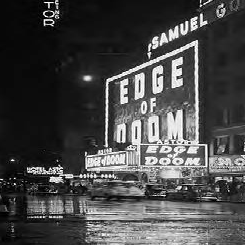
Meet Me at the Astor 07/21/18
Savant Article
With the help of correspondent ‘B’ CineSavant poaches on Greenbriar Picture Shows territory with a quick sideshow of photos from New Yawk, New Yawk: Once upon a time, any old film release might get a gigantic ‘your name in lights’ opening on the Great White Way. The Astor – Victoria theater combination created a giant wall that regularly carried enormous, elaborate film advertising signs — and not just for road show epics.
7/21/18
CineSavant Column
Hello!
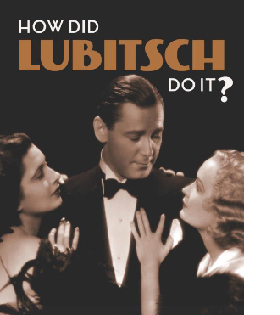
I finished Joseph McBride’s major new film book How Did Lubitsch Do It? a few days back, and needed some time to think about what I’d read. Really good books about directors don’t come along very often, and of the newer breed this one joins Bernard Eisenschitz’s book on Nicholas Ray, Foster Hirsch’s on Otto Preminger and Alan Rode’s recent study of Michael Curtiz as a fascinating, illuminating read.
McBride has written some of the closest studies of John Ford, who he was able to interview; the great Ernst Lubitsch passed far earlier in 1947, yet left his mark as one of the most influential directors in Hollywood history. McBride digs into the producer-director’s roots in Germany, when he worked with Max Reinhardt on the Berlin stage. Lubitsch transplanted his talent to America early in the 1920s and was thus firmly established before the arrival of waves of refugees from the Hitler regime. Interestingly, although his special gift was comedy, Lubitsch’s extravagant epics caught the attention of Hollywood, which was always on the prowl to snap up ‘artistic’ European directors. He worked for stars like Pickford and moved between several studios, gaining a reputation for bedroom farces pitched at a higher level of wit than those from homegrown directors like Cecil B. DeMille.

Author McBride never lets go of his prime mission, which is to try to isolate, explain and define what was meant by ‘the Lubitsch Touch.’ Even in silent films, Lubitsch consistently invented comic situations loaded with innuendo and irony, that illuminated visual jokes that seemed to spring from the characters, as opposed to being imposed on them by a gag writer. Often slyly suggestive, a perfect Lubitsch Touch construction was understated, sometimes ironic but seldom cynical. A ‘shared understanding’ generated by direct author-viewer communication, a Lubitsch effect expressed his love for things European, elegant and sentimental.
McBride finds The Touch in German films made during WW1 and several key silent comedies in Hollywood. The style really came together when sound was added. Toying with the possibilities of the musical format, Lubitsch confected affectionate, playful & naughty romantic comedies with Maurice Chevalier. The big Lubitsch films are given a serious going-over, examined from multiple angles using a wealth of research. McBride adds his own interpretations to trends in the director’s work, praising some pictures to the skies (Trouble in Paradise) and surprisingly, not others (Bluebeard’s Eighth Wife). The analysis of Trouble in Paradise convinces us that it may be the most sophisticated picture ever made. The show suggests all manner of sexual excess without once making anything overt, yet was shelved as wholly unacceptable when the Production Code was enforced.

McBride’s focused assessment of Ernst Lubitsch’s contribution is compared to that of Rouben Mamoulian, who is found wanting when he imitated Lubitsch’s style. The hothouse exercises in style and glamour of Paramount’s hot director Josef von Sternberg were not to Lubitsch’s taste. Sternberg’s career took a nosedive when Lubitsch became the Paramount production chief for a couple of years, but we are assured that Lubitsch did not have it in for his fellow director. When he gets his directing career going again, Lubitsch intersects with more writers (Walter Reisch, Charles Brackett, Billy Wilder) and continues to develop his signature style. Unlike some directors Lubitsch was a friend and true collaborator with his writers, challenging them to perfect their jokes into constructions that paid off in extra, even funnier jokes. Ninotchka, The Shop Around the Corner, To Be Or Not To Be and Heaven Can Wait are all originals with few repeated elements, by turns satirical, sentimental, politically savage and sweetly fantastic.
Although some of us tend to relate to Ernst Lubitsch through his most vocal, loyal acolyte Billy Wilder, McBride uses Wilder mainly to help zero in on the concept of The Lubitsch Touch. Wilder often returned to film subjects that seemed to be direct attempts to recapture Lubitsch’s elegant perfection of form; and often adapting the work of some of the same European playwrights Lubitsch favored. The book’s title is derived from a motto Wilder kept on his office wall, an oath-reminder to remember the Master.

Joseph McBride’s holistic approach doesn’t try to sort Lubitsch into biographical and thematic pigeonholes, which makes the read an intense experience for film adepts that want their analysis thoughtful, straight and deep. McBride doesn’t button up a topic and move on, but instead keeps angles of study afloat in an ongoing discussion. A particular film title will bounce back scores of times when some scene or event becomes relevant again. Some readers may confuse this with repetition, but it begins to pay off when we think we’re gaining purchase on an understanding of what the elusive Lubitsch touch might be. Billy Wilder never claimed that his hommages to his mentor ever quite equalled the Master’s work. I think McBride gets as close as anybody to an understanding of Lubitsch’s twinkle-eyed genius.
Yes, the McBride How Did Lubitsch Do It? is a heavyweight item. Grab it when you have some solid reading time, and prepare some bookmark placeholders to allow a return to the good parts.
(How Did Lubitsch Do It? Columbia University Press, June 26 2018, 576 pages)

Thanks for reading! — Glenn Erickson

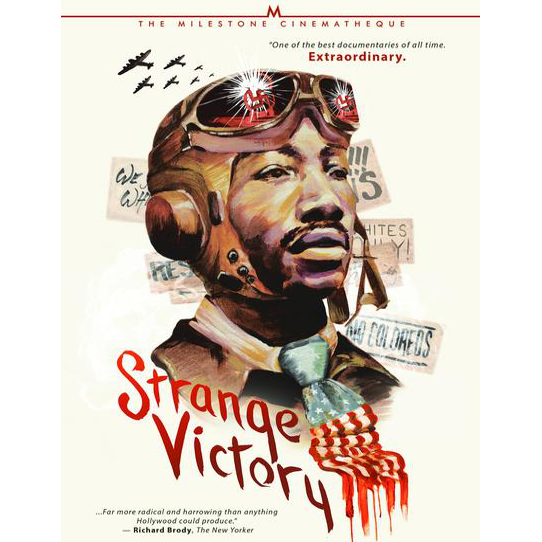
Strange Victory 07/17/18
The Milestone Cinematheque
Blu-ray
‘This Picture Kills Fascists’ might be a motto for this bombshell essay documentary. Leo Hurwitz’s film wasn’t made welcome in 1948 and would surely be controversial today, as it’s just too &%#$ truthful and blunt about good old American bigotry and injustice. The passionate, jarring plea for humanist sanity really shakes up viewers, in a constructive way. Hurwitz said that one TV executive compared it to The Sermon on the Mount. It’s still a lightning bolt against fascist ideas flourishing in the Land of the Free. Narrated by Alfred Drake, Muriel Smith, Gary Merrill, Saul Levitt and Faith Elliott Hubley. On Blu-ray from The Milestone Cinematheque.
7/17/18
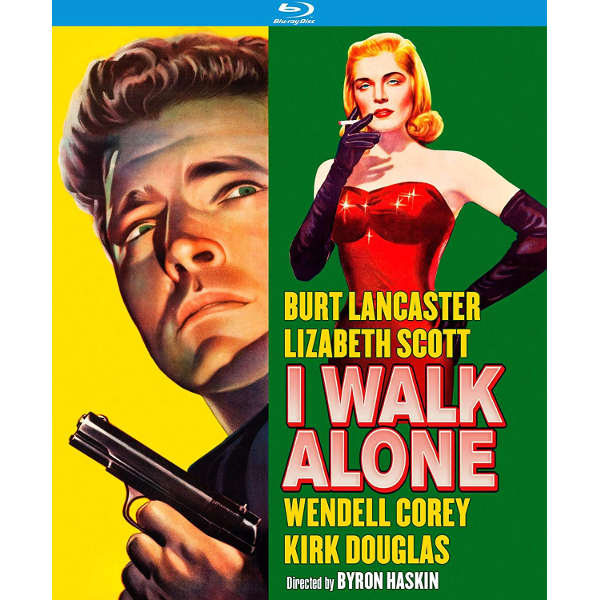
I Walk Alone 07/17/18
KL Studio Classics
Blu-ray
One of a number of Paramount noirs seemingly forever MIA on disc, Hal Wallis’ glossy production reunites Burt Lancaster and Lizabeth Scott with promising newcomers Kirk Douglas and Wendell Corey. It’s light on action but strong on character — and it contains a key scene in the development of both the noir style and the gangster genre. Co-starring Kristine Miller, George Rigaud, Marc Lawrence, Mike Mazurki, and as a cocksure hoodlum, Mickey Knox. On Blu-ray from KL Studio Classics.
7/17/18

Ready Player One 07/17/18
Warner Home Video
UltraHD, Blu-ray & Digital
Lifelong gaming fan Steven Spielberg goes all-in for motion capture, with much different results than The Adventures of Tintin. It’s an ode to 1980s videogame fads and pop culture that could be re-titled ‘Astounding Adventures in Licensing.’ It’s Star Wars, TRON and Avatar mashed together for young teens, and more interesting than it ought to be. With Tye Sheridan, Olivia Cooke, Ben Mendelsohn, Simon Pegg and Mark Rylance. On Blu-ray from Warner Home Video.
7/17/18
CineSavant Column

Hello!
Just a note today from correspondent Bill Dodd, after screenings of The WAC’s Billy Budd brought back memories of renaissance talent Peter Ustinov. July 14, 2018:
Glenn — one of the less desirable things about getting older is the feeling that one may be repeating one’s self. If I’ve already waxed poetic about Billy Budd back when the DVD came out, please forgive me and disregard this.
I saw the movie when it first came out, and three things are burned into my mind: Robert Ryan’s performance which deserved every award possible. Terence Stamp’s first role which probably also deserved every award in the book. The end, when Billy shouts “God Bless Captain Vere,” the look on Sir Peter’s face was beyond anything I’ve ever seen in the movies.
Later, in 1966, Ustinov was in town for the San Francisco Film Festival. I walked a couple of blocks from the radio station where I was the morning guy and stumbled into him, almost literally. I told him how much I loved the movie, and left him to his activities.
But there was more. The owner of the British Motorcar Distributors was a friend of Ustinov and asked him to do some radio commercials for the upcoming Imported Car Show. I was elected to record these on a Saturday morning. It was an incredible three or so hours I will never forget. I rolled the tape and he ad-libbed, about 3 minutes each. Voices, sound effects, the whole thing. I was then faced with the agony (you will understand) of cutting these down to sixty seconds each. I managed, and they were incredible. Did I save them? No. What an idiot!
Anyway, during a break we all wandered out onto the roof of the Nob Hill building where the radio station occupied the top floor. I wandered over to the ledge and sat on the very wide surround. Sir Peter came flying across the roof, pulled me off and said “Don’t do that! I can’t stand heights!” So I asked him how he managed to direct all those scenes in Billy Budd where people were up in the masts, and he replied “I let other people direct those parts!”
I have no idea if that’s true or not, but I can tell you that’s what he said. And he gave a 22 year-old broadcaster an unforgettable day. I managed to write a letter to him about a month before he died to thank him for that day. I hope he got it. — Bill Dodd, Retired Broadcaster and movie freak.
I told my own ‘meeting Peter Ustinov’ story in a footnote to my 2010 review of his film Hot Millions.
Thanks for reading! — Glenn Erickson